
Reviewed · COOKING CLASSES
Authentic Balinese Cooking Classes
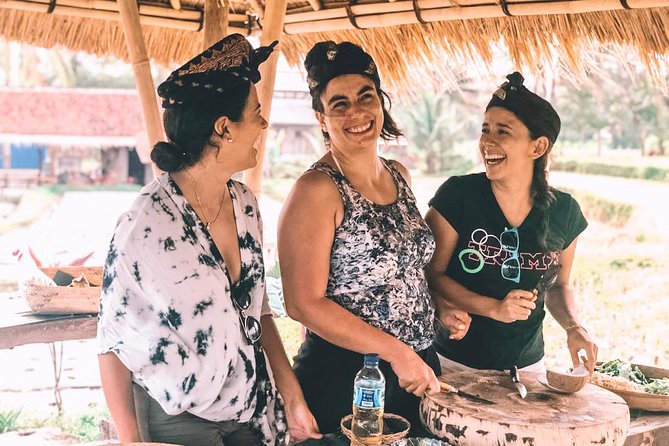
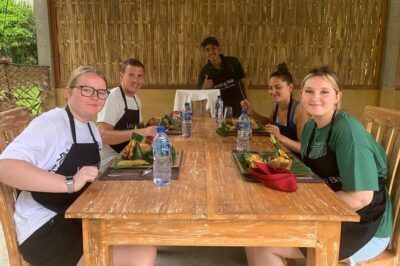
The best part of this experience is that you do not simply watch a chef cook. You shop for ingredients, prepare them at your own station, grind spices, cook several dishes, and sit down to eat what you made. The morning option adds a local market visit, where Gede explains produce, meat, fish, freshness, and Balinese bargaining.
I like the small class size, capped at 10 people, and the fact that each participant gets personal cooking space and utensils. I also like the setting: the class takes place near Bakas in Klungkung, with rice fields and rainforest views noted as part of the experience. The main drawback is the long transfer. From parts of south Bali, the drive can take around 1.5 hours each way, and one delayed pickup led to a very late market visit.
Key points
- A real hands-on class: You prepare satay, nasi goreng, black rice pudding, and other Balinese dishes yourself.
- Morning market visit: Learn how to select ingredients and practice local bargaining before cooking.
- Small groups: Classes are limited to 10 people, giving you more time with the chef.
- Gede and his team: Gede handles the class and transfers, sometimes with help from his wife.
- Scenic rural setting: The cooking location offers views toward rice fields and rainforest.
- Transfers included: Pickup and return service is offered from Ubud, Denpasar, Sanur, Kuta, Legian, Seminyak, Jimbaran, Nusa Dua, Benoa Harbor, and nearby areas.
From Bali’s market stalls to your own cooking station
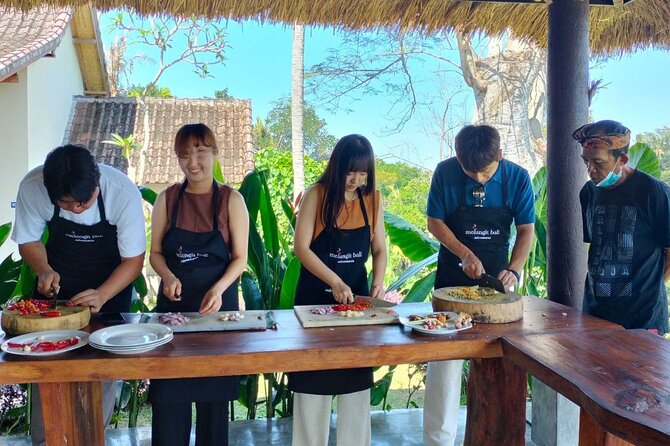
This is a cooking class with a cultural lesson built into it. The food matters, but so does the path it takes from market stall to plate.
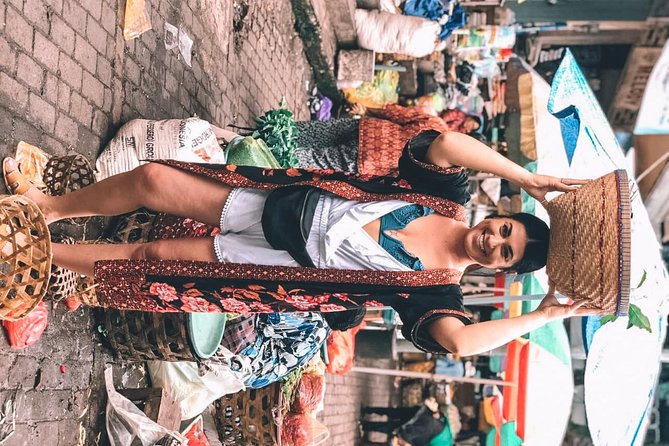
For a morning booking, the day begins with a trip to a local market. Balinese markets open early, and this is when you see them at their most useful: fresh produce, meat, fish, spices, and daily shopping all happening in one place. Gede explains local ingredients and the choices behind them, including what to select and what to reject.
You also learn the basics of bargaining. That may sound like a small detail, but it is useful for the rest of your Bali visit. The market gives you a better sense of how food is bought locally, rather than presenting Balinese cooking as a collection of recipes floating free from daily life.
The exact market experience can depend on timing. One booking began late and arrived at a market that was partly closed, so I would choose the earliest available start time if the market is important to you. Morning bookings are the ones specifically connected with the market visit.
More Cooking Classes in Bali
- Balinese Farm Cooking Class by Pemulan Bali
★ 5.0 · 410 reviews - Balinese Cooking class with traditional morning market visit
★ 5.0 · 161 reviews - Jambangan Bali Cooking Class
★ 5.0 · 142 reviews
What you cook: satay, nasi goreng, and sweet black rice
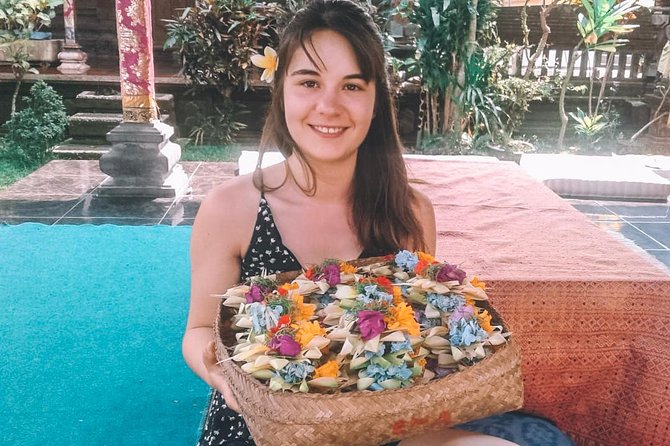
The menu includes familiar Indonesian favorites, but the value comes from preparing them in a Balinese way.
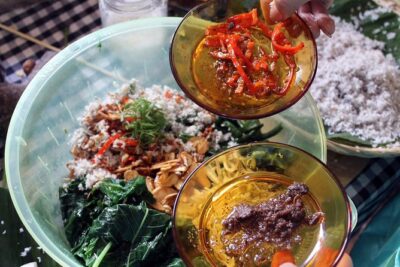
Satay gives you a practical introduction to seasoning and preparation. You work with local ingredients, prepare the mixture, and cook the skewered dish yourself. This is the sort of recipe that can be repeated at home, provided you can find the needed spices.
Nasi goreng, Indonesia’s famous fried rice, is another useful home recipe. The class lets you see how seasoning, rice, and other ingredients come together rather than simply receiving a finished plate.
For dessert, you prepare black rice pudding, a sweet dish with a distinctly Southeast Asian character. It rounds out the meal and gives the class more variety than a menu focused only on savory food.
The full menu is not specified in the available details, so do not book expecting a fixed list beyond the dishes named. The emphasis is on Balinese treats, local ingredients, and the cooking process.
Your own station means more than a demonstration
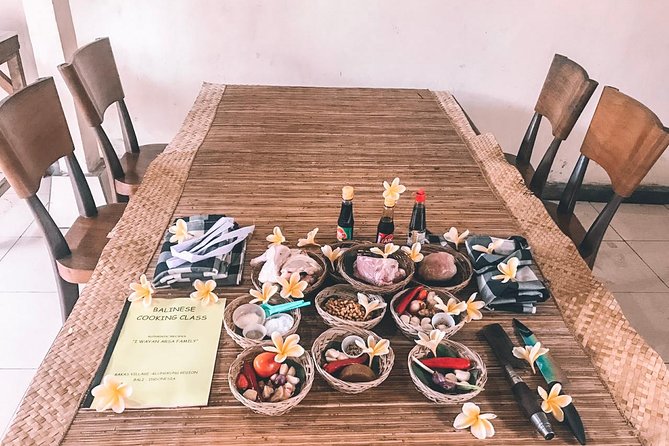
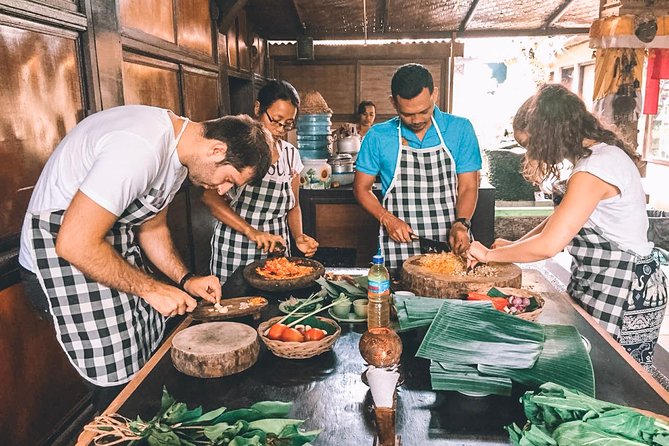
Many cooking classes place you around a shared counter and ask you to follow along. Here, each participant receives a cooking station and utensils. That matters because you are doing the work instead of watching someone else do it.
You chop, grind, prepare, and cook the dishes yourself. The chef and teachers guide you through the steps, explain Balinese tastes and customs, and share the small decisions that make the food taste right.
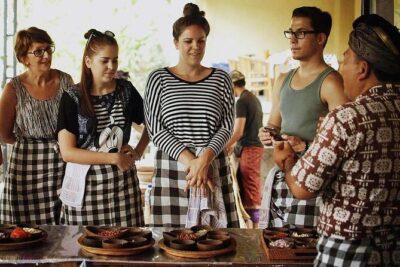
The class is conducted in English. With a maximum of 10 participants, you should have a better chance to ask questions or get help with a technique. A small group also keeps the meal more personal, though the experience is not necessarily private unless your booking is for a private group.
The teachers are described as friendly and skilled, and Gede is the named host connected with the class and transportation. His wife has also handled hotel pickup and helped make the day a family-style experience. You can expect a relaxed teaching approach rather than a formal culinary-school lesson.
The Bakas setting is part of the appeal
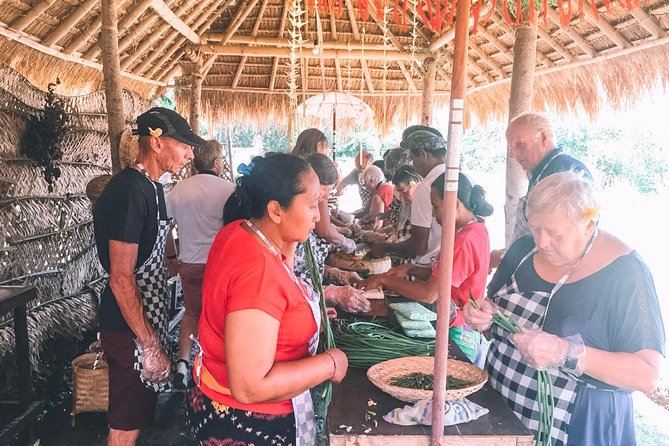
The class takes place in Bakas, in the Klungkung area of Bali, rather than in the main hotel belt of south Bali. That location is important. You are trading convenience for a more rural setting.
The cooking area has views toward rainforest, and one account describes the location as especially scenic, with rice fields visited near the class. Those surroundings give the cooking a sense of place. You are not simply in a generic kitchen built for tourists.
At the same time, the setting creates the day’s main practical issue. From Ubud or south Bali, reaching Bakas can take time. One pickup involved about 1.5 hours of driving before arrival. From Seminyak, Kuta, Jimbaran, Nusa Dua, or other southern areas, traffic can make the journey feel even longer.
The experience is listed in Jimbaran in some booking information, while the detailed description places the class in Bakas, Klungkung. I would confirm the exact class address and pickup time before booking. That small check can prevent confusion about the day’s driving time.
A completely different kind of day out in Bali:
- Bali Full-Day Traditional Village Sightseeing Trip All Inclusive
★ 5.0 · 3,069 reviews - ️ Bali Instagram Tour: The Most Famous Spots (Private & All-Inclusive)
★ 5.0 · 2,857 reviews - Full-Day Tour to Water Temples and UNESCO Rice Terraces in Bali
★ 5.0 · 2,539 reviews - ATV Quad Bike Through Tunnel and Waterfall in Bali
★ 5.0 · 2,098 reviews
Transport is convenient, but confirm the schedule
Round-trip transfers are offered from a wide area, including Ubud, Denpasar, Sanur, Kuta, Legian, Seminyak, Jimbaran, Nusa Dua, Benoa Harbor, and other nearby addresses. This is a real benefit in Bali, where reaching a rural cooking school by public transport can be awkward.
Pickup is not a minor extra here. It removes the need to arrange a driver for a full day and allows you to focus on the class. For people staying in Ubud or the southern resort areas, that may make the $65 price easier to justify.
Still, confirm the pickup time rather than assuming the advertised start time is the actual hotel departure. One booking had a planned 7 a.m. start changed to 8 a.m., followed by a pickup at 9 a.m. The delay affected the market visit and made the itinerary feel less like the promised morning program.
I would also allow extra time after the nominal six-hour duration. The class itself may fit that estimate, but pickup routes and Bali traffic can stretch the day.
Morning or afternoon: choose for the market, not just the clock
The class offers start times from morning through afternoon, with opening hours listed from 7 a.m. to 3 p.m. That flexibility helps if you have a busy sightseeing schedule or prefer not to start early.
The choice changes the character of the experience.
Morning bookings include the local market visit. You get the strongest cultural component, learn about produce before cooking, and see the food-buying side of Balinese life. Choose this option if the market and bargaining lesson are central to your plans.
Afternoon bookings may suit you better if you want a slower start or have spent the morning sightseeing. The available information does not promise the market tour for afternoon departures, so ask before booking if that part is essential.
I would not choose the earliest time simply because it appears on the schedule. Pick the time you can realistically meet for pickup, then confirm the transport details directly.
Why the market lesson adds real value
Recipes are easy to find online. Knowing how Balinese cooks choose ingredients is harder to pick up from a cookbook.
At the market, the chef explains local meat, fish, and produce. You learn how freshness is judged and which ingredients work well for the dishes ahead. You also get an introduction to local customs and the style of bargaining used in Bali.
This is useful beyond the class. Even if you never recreate black rice pudding at home, you will understand more about the food stalls and markets you see elsewhere on the island. The visit connects the cooking to ordinary life.
The market can also be the least reliable part of the day because it depends on the hour and local conditions. Go early, and keep your expectations practical. This is not presented as a large sightseeing attraction with a fixed route. It is a working food market, and that means some stalls may be closing by the time you arrive.
The meal is the payoff
After the preparation comes the part everyone can agree on: you eat the food you made.
The meal gives you a chance to compare the finished dishes and understand how the ingredients work together. It also makes the class social without turning the whole day into a lecture. You have prepared the food, so the final plate has more meaning than a restaurant meal ordered from a menu.
The experience has received an overall rating of 4.4 from seven ratings, with especially strong praise for the food, the setting, and the sense of connection to Balinese culture. One description highlights cooking with rainforest views and the passion shown for the local community. That is the right way to think about this class: the meal is important, but the place and people are part of what you are paying for.
Do not expect a fine-dining presentation or a professional certification. This is a practical, friendly class built around local recipes and shared eating.
Is $65 good value?
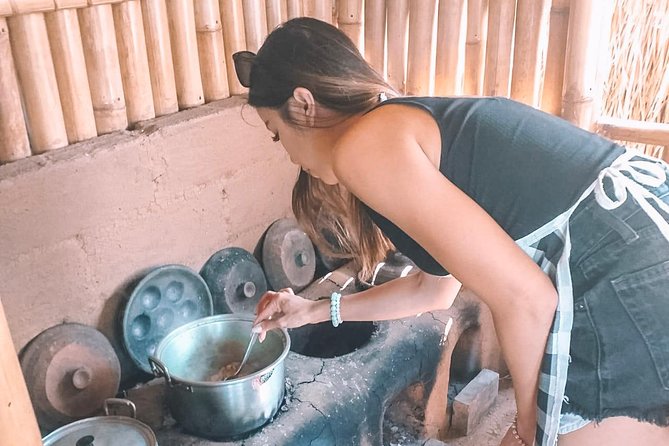
At $65, the class is not the cheapest cooking lesson you may find in Bali. The price includes roughly six hours, instruction, ingredients, the cooking experience, the meal, and two-way transfers from a broad group of resort areas.
The transport can be worth a sizable portion of the fee, especially if you would otherwise hire a car and driver for the day. The market visit also adds value because it gives you more than a kitchen demonstration.
The calculation is less favorable if you are staying close to the class or already have your own transport. In that case, you are paying mainly for the teaching, ingredients, meal, and cultural setting. The long drive also takes time that you could spend elsewhere.
I see the price as reasonable for someone who wants an all-in-one day and values personal instruction. It is less compelling for someone who only wants a quick two-hour lesson in a central tourist area.
Who should book this class?
I would recommend it to you if you enjoy food, want direct contact with local customs, and do not mind spending much of the day on the experience. It suits couples, families, and small groups who prefer doing things together rather than ticking off another sightseeing stop.
It is also a good choice if you are staying in Ubud or south Bali and want transport handled for you. The small class size helps beginners, since you do not need advanced cooking skills to take part.
You may want to skip it if your Bali schedule is tight, you dislike long drives, or you are mainly looking for a market tour. The class is built around cooking, and the market component is tied to the morning schedule.
People with strict dietary needs should ask for confirmation before booking. The available details explain the dishes and ingredients in general, but they do not set out allergy, vegetarian, vegan, or substitution arrangements.
Free cancellation is available if you cancel at least 24 hours before the local start time. Changes or cancellations inside that window are not accepted for a refund.
My call: a worthwhile food day with one important warning
I would book this class for the hands-on cooking, the small group, the rural setting, and the chance to learn how ingredients are bought and chosen in Bali. Gede and his team offer the kind of personal contact that makes a food class memorable, and the recipes are practical enough to use after you get home.
My caution is simple: confirm the exact location, pickup time, and market arrangements before paying. The Bakas location can mean a long drive, and an unreliable pickup can weaken an otherwise excellent day.
Book the morning option if the market visit matters to you. Choose this experience when you want a full cultural and food-focused day, not a quick lesson squeezed between beach time and dinner.
FAQ
Where does the cooking class take place?
The detailed experience description places the class at Bakas Cooking Class in Bakas, Klungkung, Bali. Some booking information identifies the location as Jimbaran, so confirm the exact address before departure.
How long does the experience last?
The experience lasts approximately six hours, not including any additional delay caused by pickup routes or traffic.
What food will I learn to cook?
The named dishes include satay, nasi goreng, and black rice pudding. The class also describes Balinese treats and local ingredients more generally.
Is a market visit included?
A local market visit is included with morning bookings. The chef explains produce, meat, fish, freshness, and Balinese bargaining. The market visit is not specifically promised for afternoon bookings.
How many people can join the class?
The activity has a maximum of 10 participants. Each participant receives an individual cooking station and utensils.
Is hotel pickup available?
Two-way transfers are offered from addresses in Ubud, Denpasar, Sanur, Kuta, Legian, Seminyak, Jimbaran, Nusa Dua, Benoa Harbor, and nearby areas. Confirm your address and pickup time in advance.
Can I cancel for a full refund?
Yes. You can cancel at least 24 hours before the experience start time for a full refund. Cancellations or changes made less than 24 hours before the local start time are not accepted for a refund.
Just added around Bali
- Bali Parasailing Adventure, Jet Ski, Banana Boat , Donat Boat, with Transport★ 5.0 · 11 reviews
- 1.5 Hours Bali ATV Quad Tour★ 5.0 · 8 reviews
- ATV Quad Bike Through Tunnel and Waterfall★ 5.0 · 3 reviews
- Bali Driver Recommendation★ 5.0 · 7 reviews
- Bali Private Custom Tour★ 5.0 · 12 reviews
- Bali Cooking Class Experience with All Inclusive★ 5.0 · 12 reviews
- Penglipuran Village Waterfall Swing Private Guided Tour★ 5.0 · 13 reviews
- Bali Sightseeing Car Hire with English-speaking Guide and Driver★ 5.0 · 24 reviews
Cooking Classes, compared.
Private Authentic Balinese Cooking Class in Ubud at Putu’s Home
Read our review →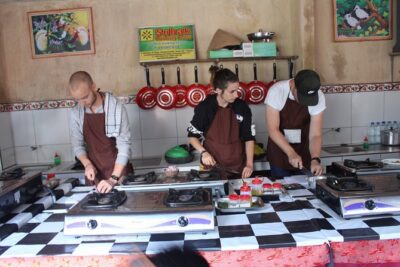
Balinese Ubud cooking school (9 Dish Cooking and Market Tour)
Read our review →
Learn to cook Indonesian food at Gili Cooking Classes Trawangan
Read our review →
Browse the lists this tour appears in