
Reviewed · COOKING CLASSES
Balinese Ubud cooking school (9 Dish Cooking and Market Tour)
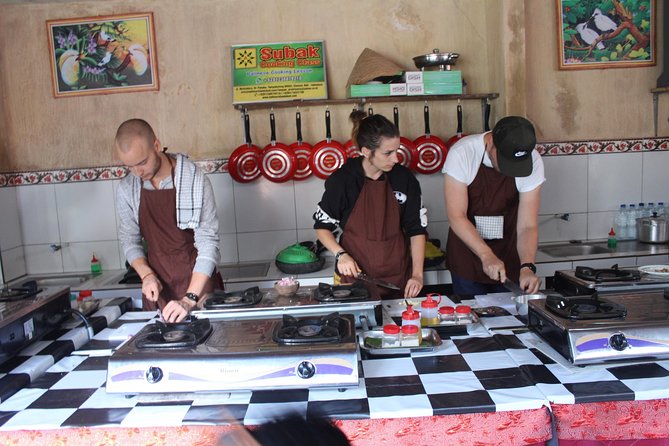
The big draw here is the sheer amount of food you learn to prepare. Instead of making one curry and calling it a day, you work through nine Balinese recipes, from chicken satay and vegetable soup to sambal matah and sweet klepon.
I like the morning route for its local-market visit, fruit tasting, rice-paddy stop, and glimpse into everyday Balinese food culture. I also like the practical format: you cook at your own station, receive recipe copies, and eat the finished meal together. The main consideration is transport. The class is outside central Ubud, and the drive can take about 50 minutes from the meeting point.
Key points
- Nine recipes in one class: Prepare a broad Balinese meal rather than just one or two dishes.
- Morning means market time: Visit a local market, taste unfamiliar fruit and sweets, and see ingredients being sold.
- Rice fields add context: Learn about Balinese rice growing, harvest timing, and different types of rice.
- Afternoon has a different focus: The afternoon option includes making a Balinese offering instead of visiting the traditional market.
- Choose your menu carefully: Select regular or vegetarian dishes when booking.
- Small-group cooking: The class has a maximum of 14 people, with individual cooking stations reported within the shared kitchen.
Nine Balinese dishes, not just a token curry
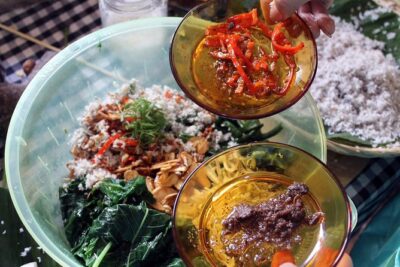
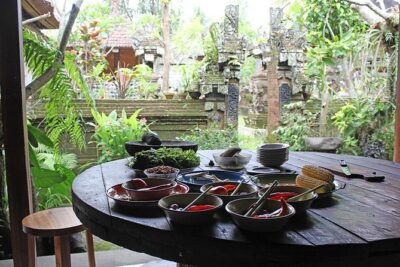
Many cooking classes give you a recipe, let you stir a pot, and send you home. This one aims for a full Balinese meal. The regular menu includes vegetable soup, chicken with coconut milk and Balinese spices, sweet fried tempe, chicken sate lilit, chicken pepes cooked in banana leaf, lawar, sambal matah, base gede spice paste, and klepon cake. White rice accompanies the main dishes.
That list gives you a useful look at the structure of Balinese cooking. You work with spice pastes, coconut, fresh vegetables, banana leaves, fermented soybean products, grilled food, steamed food, and raw condiments. You are not learning one isolated dish. You are learning how several parts of a Balinese meal fit together.
The vegetarian menu replaces the chicken dishes with tofu and tempe preparations. You may make tofu with Balinese sauce, tempe skewers with peanut sauce, and steamed or grilled tofu in banana leaf. The soup, lawar, sambal matah, spice paste, klepon, and rice remain part of the meal.
You should select the regular or vegetarian menu in advance. The information provided does not describe a separate vegan menu, so ask before booking if you need to avoid eggs, dairy, shrimp paste, or other ingredients.
More Cooking Classes in Ubud
- Ubud Cooking Class Bali with Balinese Chef
★ 5.0 · 1,609 reviews - PRIVATE Authentic Balinese Cooking Class in Ubud at Putu’s Home
★ 5.0 · 644 reviews - Balinese Authentic Cooking Class in Ubud
★ 5.0 · 239 reviews
What the cooking actually teaches you
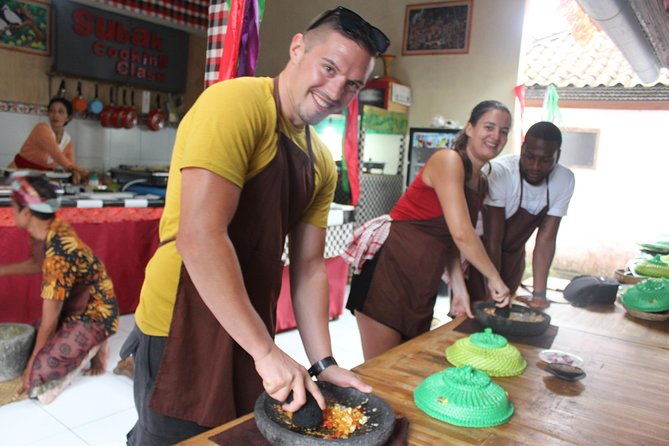
The strongest part of the class is its range. Base gede, the basic Balinese spice paste, is especially useful because it forms the foundation for many local dishes. Learning how its ingredients are combined gives you a skill you can use beyond the recipe sheet.
Sambal matah offers a different lesson. This raw mixture of spices and coconut oil brings freshness and heat to the meal, and it shows how Balinese food is not built only around long-cooked sauces. Lawar adds another side of the cuisine, combining vegetables with Balinese spices.
The class also covers several cooking methods. You prepare food by frying, grilling, steaming, and cooking in banana leaf. Sate lilit is shaped around a skewer rather than formed as ordinary cubes of meat. Pepes introduces you to banana-leaf cooking, which adds both a visual and practical element to the meal.
Klepon gives the class a sweet finish. These round sticky-flour cakes contain palm sugar and are boiled before serving. It is a simple dessert, but it is also the kind of local treat you might not think to order in a restaurant.
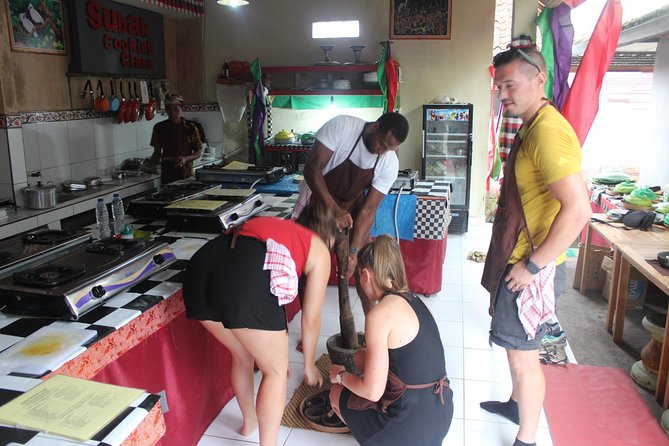
The setup is designed to keep you involved. Ingredients are prepared in advance, which helps the group complete nine recipes in around five hours. One important tradeoff is that some of the chopping and preparation may already be done. That keeps the class moving, but it means you may not perform every single step from raw ingredient to finished dish.
Morning market, fruit tasting, and rice-paddy views
Choose the morning session if you want the broader cultural outing. The day begins with a visit to a traditional market, where a local guide explains how people buy and sell fruit, vegetables, spices, cakes, and other cooking ingredients.
This is more useful than simply walking past market stalls. You can ask what unfamiliar ingredients are used for, see the produce needed for the class, and try local fruit and sweets. The experience may be particularly worthwhile if you have not spent much time in an Indonesian market before.
The market can also be a sensory stop, with strong smells, wet floors, uneven paths, and crowded areas possible. The provided information does not promise a specific market name or a private shopping experience, so think of it as a guided local visit rather than a formal food tour.
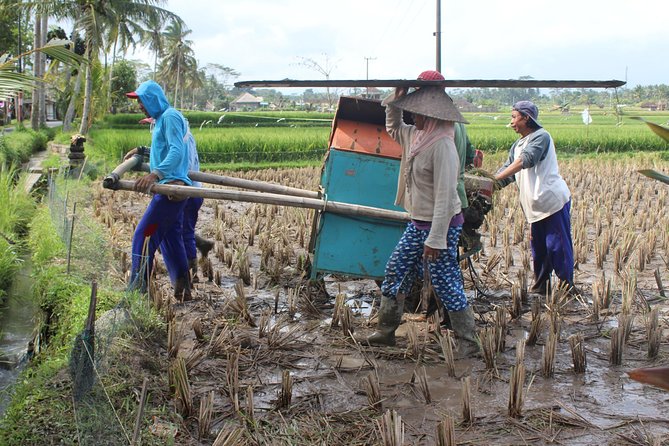
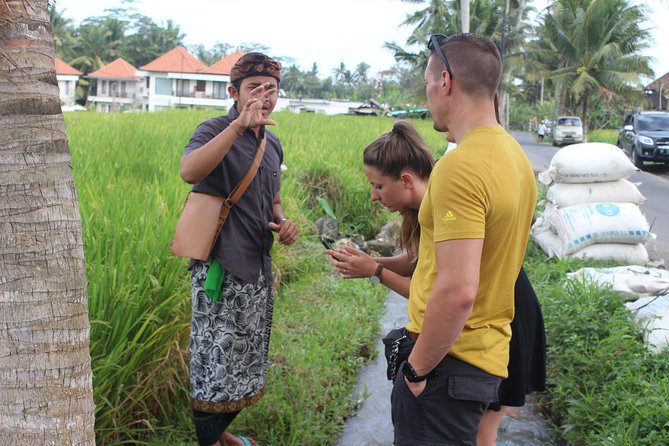
The route also includes a rice-paddy visit. Your guide explains how rice is grown in Bali, the types of rice used, and how long the crop takes to reach harvest. The rice fields provide a useful link between the ingredients on your plate and the work behind them.
You may also get views toward a volcano, depending on conditions and the exact stop. A camera is worth bringing. This is a short cultural and scenic stop, not a long walk through the fields, so wear normal clothing and practical shoes.
Afternoon option and the Balinese offering
The afternoon class follows a different program. Instead of the traditional market visit, it includes making a Balinese offering.
That change matters when choosing your start time. The morning option is better if you want markets, produce, fruit tasting, and rice fields. The afternoon option gives you a hands-on look at a religious and artistic practice. The available information does not state the exact class start times, so check the booking details carefully.
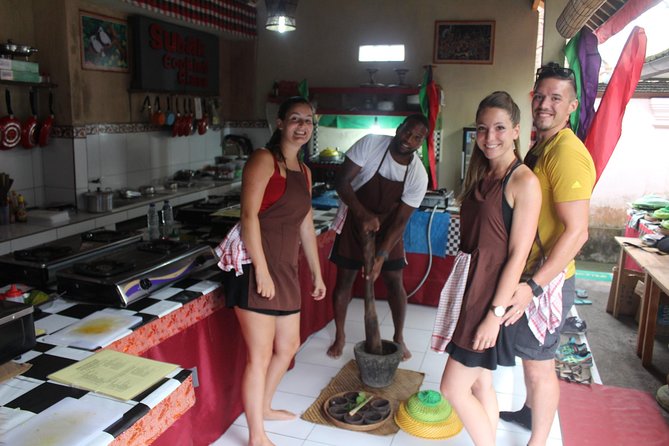
A local Balinese house is used as the setting for the cooking school. That makes the class feel less like a polished restaurant demonstration and more like a family-run food lesson. Several people describe the hosts as warm, funny, and welcoming, with chef instructors such as Yogi, Putu, and Gus named in the feedback.
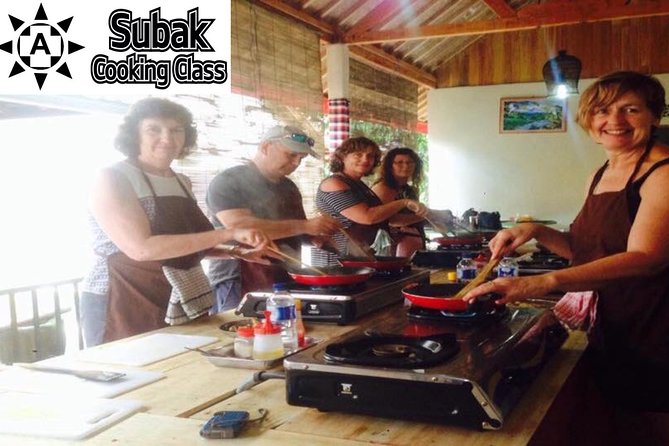
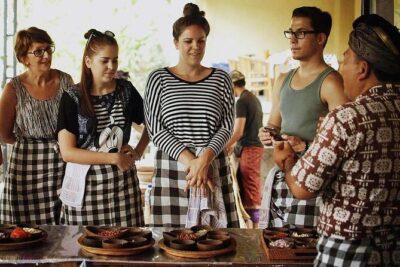
The teaching style appears informal but organized. You cook with a partner or in a shared group, while each person has a cooking station. The maximum group size is 14, so the class is not private, but it is small enough for instruction to remain fairly personal.
More Shopping Tours in Ubud
- PRIVATE Ubud Market Tour & Balinese Cooking Class with Putu
★ 5.0 · 125 reviews - Ubud Cooking Class with Optional Market Visit Pickup Included
★ 5.0 · 70 reviews - Ubud Experience ; Swing, Waterfalls, Art Market, Rice Terrace
★ 5.0 · 56 reviews
The meal at the end is part of the value
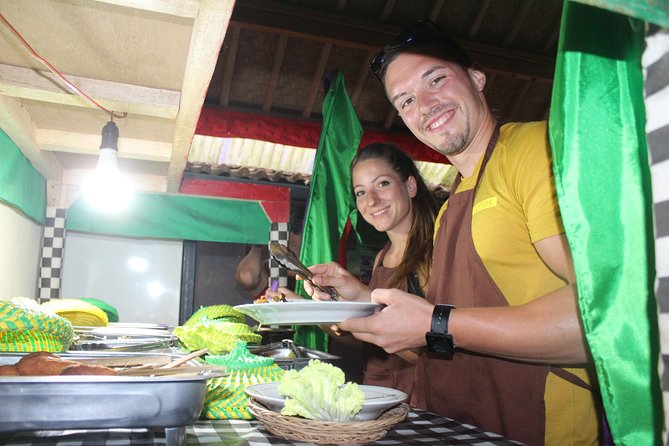
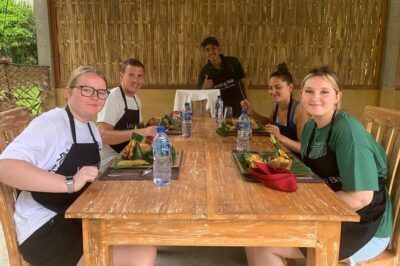
You do not simply taste one spoonful of each dish. The food you prepare becomes lunch or dinner, served buffet-style. With nine recipes on the table, you should arrive hungry.
The amount of food is one reason the $58 price can make sense. The cost covers the class, ingredients, equipment, recipe copies, bottled water, food tasting, the meal you cook, local hosting, and certain visits. You also receive transport within the stated Ubud pickup area.
For a couple or small group, this can compare well with paying for a cooking class, a market tour, and a substantial meal separately. The value is strongest if you care about learning techniques and want to repeat the dishes at home. It is less compelling if you only want a quick demonstration and a restaurant lunch.
There is also little waste at the table. If you cannot finish everything, the class may let you pack leftovers to take back to your hotel. That is useful because nine dishes create a very full meal, even for people with large appetites.
Spice levels can be adjusted. One participant prepared food with less spice while others chose more heat. Still, you should tell the chef early if you have a low tolerance for chili or strong seasoning.
Transport is the main practical caution
The listed meeting point is Ubud Palace on Jalan Raya Ubud. The activity ends back at the meeting point. Pickup and drop-off are included for the Ubud area only, and accommodation outside Ubud may require an extra charge.
Do not assume that a booking automatically includes a long-distance transfer. If you stay outside Ubud, request transport and confirm the additional cost before the day of the class. The experience information specifically advises bringing cash for extra transport.
The drive from central Ubud to the cooking site can be longer than expected. One account describes about 50 minutes from the pickup point. That is not a problem if you expect a village outing, but it can feel frustrating if you think you are booking a cooking class right in central Ubud.
The transport arrangement also deserves a little attention. Most accounts describe friendly drivers and smooth organization, but one report raised concerns about a driver and a small toll-road change dispute. I would confirm the pickup point, keep the booking reservation ready, and carry some cash for incidental transport charges.
The class itself lasts about five hours, but allow extra time for transfers. Morning traffic and the market stop can affect the schedule.
What to bring and how to choose your day
Bring your booking confirmation, camera, and cash if you are staying outside the included Ubud pickup area. Normal clothing is fine. The class provides cooking equipment and mineral water.
You do not need advanced cooking skills. The chef leads the group step by step, and the class is set up for beginners. This makes it suitable for families, couples, friends, and people who rarely cook.
The menu also works for mixed groups. One person can select vegetarian food while another chooses the regular menu, subject to how the booking is arranged. Tell the provider about dietary needs before arrival rather than waiting until ingredients are on the table.
For the best fit:
- Choose morning for the market, rice fields, fruit tasting, and a fuller introduction to local food.
- Choose afternoon if making a Balinese offering interests you more than market shopping.
- Choose the regular menu if you want chicken, coconut-based dishes, and chicken satay.
- Choose vegetarian if tofu and tempe are your preference.
- Choose this class if you want many recipes and a generous meal.
- Consider another option if you want a central-Ubud class with minimal driving.
The group size can reach 14 people. That is small compared with a large commercial tour, but you should not expect an intimate private lesson. The best experience will likely come from taking an active role, asking questions, and sharing the work at your station.
Recipes you can actually use at home
The recipe copies are a real benefit. Balinese dishes can seem difficult when you first encounter unfamiliar herbs, spice pastes, banana leaves, or palm sugar. A written recipe helps you adapt the techniques to ingredients available at home.
You may not find every Balinese ingredient in your local shop. Still, the class gives you a way to understand what each part contributes. Sambal matah, sweet tempe, vegetable soup, and klepon may be easier to recreate than a full restaurant-style curry.
The most useful takeaway may be the pattern rather than one exact recipe: prepare a spice base, balance heat with coconut or sweetness, add fresh herbs or vegetables, and serve several contrasting dishes together. That is a practical lesson you can use when cooking for friends and family.
You also gain cultural context. The market visit explains how ingredients are bought, the rice stop connects the meal to farming, and the house setting places the cooking within ordinary Balinese life. Those details give more meaning to the recipes than a recipe card alone.
Who should book this Ubud cooking class?
I would recommend it to food-focused visitors who want a full half-day activity rather than a short class. It suits you especially well if you enjoy eating many small dishes, learning by doing, and bringing recipes home.
Families can benefit from the broad menu and relaxed teaching style. Couples and friends can split tasks at a shared station. Vegetarians have a dedicated menu, which makes the experience easier to plan than a class that only offers meat dishes.
It may not suit you if you dislike long transfers, hot kitchens, shared workspaces, or strongly seasoned food. The class also asks for several hours of attention, so it is not an easy add-on between tightly timed Ubud activities.
The current listed price is $58. At that rate, I see the strongest value in the combination of the cooking lesson, nine preparations, market or offering activity, rice-paddy stop where applicable, meal, recipes, and local transport within Ubud. The price is harder to justify if you only want to watch a chef cook or if you are staying far outside Ubud and face a significant transfer surcharge.
Should you book it?
Book this experience if you want a hands-on introduction to Balinese food with plenty to eat and several cultural stops around the class. Select the morning route for the traditional market and rice fields, and confirm the pickup arrangements if you are outside Ubud.
I would treat the drive as part of the outing, not a minor transfer. With that expectation, the class offers a generous menu, friendly local instruction, and recipes you can use after Bali. For most food lovers, it is a strong choice. For anyone seeking a quick, central, highly polished demonstration, the long menu and village setting may feel like more than necessary.
FAQ
How long does the Balinese cooking experience last?
The activity lasts approximately five hours, not including any extra time that may be needed for pickup and return transport.
Where does the tour start?
The listed meeting point is Ubud Palace, at F7V7+72R, Jalan Raya Ubud No. 8, Ubud, Bali. The activity ends back at the meeting point.
Is pickup included?
Pickup and drop-off are included for the Ubud area only. If you stay outside Ubud, additional transport charges may apply, and you should request this service in advance.
Does every class include a traditional market visit?
No. The traditional market visit is provided with the morning class only. The afternoon option includes making a Balinese offering instead.
What dishes are included?
The regular menu includes Balinese vegetable soup, chicken with coconut milk and spices, sweet fried tempe, chicken sate lilit, chicken pepes, lawar, sambal matah, base gede spice paste, and klepon cake, served with white rice. The vegetarian menu substitutes tofu and tempe dishes for the chicken recipes.
Is a vegetarian menu available?
Yes. You can choose a vegetarian menu featuring tofu, tempe, vegetable soup, lawar, sambal matah, base gede, klepon, and white rice.
What is included in the price?
The price includes bottled water, cooking equipment, food tasting, the lunch or dinner you prepare, recipe copies, a driver or guide, a local guide or host, and the listed market, rice-paddy, or offering activity depending on the option selected.
Can I cancel for a refund?
Yes. You can cancel at least 24 hours before the experience start time for a full refund. Cancellations or changes made less than 24 hours before the start time are not accepted for a refund.
Just added around Ubud
- Ubud private tours★ 5.0 · 4 reviews
- Ubud Village, Tegalalang Rice Terrace Swing, Tirta Empul Temple and Waterfafall★ 5.0 · 7 reviews
- Ubud Instagram: Waterfall Tours★ 5.0 · 57 reviews
- Ubud Waterfalls and Rice Terraces Private Day Tour★ 5.0 · 12 reviews
- Bali Half Day-Tour: Ubud Night Trip Packages★ 5.0 · 5 reviews
- Ubud VW Safari Bali Tour – Volkswagen Classic Car Trip★ 5.0 · 21 reviews
- Hidden Ubud: Waterfalls & Sacred Temples★ 5.0 · 6 reviews
- Ubud Full Day Tour Waterfall Monkey Forest Rice Terrace★ 5.0 · 4 reviews
Cooking Classes, compared.
Private Authentic Balinese Cooking Class in Ubud at Putu’s Home
Read our review →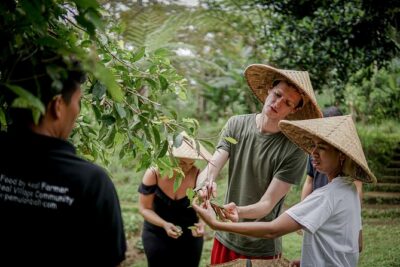
Learn to cook Indonesian food at Gili Cooking Classes Trawangan
Read our review →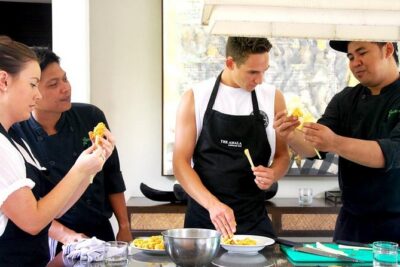
Private Balinese Cooking Class in Ubud with Dewa with Transfers
Read our review →Browse the lists this tour appears in