
Reviewed · COOKING CLASSES
Balinese Cooking class with traditional morning market visit
The best part of this Ubud experience happens before the cooking begins. You visit a local morning market, taste or inspect unfamiliar fruit, herbs, vegetables, meat, and spices, then use what you have seen in a hands-on class in Laplapan village. The market gives the food a setting and a purpose.
I like the small maximum group of eight, which leaves room for questions and personal help. I also like the canang offering lesson, since it adds a cultural layer that most food classes skip. The one thing to consider is the six-hour schedule: this is a full morning and early afternoon, not a quick class squeezed between sightseeing stops.
Key points at a glance
- Market first: Choose ingredients and learn how local produce is used before cooking.
- Laplapan village setting: The class takes place in traditional village surroundings near Ubud.
- Canang offering lesson: Make a Balinese offering basket before starting the recipes.
- Several dishes: Prepare starters, main courses, and dessert, with some sessions covering as many as nine dishes.
- Personal teaching: Wayan, Dewa, Putu, and other local staff guide the class and answer questions.
- Useful logistics: Hotel pickup, air-conditioned transport, equipment, taxes, and free cancellation up to 24 hours before departure are included.
Why the market visit matters
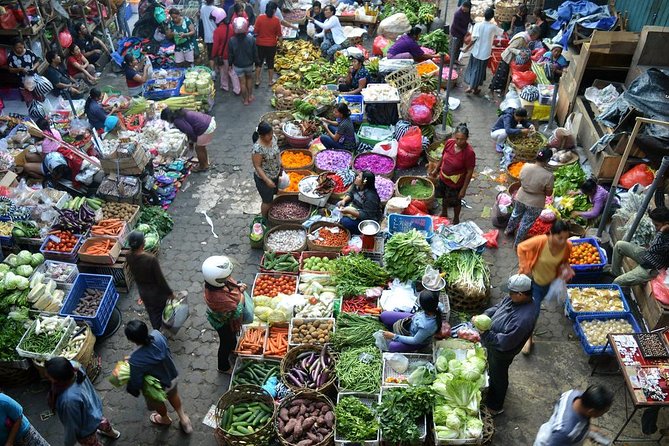
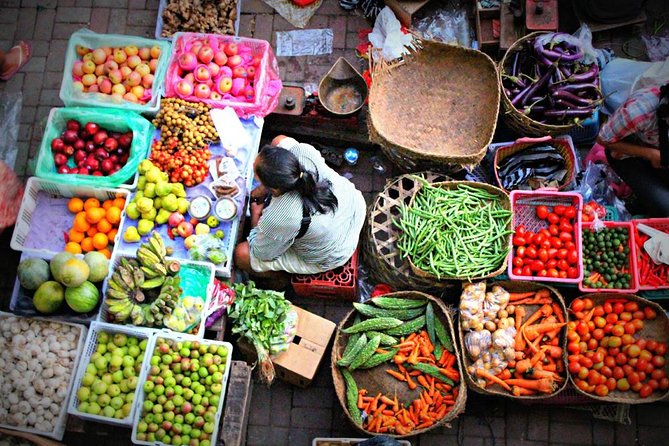
Many cooking classes begin with ingredients already lined up on a worktable. This one begins at a fresh food market, where you see the produce in its everyday setting. That small change makes a difference. Instead of simply being told that a certain herb or spice belongs in a dish, you can see how it is sold and ask how it is used at home.
The market visit is described as a chance to choose vegetables, herbs, meat, and spices for the class. You may also be offered small tastes of fruit, sweets, or other unfamiliar foods. One particularly useful part of the visit is learning which products are local and which arrive from elsewhere.
The stop is not presented as a long shopping expedition. It is a brief, guided introduction before the class, so you should expect explanation and tasting rather than hours of independent browsing. That is a fair trade for a six-hour program that also includes transport, a cultural activity, cooking, and lunch.
Your guide at the market may be Wayan, Putu, or another member of the local team. The exact host can vary, but the teaching style is clearly personal. Guides answer questions, explain ingredients, and help you make sense of foods that can look very different from their supermarket versions at home.
More Cooking Classes in Bali
- Balinese Farm Cooking Class by Pemulan Bali
★ 5.0 · 410 reviews - Jambangan Bali Cooking Class
★ 5.0 · 142 reviews - Chef Bagus Balinese Indonesian Food Cooking Class
★ 5.0 · 89 reviews
The ride from your hotel to Laplapan
Pickup is offered from your hotel, followed by air-conditioned transport to the market and cooking workshop. This is a practical advantage in Bali, where getting from one part of the Ubud area to another can take time and road conditions can make a short distance feel longer.
The transport also lets you treat the morning as one connected outing. You do not need to arrange a separate taxi to the market, find the village workshop, or work out how to return afterward. A driver named Awan is specifically praised for explaining places passed along the way, though your driver may be someone else.
Pickup has also been used for people staying as far away as Sanur. That suggests a wider service area, but you should confirm your exact hotel location when booking. The stated tour length is about six hours, and a distant pickup can make the day feel longer once driving time is added.
Arriving in Laplapan village
After the market, the group continues to Laplapan, a traditional village near Ubud. The arrival includes a welcome from local people, followed by time in a clean cooking space surrounded by rural Ubud scenery.
This setting helps separate the activity from a standard demonstration kitchen. You are not only watching a chef prepare food in a commercial room. You are cooking in a village environment and meeting the people who host the class.
The reviews describe the welcome as warm and relaxed, with a drink and snack provided before cooking begins. Those details are not the main reason to book, but they help the class feel like a hosted visit rather than a formal lesson.
The setting is also useful for families. Children aged six, eight, and nine have taken part successfully, and the cooking is structured so that people with different skill levels can contribute. You should still remember that cooking involves knives, heat, and close attention, so children need adult supervision.
Making a canang offering
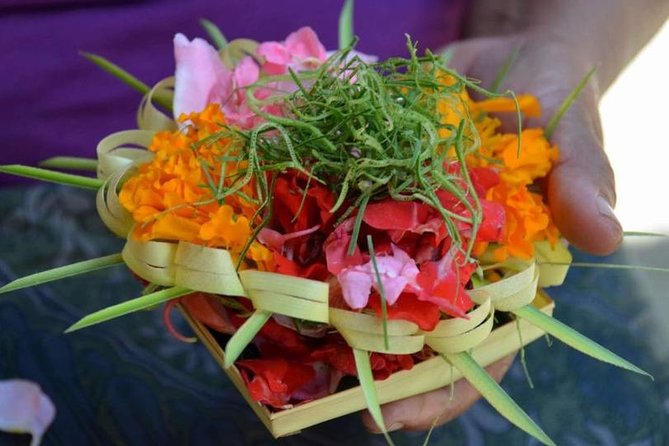
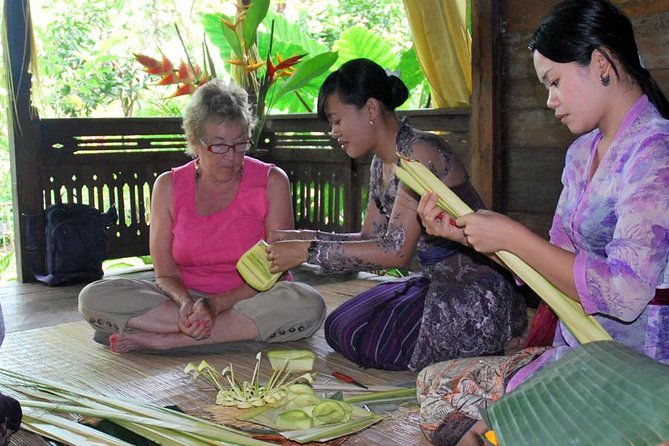
Before the recipes, you learn how to make a canang, the small woven offering basket used in Balinese Hindu practice. The class also explains the equipment and process connected with making offerings.
This is one of the strongest parts of the experience for anyone who wants cultural context, not just food. A canang is not simply a decorative craft project. Making one gives you a practical introduction to a daily religious tradition and helps explain the small offerings you see around Bali.
The lesson is hands-on. You make the offering yourself rather than only watching someone else do it. It is a modest activity, but it slows the morning down in a useful way and gives the cooking class a clearer connection to village life.
If your main goal is speed, this section may feel like an addition to an already full itinerary. If you want to understand more about Bali beyond restaurants and temples, it is a worthwhile use of time.
More Shopping Tours in Bali
- Balinese Cooking Class with Traditional Market Tour
★ 5.0 · 66 reviews - Bali Food Tour: Savor Street Food and Night Market Adventures
★ 5.0 · 46 reviews - Bali Arts shopping with temples-waterfall visit.
★ 5.0 · 6 reviews - Half Day Bali Shopping Art Village Private Tour
★ 5.0 · 4 reviews
Cooking several Balinese dishes
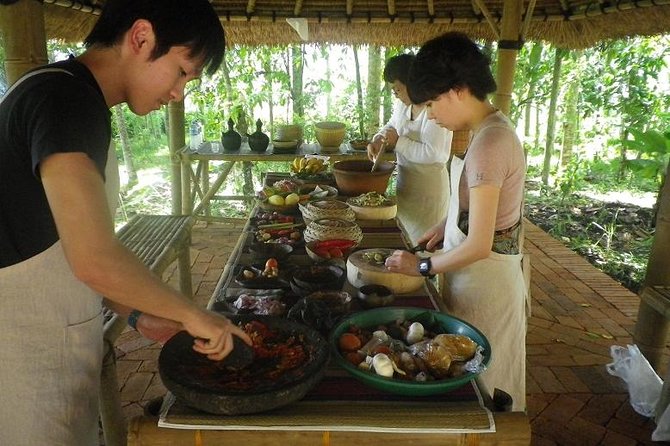
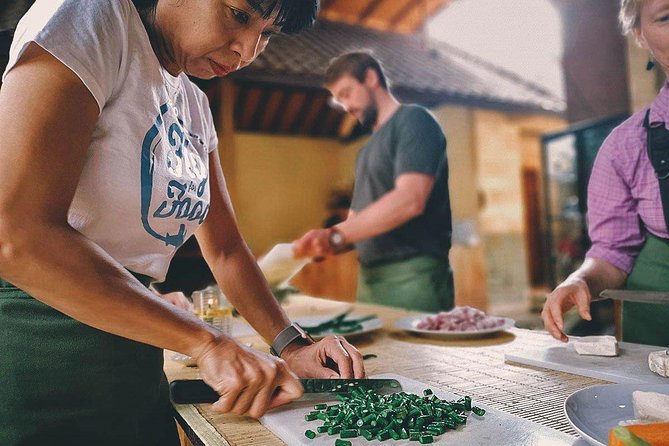
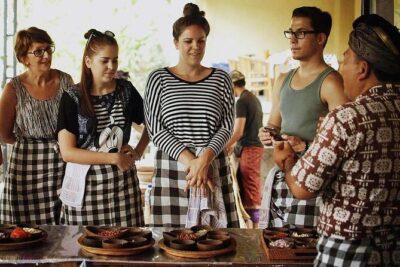
The main class covers traditional techniques and local recipes, with an instructor providing guidance as you prepare starters, main courses, and dessert. You work alongside the other participants, so the class has a social feel without being a large workshop.
The amount of food is a strong point. Some sessions include nine dishes, while another description refers to a five-course set. The precise menu can vary, but you should expect several preparations rather than one recipe repeated in different forms.
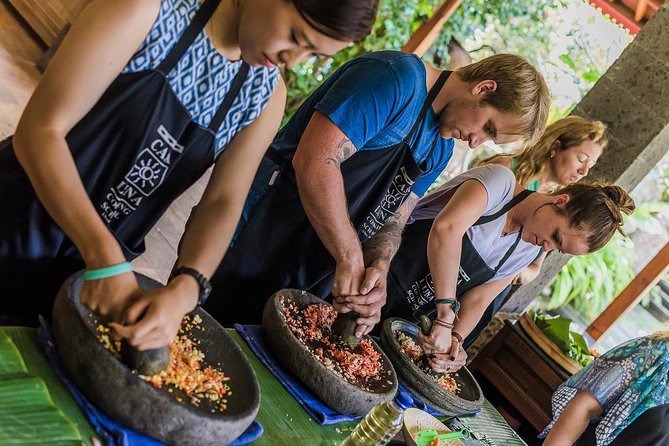
The group may divide tasks, yet the teaching remains hands-on. You could chop, pound, mix, season, or cook, depending on the dish and the way the class is organized that day. Some preparation is done in advance to keep the schedule moving, but the class still gives you plenty to do.
That balance matters. If every ingredient were prepared from scratch in front of you, the six-hour program could become tiring. If everything were prepared before you arrived, you would learn very little. Here, advance preparation helps the class cover a broad menu while leaving you involved in the key steps.
Wayan is praised for patient instruction and clear answers, while Putu is described as funny, welcoming, and particularly good with children. Dewa and Wayan are also associated with the cooking school. The names may help you know who to look for, but the specific instructor is not guaranteed.
The food can be adapted for vegetarian participants, according to the information provided. If you have dietary requirements, tell the operator ahead of time and repeat your needs when you arrive. The available information confirms vegetarian flexibility, but it does not promise every allergy or special diet can be accommodated.
Eating what you prepare
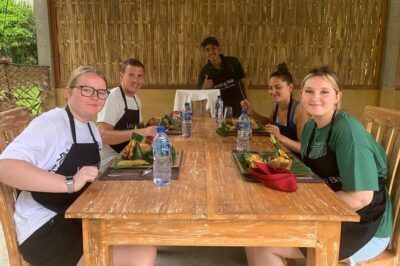
The class ends with a sit-down meal made from your work. This is more satisfying than receiving a plate of food prepared entirely by the chef, since you can connect each dish with the techniques used to make it.
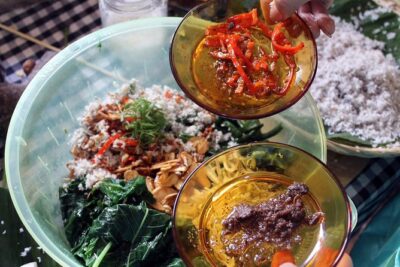
The meal is described as generous, attractive, and delicious, but the real value is educational. You taste the balance of herbs, spices, vegetables, and sauces after learning how each part was handled. That makes it easier to remember the recipes when you return home.
Several participants receive recipes to recreate the food later. A recipe book is also mentioned as part of one class, although you should confirm exactly what materials are supplied with your booking. Either way, the recipes make the experience more useful than a meal you can only remember through photographs.
The shared meal also works well for solo visitors. You meet other people during the class, take on tasks together, and have an easy conversation while eating. Families and couples can enjoy it too, since everyone can take part at a different level.
What the $35 price includes
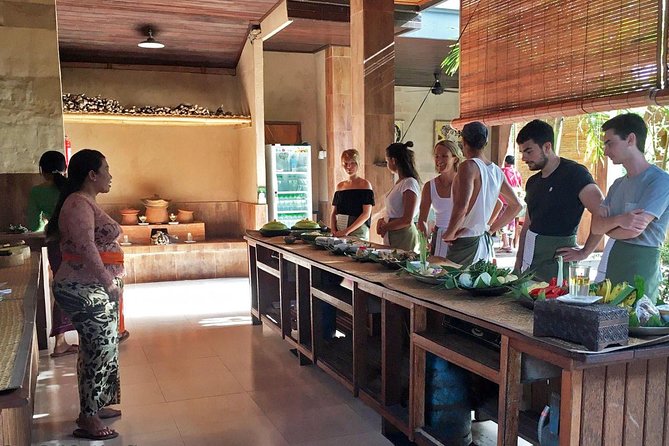
At $35 per person, this is a strong value if you use the full package. The price covers about six hours, hotel pickup, air-conditioned transport, the market visit, the offering activity, cooking equipment, cooking class fees, and taxes.
The value comes from the combination. A market tour alone would be shorter. A cooking class alone might cost less, but it would not include the ride, village visit, or cultural lesson. You are paying for a full morning and early afternoon with several connected parts.
Personal expenses are not included. That means you should budget separately for anything you choose to buy at the market or elsewhere. The included information does not state that market purchases are part of the class price.
A maximum of eight people keeps the class small enough for direct help. A private lesson may happen if no one else books that time, but you should not book expecting a private class. The standard format is a small group.
Who will enjoy this class most
This is a good match for food-focused visitors who want more than restaurant recommendations. You learn how ingredients appear at the market, how offerings are made, and how several dishes come together at the cooking station.
It also suits first-time cooking-class participants. The instructors guide you through the work, and the class is organized so you can participate without already having advanced kitchen skills. You do not need to know Balinese cooking before arriving.
Families can enjoy the format, especially if children are interested in food and crafts. Solo visitors also have a natural way to meet people. Couples may like the mix of shared activity and a meal at the end.
I would think twice if you dislike early starts, market environments, group cooking, or a long half-day schedule. The market is part of the point, so this is not the right choice if you want a quiet private lesson with no time spent outside the kitchen.
The class also may not suit someone who wants a tightly fixed menu. The descriptions indicate several dishes and vegetarian options, but they do not provide one permanent menu for every date. Ask the operator if a particular dish matters to you.
Practical planning tips for the morning
Wear clothes you can cook in and shoes that are comfortable for walking through a market. The information does not specify a dress code, but a market visit and kitchen session call for practical clothing rather than anything delicate.
Plan on the full six-hour window. Pickup, driving, the market, the offering lesson, cooking, and the final meal all take time. Do not schedule a major attraction immediately afterward unless you are comfortable allowing extra time.
The air-conditioned vehicle is included, which helps with the ride. The cooking location is described as clean and comfortable, but the class still involves standing, food preparation, and active participation.
You receive booking confirmation at the time of booking. Free cancellation is available if you cancel at least 24 hours before the start time. Cancellations or changes made less than 24 hours before departure are not refunded or accepted, and the cut-off follows local time.
Should you book this Ubud cooking class?
I would book it if you want a practical introduction to Balinese food and culture in one well-filled morning. The strongest reasons are the market visit, the hands-on canang lesson, the small group, and the chance to eat several dishes you helped prepare.
The $35 price is especially appealing because transport, equipment, taxes, and the meal are built into the experience. Just confirm pickup coverage, dietary needs, and the menu if those details matter to you.
Skip it if you want a short activity, a fixed dish list, or a private kitchen lesson by default. For most food lovers, families, solo visitors, and first-time cooks in Ubud, this is an easy recommendation.
FAQ
How long does the Balinese cooking class last?
The experience lasts approximately six hours, including hotel pickup, the market visit, the village activity, cooking, and the final meal.
How much does the experience cost?
The listed price is $35 per person.
Is hotel pickup included?
Yes. Pickup is offered from your hotel, and air-conditioned transport to the market and workshop is included.
How many people can join the class?
The activity has a maximum of eight travelers.
What happens at the morning market?
You visit a local fresh food market, learn about Balinese ingredients, and choose vegetables, herbs, meat, and spices for the cooking class. Tasting some local foods may also be part of the visit.
Where does the cooking class take place?
After the market, you continue to Laplapan village, where the cooking workshop takes place in traditional village surroundings near Ubud.
Do you learn to make a Balinese offering?
Yes. Before cooking, you learn about the process of making canang and other offering equipment, then make an offering basket yourself.
Is a vegetarian option available?
Vegetarian options are available. If you have other dietary requirements, contact the operator before booking to confirm what can be accommodated.
What happens if you need to cancel?
You can receive a full refund if you cancel at least 24 hours before the experience starts. Cancellations or changes made less than 24 hours before the start time are not accepted, and the local time cut-off applies.
Just added around Bali
- Bali Parasailing Adventure, Jet Ski, Banana Boat , Donat Boat, with Transport★ 5.0 · 11 reviews
- 1.5 Hours Bali ATV Quad Tour★ 5.0 · 8 reviews
- ATV Quad Bike Through Tunnel and Waterfall★ 5.0 · 3 reviews
- Bali Driver Recommendation★ 5.0 · 7 reviews
- Bali Private Custom Tour★ 5.0 · 12 reviews
- Bali Cooking Class Experience with All Inclusive★ 5.0 · 12 reviews
- Penglipuran Village Waterfall Swing Private Guided Tour★ 5.0 · 13 reviews
- Bali Sightseeing Car Hire with English-speaking Guide and Driver★ 5.0 · 24 reviews
Cooking Classes, compared.
Private Authentic Balinese Cooking Class in Ubud at Putu’s Home
Read our review →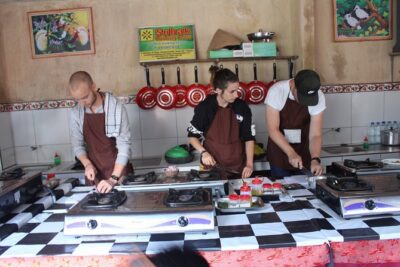
Balinese Ubud cooking school (9 Dish Cooking and Market Tour)
Read our review →
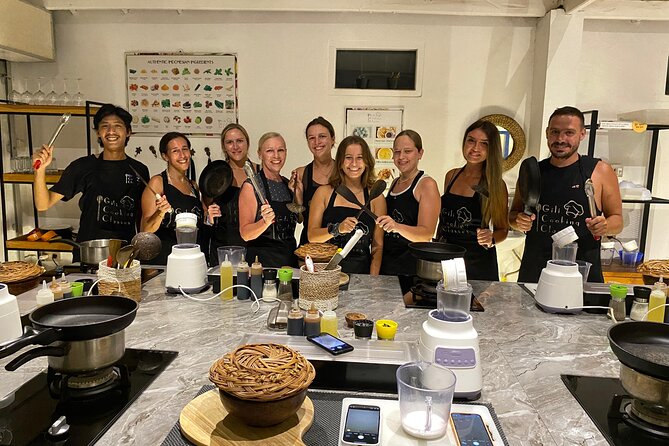
Learn to cook Indonesian food at Gili Cooking Classes Trawangan
Read our review →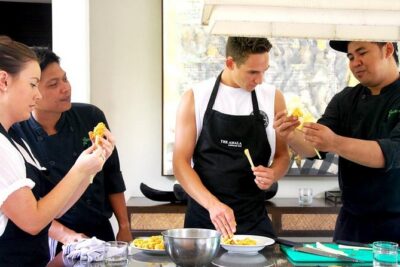
Browse the lists this tour appears in