
Reviewed · COOKING CLASSES
Jambangan Bali Cooking Class
The best part of this Ubud experience is that cooking begins before you reach the kitchen. You may visit a traditional market, see rice farmers at work, then enter a Balinese family compound where the class takes place. I especially like the market ingredient shopping and the chance to eat food you prepared yourself in the family garden.
I also like the small cultural touches, from making a simple Hindu offering to trying bamboo rindik music. The main drawback is timing: an evening class may not include the market because it closes earlier, and some afternoon or evening schedules may substitute a coffee and tea stop instead.
Key Points

- Shop for ingredients in a traditional market: Morning timing gives you the best chance to see fresh herbs, spices, meat, and vegetables selected for the meal.
- Cook in a Balinese family home: The open kitchen and garden meal offer more personal contact than a restaurant visit.
- Prepare several dishes yourself: Past classes have included as many as eight dishes, with recipes provided afterward.
- Add hands-on cultural activities: You may learn simple offering-making, see coconut oil processing, and play rindik, a bamboo instrument.
- Choose lunch or dinner: Lunch is the better choice if the market matters most, while later sessions may include another local stop.
- Good value at $34: Five hours, lunch, cultural activities, and guided cooking make this a full half-day experience rather than a quick demonstration.
Why This Cooking Class Feels Different
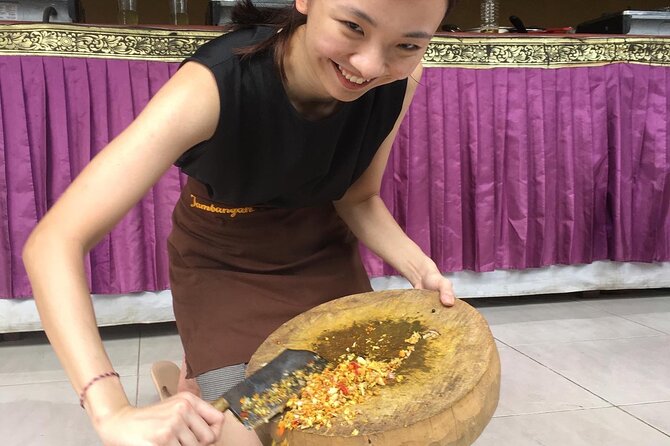
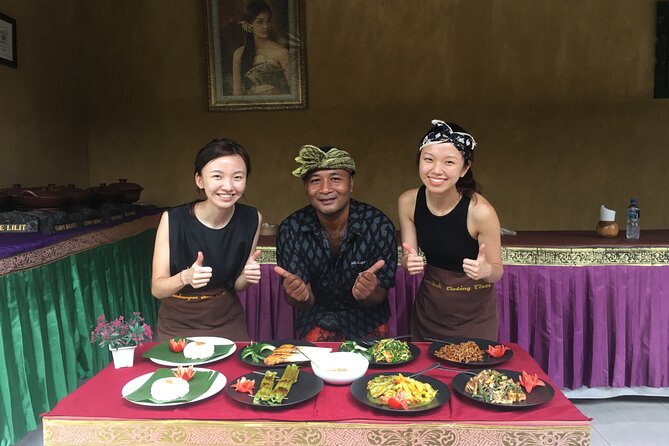
Many cooking classes give you a recipe, a cutting board, and a seat at a shared table. Jambangan Bali Cooking Class begins with the world behind the recipe. You see where the ingredients come from, learn how they fit into Balinese food, and then cook them in a local home.
That change of setting matters. A restaurant can show you the finished dish, but it cannot easily explain the daily Hindu offering made at home, the work involved in processing coconut oil, or the layout of a Balinese family compound. Here, those details are part of the day.
The class lasts about five hours, so you should treat it as a main activity, not a short add-on between temple visits. At the end, you sit down for lunch or dinner in the garden and eat the dishes you helped make.
The classes are conducted in English by Balinese cooks familiar with local food and culture. Hosts named in past sessions include Wayan, Made, and Putu. The teaching style can vary by host, but the central idea remains the same: you cook the full menu rather than watching someone else do all the work.
More Cooking Classes in Bali
- Balinese Farm Cooking Class by Pemulan Bali
★ 5.0 · 410 reviews - Balinese Cooking class with traditional morning market visit
★ 5.0 · 161 reviews - Chef Bagus Balinese Indonesian Food Cooking Class
★ 5.0 · 89 reviews
Starting at the Market in Kelabang Moding
For a morning class, the day begins at a traditional market. This is one of the strongest reasons to choose the earlier departure. You can help select fresh herbs, spices, cuts of meat, and vegetables before those ingredients appear in the kitchen.
The market visit gives you useful context. Balinese cooking depends heavily on fresh aromatics and spice mixtures, and a guide can point out what each ingredient is used for. You do not simply hear a list of names. You see the raw materials in their normal setting, before they are cleaned, chopped, and turned into a finished dish.
This is also the best part of the experience for curious eaters who want more than a meal. You can compare what is familiar with what is new, ask about substitutions, and understand why a dish tastes different when made with local ingredients.
There is one important timing issue. The market is not available in the evening because it closes earlier. An evening class may replace the market visit with a small plantation stop where you sample different coffees and teas, including coffee luwak. That can be pleasant, but it is a different experience. If market shopping is your priority, book the morning class.
Rice Fields and the Route to the Home
After the market, the route can include a look at rice fields and the daily work of local farmers. The stop is not presented as a long agricultural tour, but it helps connect the ingredients to the countryside around Ubud.
This brief look at farming adds value because rice is not just a side dish in Bali. It is part of daily life, local work, and religious practice. Seeing farmers at work before cooking makes the meal feel tied to the place instead of separated from it.
The exact order can change with the schedule. Some afternoon sessions have included a visit to a coffee plantation and a look at family rice paddies on the way to the cooking location. Keep your expectations flexible, since the market, rice-field visit, and plantation stop are not all guaranteed in every time slot.
Inside the Balinese Family Compound
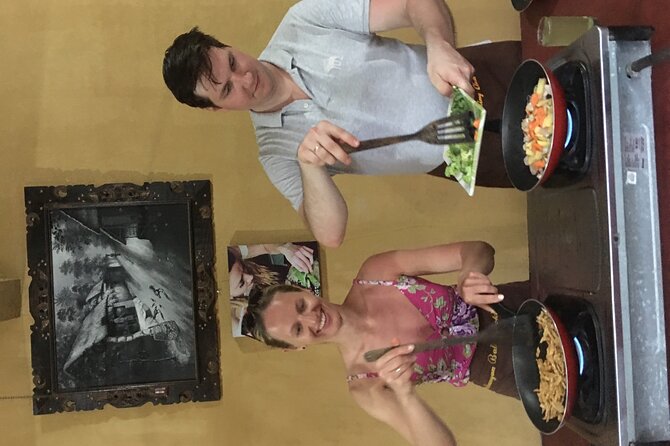
At the home, your host introduces you to the compound and explains aspects of family life. The cooking takes place in an open kitchen, which keeps the activity informal and lets you see how the food is prepared from start to finish.
This is where the class becomes more personal than a standard cooking school. You are not only learning how to combine ingredients. You are seeing the setting in which food, family routines, music, and religious practice sit side by side.
The home visit also makes the experience suitable for families. Children can take part in simple food preparation and cultural activities, while adults get a closer look at daily Balinese customs. The class is designed for food lovers, but you do not need advanced cooking skills to take part.
You should remember that this is a working family home, not a staged attraction. That is part of its appeal, but it also means the pace and presentation may feel more relaxed than a highly polished culinary school. Come ready to listen, help, and adapt to the rhythm of the household.
A completely different kind of day out in Bali:
- Bali Full-Day Traditional Village Sightseeing Trip All Inclusive
★ 5.0 · 3,069 reviews - ️ Bali Instagram Tour: The Most Famous Spots (Private & All-Inclusive)
★ 5.0 · 2,857 reviews - Full-Day Tour to Water Temples and UNESCO Rice Terraces in Bali
★ 5.0 · 2,539 reviews - ATV Quad Bike Through Tunnel and Waterfall in Bali
★ 5.0 · 2,098 reviews
Cooking Several Dishes in an Open Kitchen
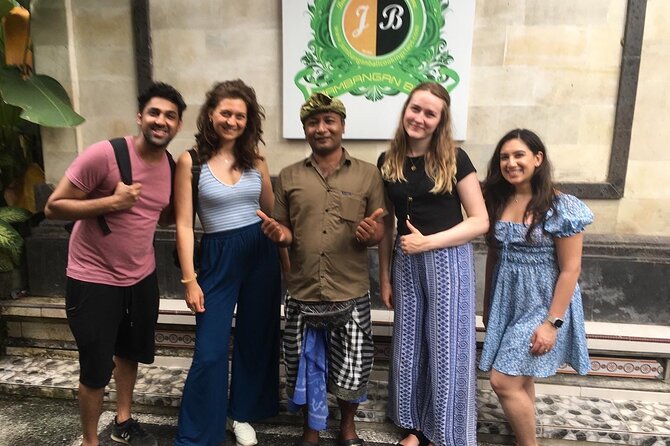
The recipes are made by you, with guidance from the Balinese cooks. Previous menus have included as many as eight dishes, so this is more than learning one curry or a single sambal.
The exact menu can vary, but the class is built around a full meal. You handle the ingredients, follow the cooking steps, and then sit down to eat the results. That hands-on format makes it easier to remember what you learned when you return home.
A useful feature is the recipe handout provided after class. You can recreate the dishes later instead of leaving with only a photograph and a vague memory of the ingredients. The class also covers alternatives when certain ingredients are unavailable, which helps if you cook Balinese food outside Indonesia.
The pace is likely to feel busy when several dishes are prepared at once. That is good for people who want plenty of practice, though it may be less relaxing than a class focused on only two or three recipes. If you want to taste a broad range of Balinese food and learn practical methods, the fuller menu is a plus.
One participant with a chicken allergy was able to take part after the hosts arranged suitable alternatives. That is encouraging, but you should still communicate dietary needs clearly when booking. The available information confirms that an alternative was handled successfully, not that every dietary request can automatically be met.
Hindu Offerings, Coconut Oil, and Rindik Music
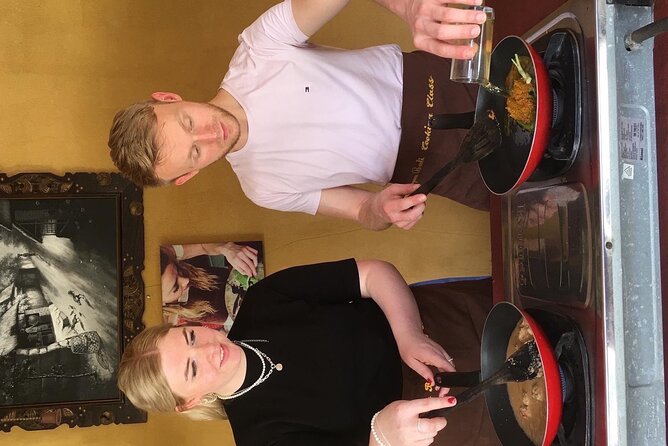
The cultural activities are not filler between cooking steps. They show how food connects with Balinese household life.
You may see a daily Hindu offering and learn how to make a simple offering yourself. These small offerings are part of everyday religious practice, and learning about them helps explain why flowers, rice, and prepared food appear in homes and temples throughout Bali.
You can also see traditional coconut oil processing. This is a useful demonstration because coconut is important in Balinese kitchens, but the finished bottle of oil hides the work behind it. The activity gives you a practical look at an older household process.
Music adds another lighthearted moment. Rindik is made from bamboo, and you may get a chance to play it. A short music lesson can be especially welcome after chopping, stirring, and standing in the kitchen.
These activities are simple rather than elaborate performances. That is exactly why they work. You are given a small role in ordinary practices instead of watching a large cultural show built for an audience.
Eating in the Garden
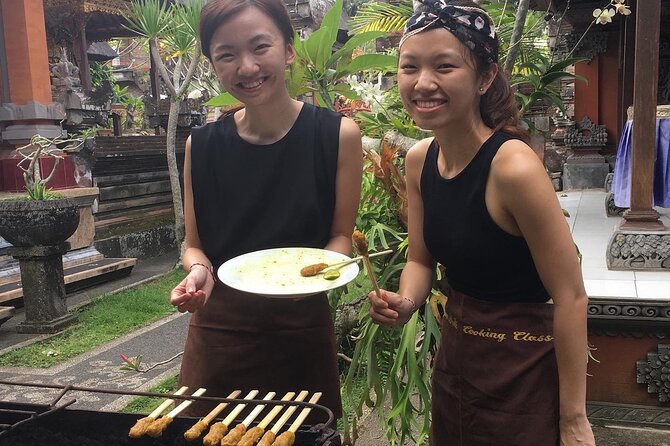
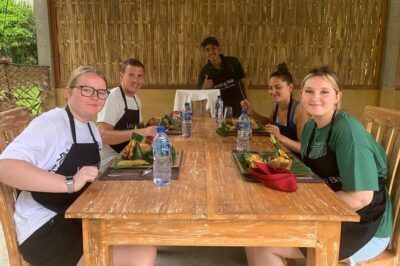
Once the dishes are ready, you eat the meal in the garden. Lunch is included, while alcohol is not. The garden setting gives the meal a calm finish after the market and kitchen work.
I like this part because the meal has a clear connection to the morning. You selected or saw the ingredients, helped prepare them, and now taste the final result. That sequence makes the food more memorable than ordering the same dishes in a restaurant.
The hosts are also part of the meal experience. Past sessions have been led by friendly family members who explain the home and keep the class relaxed. Wayan, Made, and Putu are among the names associated with different classes, so you may meet a different teacher depending on the date.
Do not expect a restaurant-style service format. You are there to eat the food you made, share the setting with the household, and continue the conversation. The personal quality is the point.
Is $34 Good Value for Five Hours?
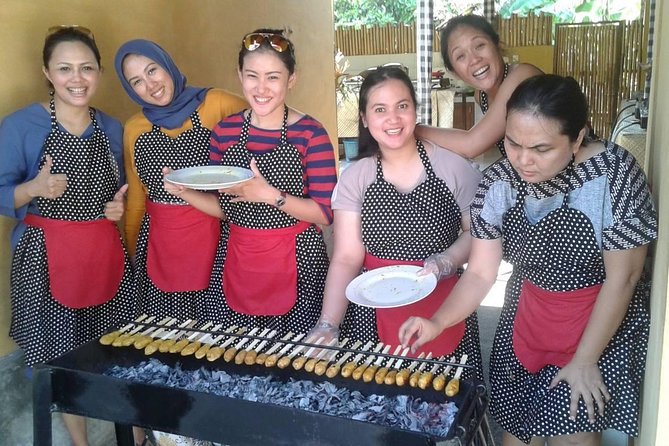
At $34, this is a strong value for a five-hour activity in Ubud. The price includes the class and lunch, while the experience also folds in market or countryside visits, home-based cultural activities, and recipes to use later.
The value is especially good if you would otherwise pay separately for a meal, a market tour, and a cultural demonstration. You are not simply buying food. You are paying for access to a family setting and for guided participation.
The comparison changes if you want a formal culinary lesson with professional kitchen equipment or a certificate. That is not what this experience offers. The open-air home kitchen, flexible teaching style, and cultural contact are more important than polished facilities.
A maximum of 15 participants keeps the class from becoming enormous, though it is not a private lesson. Smaller groups may feel more personal, while a full group can create a livelier shared meal. If you need one-on-one instruction, ask about the group size for your date.
Choosing Morning, Afternoon, or Evening
Choose the morning class if you care most about the market. You are more likely to see the ingredient shopping, the rice-field activity, and the full connection between market produce and the finished meal.
An afternoon class may still include the home, rice paddies, and cooking, and it can sometimes include a coffee plantation visit. It is a good choice if your schedule does not allow an early start.
An evening class offers the same general cooking and cultural focus, but you should not assume the traditional market will be open. The plantation and coffee or tea tasting may replace it.
The choice is simple:
- Morning: best for the market and a fuller start to the day.
- Afternoon: useful for a later schedule and possible plantation visit.
- Evening: suitable if dinner timing matters more than market shopping.
The activity returns to the meeting point at Warung JB Jambangan Bali, at Jln Kelabang Moding No. 713, Tegallalang, Ubud. The published meeting point is the place to plan around. One past session included hotel pickup, but pickup should not be treated as a standard promise unless confirmed for your booking.
Who Will Enjoy This Most?
This class suits you if food is one of the main reasons you came to Bali. It is also a good pick for families, couples, and anyone who wants contact with local life without signing up for a demanding trek or a long formal tour.
It works particularly well for first-time visitors to Ubud because it combines several experiences in one half-day: market shopping, rural views, a family home, cooking, a meal, and small cultural activities.
You may want another kind of class if you prefer a luxury kitchen, strict timing, or a narrow focus on advanced technique. The setting is informal and family-based. Its strength is personal contact, not fine-dining presentation.
The experience has a 99 percent recommendation rate and a five-star rating based on 142 reviews. Those numbers suggest very strong satisfaction, but your enjoyment will still depend on choosing the right time and being comfortable with a relaxed home setting.
Practical Details Before You Book
Confirmation is provided at booking, and the activity is near public transportation. The experience requires good weather. If poor weather forces a cancellation, you can receive a different date or a full refund.
You can cancel for a full refund up to 24 hours before the start time. Changes or cancellations inside that 24-hour window are not accepted for a refund, and cut-off times follow local Bali time.
Wear something comfortable for a kitchen setting and plan for a substantial half-day. The supplied information does not give a specific dress code, footwear rule, or menu for each date, so ask ahead if those details matter to you.
Should You Book Jambangan Bali Cooking Class?
Book it if you want to understand Balinese food through the people and places behind it. The strongest version of the day is a morning class with the market, rice fields, family home, open-air cooking, offering-making, rindik music, and a garden meal.
The main decision is timing. If you choose dinner, you may lose the market and receive a coffee and tea plantation visit instead. That is not a bad substitute, but it changes the focus.
At $34, the five-hour format gives you a lot for your money. I would choose this class for its home setting, broad menu, recipe handout, and small cultural activities. I would skip it only if you want a formal cooking school or a guaranteed market visit at night.
FAQ
Where does the Jambangan Bali Cooking Class meet?
The meeting point is Warung JB Jambangan Bali, Jln Kelabang Moding No. 713, Kelabang Moding, Tegallalang, Ubud, Bali 80571, Indonesia.
Where does the activity finish?
The activity ends back at the meeting point.
How long does the cooking class last?
The experience lasts approximately five hours.
What does the activity cost?
The listed price is $34.
Is lunch included?
Yes. Lunch is included in the experience.
Is alcohol included?
No. Alcohol is not included.
Can I choose between lunch and dinner?
Yes. The experience offers a lunch or dinner class.
Does every class visit the traditional market?
No. Morning timing is best for the market. An evening class may not include it because the market closes, and a plantation visit with coffee and tea tasting may be offered instead.
How many people can join the class?
The activity has a maximum of 15 travelers.
What happens if bad weather cancels the activity?
You can be offered a different date or a full refund if poor weather causes the cancellation.
Just added around Bali
- Bali Parasailing Adventure, Jet Ski, Banana Boat , Donat Boat, with Transport★ 5.0 · 11 reviews
- 1.5 Hours Bali ATV Quad Tour★ 5.0 · 8 reviews
- ATV Quad Bike Through Tunnel and Waterfall★ 5.0 · 3 reviews
- Bali Driver Recommendation★ 5.0 · 7 reviews
- Bali Private Custom Tour★ 5.0 · 12 reviews
- Bali Cooking Class Experience with All Inclusive★ 5.0 · 12 reviews
- Penglipuran Village Waterfall Swing Private Guided Tour★ 5.0 · 13 reviews
- Bali Sightseeing Car Hire with English-speaking Guide and Driver★ 5.0 · 24 reviews
Cooking Classes, compared.
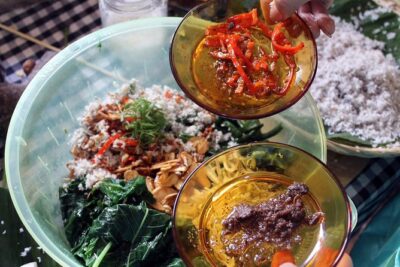
Private Authentic Balinese Cooking Class in Ubud at Putu’s Home
Read our review →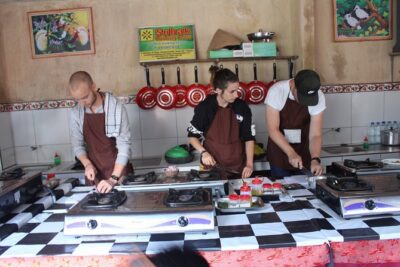
Balinese Ubud cooking school (9 Dish Cooking and Market Tour)
Read our review →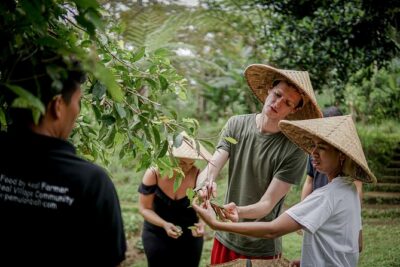
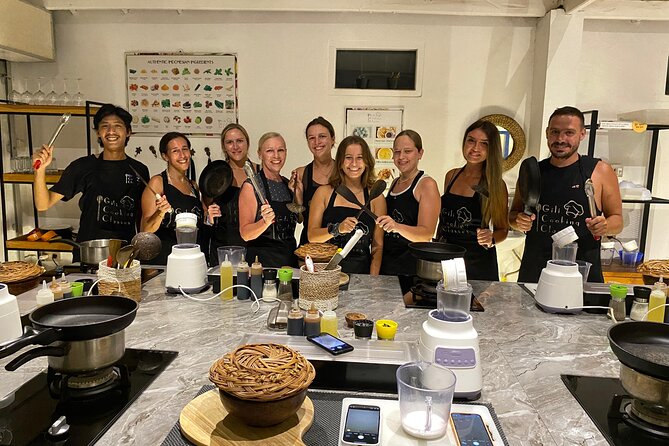
Learn to cook Indonesian food at Gili Cooking Classes Trawangan
Read our review →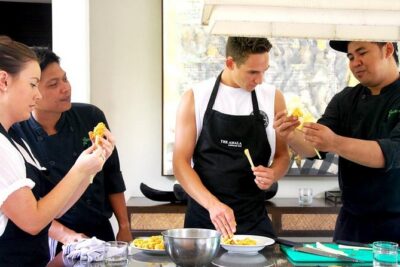
Browse the lists this tour appears in