
Reviewed · COOKING CLASSES
Traditional Tempeh Making & Cooking Balinese Cuisine
Tempeh is the star here, not a token vegan substitute. You learn how soybeans become the firm, nutty Indonesian staple, then use it in several dishes before sitting down to lunch in a family garden. Ayu and Ngurah also explain the spices and cooking methods as you work, which gives the meal more meaning than a standard recipe demonstration.
I like the hands-on tempeh lesson and the small class size, capped at 10 people. I also like that the menu can work for vegans, while chicken and tuna remain optional for those who want a broader Balinese lunch. The main thing to check is the meeting point: the experience is marketed in Seminyak, but the stated address is Canang Sari Homestay in northern Denpasar.
Key points to know
- Tempeh from scratch: Learn how this Indonesian protein is prepared, with a guide to making it at home.
- Seven-dish lunch: Cook and eat a selection of Balinese and Indonesian dishes, including tempeh recipes and Sayur Urab.
- Vegan-friendly format: Skip the chicken and tuna and keep the meal plant-based.
- Small-group attention: The class accepts a maximum of 10 people, with a private option available on request.
- Morning schedule: Begin at 9:30 a.m., finish around 12:30 p.m., and return to the meeting point.
- Garden setting: Eat the food you prepare in the garden of a cozy local home, with tea, coffee, water, and a light snack included.
Why tempeh makes this Bali cooking class different
Many cooking classes in Bali focus on familiar dishes, spice pastes, and a market visit. This one gives equal billing to the ingredient itself. Tempeh, or tempe, comes from Java and has been part of Indonesian food culture since at least the 1600s. It is made from fermented soybeans and is valued for its protein and nutrients.
You do not simply chop tempeh and add it to a finished dish. The class includes the process of making it from scratch, along with an explanation of how it became such an important everyday food. That makes the morning useful even if you already know how to cook Indonesian food.
I especially like this format for anyone curious about plant-based cooking. Tempeh has a firmer texture and more character than many meat substitutes, and it takes on the flavors of garlic, spices, coconut, and other ingredients well. You leave with more than a meal. You get a method you can try again at home.
A guide to making tempeh yourself is also provided, which is a practical touch. You will need to find the right ingredients and have enough time at home to repeat the process, but the written help gives you a fair chance of trying.
More Cooking Classes in Bali
- Balinese Farm Cooking Class by Pemulan Bali
★ 5.0 · 410 reviews - Balinese Cooking class with traditional morning market visit
★ 5.0 · 161 reviews - Jambangan Bali Cooking Class
★ 5.0 · 142 reviews
Meeting Ayu and Ngurah at 9:30 a.m.
The class begins at 9:30 a.m. and finishes at about 12:30 p.m. The listed meeting point is Canang Sari Homestay, Gg. Kaswari No. 6, Dangin Puri Kaja, in northern Denpasar. The activity ends back at that same point.
That location matters. The experience is described as being in Seminyak, yet the provided address is in Denpasar. Do not assume your hotel in Seminyak is the pickup location. Check the address carefully when booking and allow time to reach it. No hotel pickup or transfer is included in the information provided.
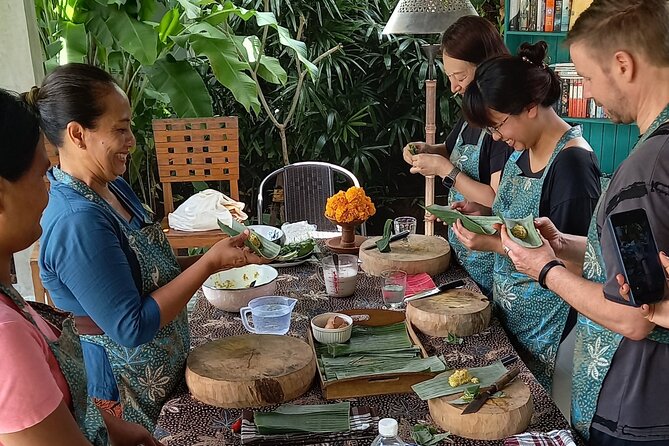
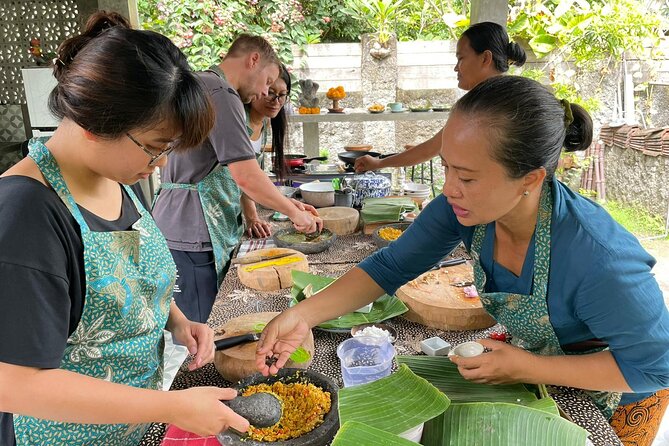
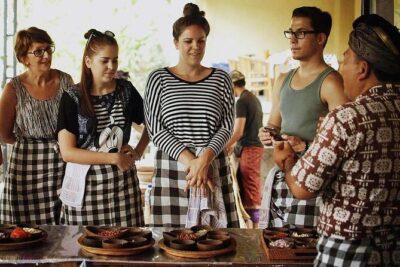
Ayu and Ngurah host the class in an open-air kitchen studio at their home. Their role is central to the experience. Ayu explains the recipes, the story of tempeh, and the cooking steps, while both hosts create the relaxed family atmosphere that makes the meal feel personal rather than commercial.
The small-group limit of 10 is useful here. Cooking becomes awkward when too many people crowd around one board or stove. With fewer people, you should have a better chance to see the techniques, ask questions, and take part instead of standing behind someone else.
A private class is available if you want more personal attention or are arranging the experience for your own group. The supplied details do not give a separate private-class price, so ask about the cost before confirming.
Learning the story and method of tempeh
The first major part of the morning focuses on tempeh. You learn that it is an original Indonesian food from Java and that it has been known there for centuries. That background helps explain why tempeh appears in everyday meals rather than only in specialist vegetarian cooking.
The useful part is the practical method. You see how the ingredient is handled before it reaches the pan, and you learn the basic process rather than treating tempeh as a ready-made mystery. The pace is designed for a three-hour class, so expect an introduction and guided preparation rather than a long technical fermentation course.
This is a good match for curious cooks who want to understand what they are eating. It also suits people who have tried tempeh in restaurants but never learned how it is made. If you want a full food science workshop with extensive fermentation theory, this class may be too short. Its aim is to connect the ingredient with a meal you can cook and enjoy the same morning.
The class is particularly helpful for vegans and vegetarians because tempeh is not an afterthought. It is the central ingredient in several dishes. You can see how it behaves in different preparations, which is more useful than being handed one isolated recipe.
Cooking with Bali’s spice cupboard
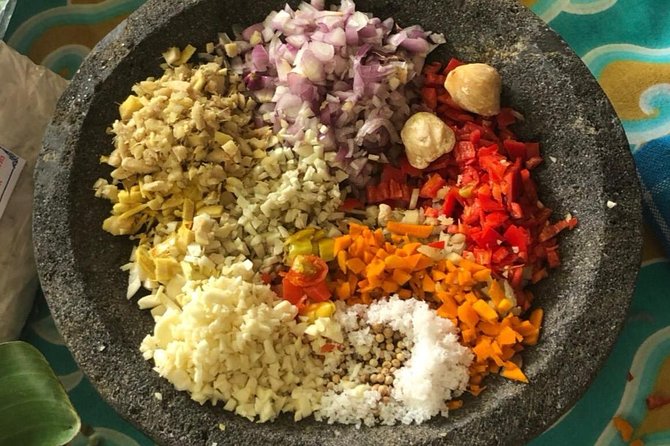
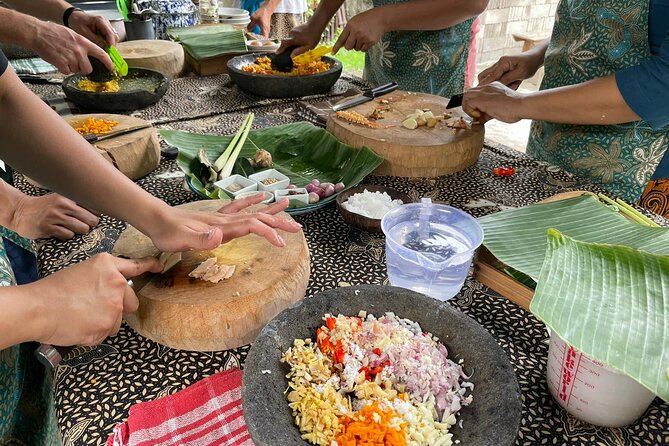
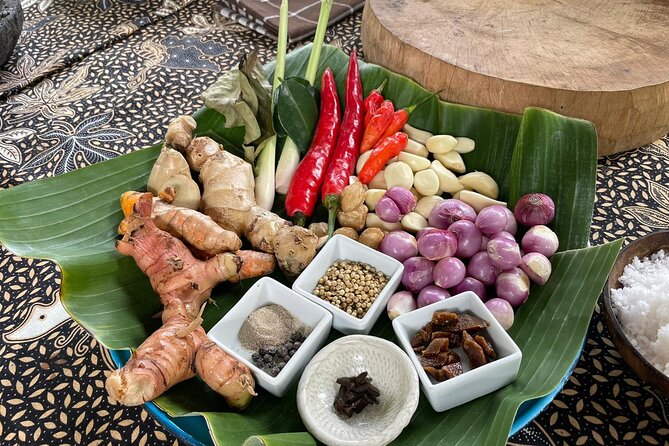
After the tempeh lesson, the class moves into the wider Balinese menu. You work with fresh plant-based ingredients and the spices used in Indonesian cooking. The supplied description does not provide a full spice list, so you should expect a broad introduction to local flavors rather than a promised inventory of every ingredient.
This part is valuable because Indonesian food often depends on the balance of its seasonings. Learning to cook a dish from scratch gives you a clearer sense of how the spices support the vegetables, tempeh, coconut, and other ingredients. You are not merely watching Ayu prepare lunch. You take part in the work.
The cooking takes place in an open-air kitchen studio. That setting keeps the morning connected to the home and garden instead of placing you in a formal cooking school. It also means the experience is tied to the rhythms of a local household, which is part of its appeal.
A light snack, tea, coffee, and water are provided during the class. Since the activity begins in the morning and includes lunch, you should not need to arrange a separate meal before the class, though the information does not specify the snack or drink choices.
A completely different kind of day out in Bali:
- Bali Full-Day Traditional Village Sightseeing Trip All Inclusive
★ 5.0 · 3,069 reviews - ️ Bali Instagram Tour: The Most Famous Spots (Private & All-Inclusive)
★ 5.0 · 2,857 reviews - Full-Day Tour to Water Temples and UNESCO Rice Terraces in Bali
★ 5.0 · 2,539 reviews - ATV Quad Bike Through Tunnel and Waterfall in Bali
★ 5.0 · 2,098 reviews
Seven dishes, with Sayur Urab at the center
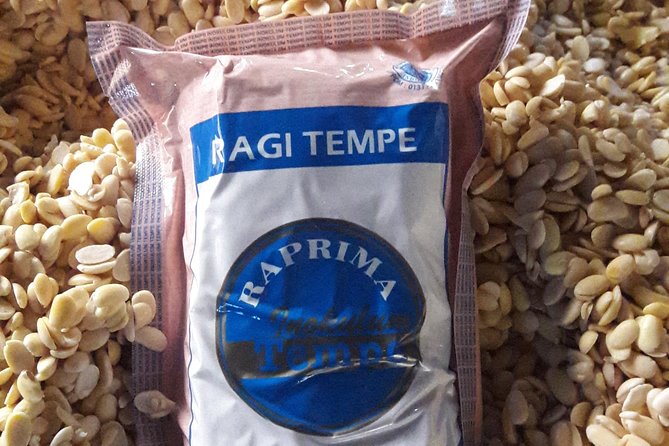
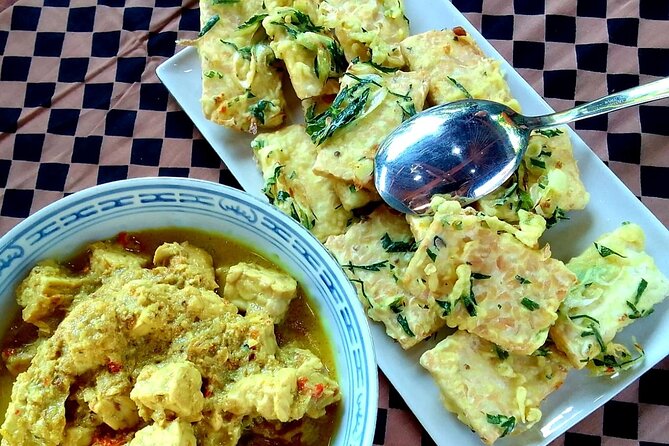
The finished meal includes seven Balinese and Indonesian dishes. The exact complete menu can vary or is simply not listed in the supplied details, so you should not book expecting a fixed restaurant-style menu with every dish named in advance.
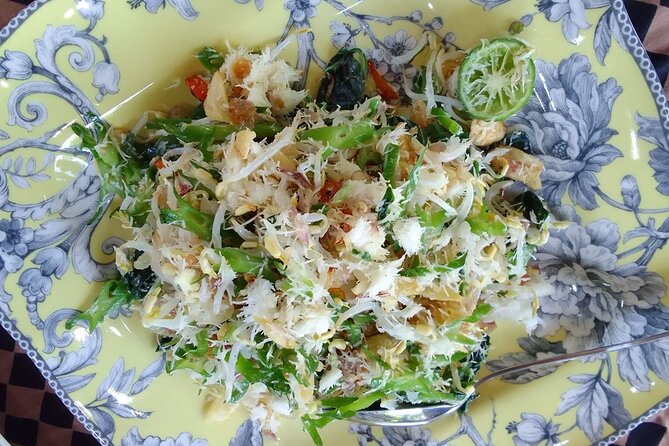
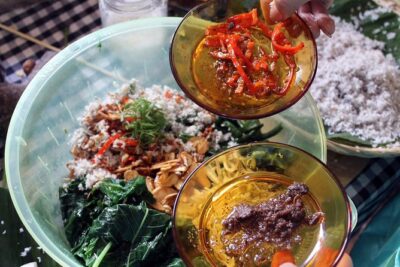
One named dish is Sayur Urab, a vegetable preparation made with greens and beans mixed with grilled grated coconut. It is a useful example of the kind of food this class covers: fresh vegetables, toasted coconut, and seasoning working together without needing meat to make the dish satisfying.
Several dishes use the tempeh you have prepared. This gives you a chance to compare how the same ingredient works in different recipes. One specific preparation mentioned by a Japanese-speaking participant was tempeh fritters, which could be adapted at home in different ways.
Chicken and tuna may be added for those who want them, but both can be skipped. This makes the class flexible for a mixed group. A vegan can eat a fully plant-based meal, while an omnivore can sample the optional meat and fish dishes.
Still, you should tell the hosts your dietary preference in advance. The class is described as vegan-friendly, but the information does not list allergy procedures, substitutions beyond skipping chicken and tuna, or a separate allergy-safe kitchen.
Lunch in the garden after the cooking
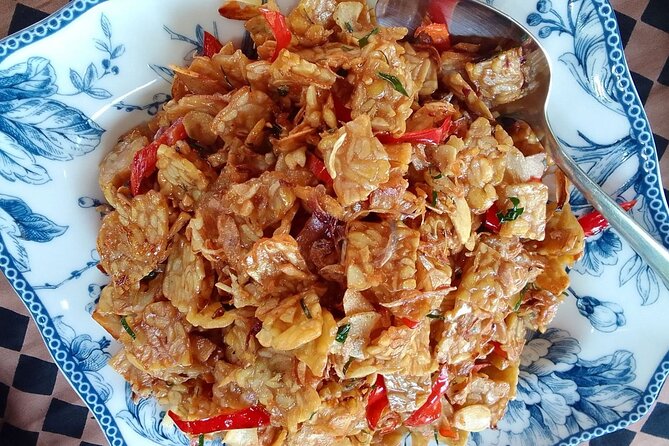
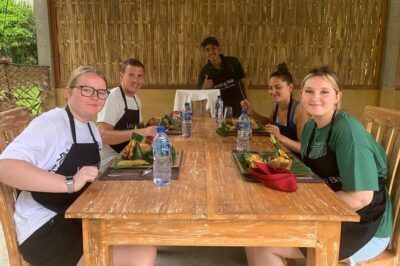
The final part is the meal itself. You sit in the garden of the home and share the food you have prepared. That setting is one of the experience’s strongest features because you can connect the dishes with the people who taught you to make them.
A garden lunch also changes the pace of the morning. Cooking classes can feel rushed when the food is eaten standing at a counter or packed away for later. Here, lunch is part of the experience, and the meal provides time to enjoy the results of the work.
The family atmosphere may appeal to you if you prefer local hospitality to a polished culinary studio. It is less suited to someone looking for a formal tasting menu, restaurant service, or a highly structured professional kitchen.
The five-star rating from 18 published evaluations and a 100 percent recommendation figure point to consistently strong satisfaction with the hosting and food. I would place the greatest weight on the specific praise for Ayu’s warmth, clear instruction, and passion for cooking. Those qualities matter in a hands-on class, where a rushed or unclear teacher can make even good recipes difficult to follow.
What the $39 price includes
At $39 per person, the class offers about three hours of instruction, tempeh preparation, cooking, lunch, drinks, and a light snack. For a small-group experience that includes a full meal and a specialized ingredient lesson, that is a fair price.
The value is strongest if you care about learning. You are paying for the food, but also for an explanation of tempeh, guidance through several recipes, and a written guide for repeating the process at home. A standard lunch in Bali will cost less, but it will not give you the same kitchen access or instruction.
The price is less compelling if you mainly want to eat and have little interest in cooking. The class spends time on preparation, and the three-hour schedule is built around participation. You should choose it for the combination of food and teaching, not simply as a cheap meal.
Private groups are available by request, but the private rate is not stated. Ask for that figure before booking if exclusivity is important to you.
Who should book this experience
I would recommend this class to:
- Vegans and vegetarians who want tempeh treated as a main ingredient.
- Curious cooks who want a practical introduction to making tempeh.
- Couples, families, and small groups who enjoy eating what they have prepared.
- Visitors who prefer a home setting to a large commercial cooking school.
- Anyone interested in Balinese spices, coconut-based vegetable dishes, and local food traditions.
It may be less suitable if you need a centrally located Seminyak activity with hotel pickup. The stated meeting point is in Denpasar, and the activity ends there. It may also be a poor match if you want a market tour, a long cultural lecture, or a fixed menu with every recipe announced ahead of time.
Families should also consider the three-hour duration and the hands-on format. The supplied information does not state a minimum age or child pricing, so confirm those details before booking with young children.
Timing, cancellation, and practical planning
The class runs in the morning from 9:30 a.m. to about 12:30 p.m. Since lunch is part of the schedule, you do not need to plan another midday meal immediately afterward.
Confirmation is provided when you book, and the experience accepts a maximum of 10 people. A mobile ticket is available, which is convenient for a morning activity.
You can cancel for a full refund up to 24 hours before the start time. Changes made within 24 hours are not accepted, and a late cancellation is not refunded. The cutoff uses local Bali time.
The class depends on good weather. If poor weather causes cancellation, you are offered another date or a full refund. The activity also requires a minimum number of participants. If that minimum is not met, you receive the choice of another date or experience, or a full refund.
My recommendation for the tempeh-focused morning
I would book this if you want a food experience with a clear point of difference. The tempeh lesson, flexible vegan menu, seven-dish lunch, and home garden setting give it more substance than a short demonstration followed by a prepared meal.
The best reason to choose it is the combination of Ayu and Ngurah’s personal teaching with a useful ingredient lesson you can take home. The main caution is practical: confirm that the Denpasar meeting point works for you, especially if you are staying in Seminyak, and ask about the menu if you have allergies or strict dietary needs.
At $39, this is good value for a small-group morning that includes instruction, lunch, and drinks. Book it if you want to cook, ask questions, and eat a plant-based Balinese meal in a home setting. Skip it if you only want a quick meal or require hotel transport and a fully fixed itinerary.
FAQ
Where does the tempeh cooking class meet?
The stated meeting point is Canang Sari Homestay, Gg. Kaswari No. 6, Dangin Puri Kaja, Denpasar, Bali 80234. The activity ends back at the same meeting point.
What time does the class start and finish?
The class starts at 9:30 a.m. and finishes at about 12:30 p.m. Lunch is included during the experience.
Is the class suitable for vegans?
Yes. The class is described as vegan-friendly, and you can skip the chicken and tuna. The main dishes include tempeh and plant-based recipes.
How many people can join the class?
The maximum group size is 10 people. A private group is available on request.
What is included in the experience?
You receive tempeh-making instruction, cooking instruction, lunch consisting of seven dishes, tea, coffee, water, and a light snack.
Can I cancel for a full refund?
Yes. You must cancel at least 24 hours before the start time for a full refund. Cancellations or changes made less than 24 hours in advance are not accepted for a refund.
Just added around Bali
- Bali Parasailing Adventure, Jet Ski, Banana Boat , Donat Boat, with Transport★ 5.0 · 11 reviews
- 1.5 Hours Bali ATV Quad Tour★ 5.0 · 8 reviews
- ATV Quad Bike Through Tunnel and Waterfall★ 5.0 · 3 reviews
- Bali Driver Recommendation★ 5.0 · 7 reviews
- Bali Private Custom Tour★ 5.0 · 12 reviews
- Bali Cooking Class Experience with All Inclusive★ 5.0 · 12 reviews
- Penglipuran Village Waterfall Swing Private Guided Tour★ 5.0 · 13 reviews
- Bali Sightseeing Car Hire with English-speaking Guide and Driver★ 5.0 · 24 reviews
Cooking Classes, compared.
Private Authentic Balinese Cooking Class in Ubud at Putu’s Home
Read our review →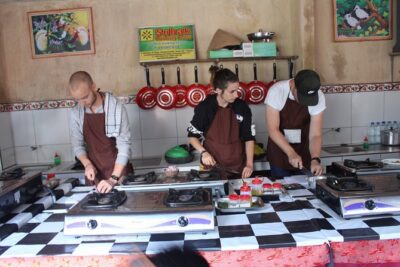
Balinese Ubud cooking school (9 Dish Cooking and Market Tour)
Read our review →
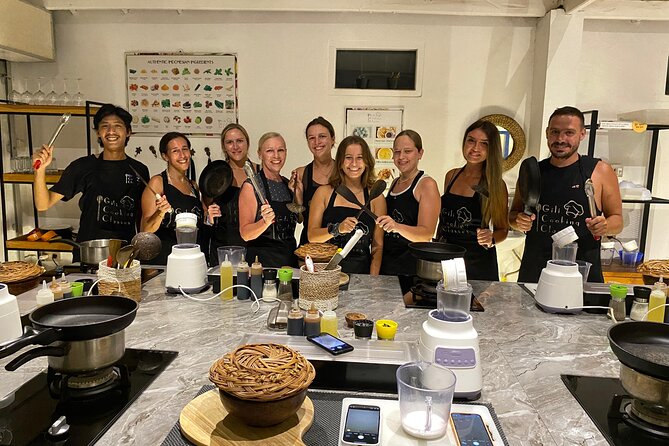
Learn to cook Indonesian food at Gili Cooking Classes Trawangan
Read our review →
Browse the lists this tour appears in