
Reviewed · COOKING CLASSES
Kerobokan Pastry Class for Kids and Families
The unusual part of this Kerobokan pastry class is its setting: you learn in a French chef’s private home rather than a large cooking school. Children do more than follow a recipe. They may play food games, study fruits and spices, watch chocolate-making videos, write down recipes, and turn their finished pastries into something to eat or take home.
I like the small maximum of 10 people, which gives children room to ask questions and work at their own pace. I also like the mix of useful skills and playful tasks, from weighing ingredients to guessing fruits, vegetables, and desserts. The main consideration is transport: it is not included, and the meeting point is in Kerobokan Kaja, north of central Seminyak.
- French chef’s private home: A more personal setting than a large commercial kitchen.
- Hands-on baking: Children measure, mix, knead, fill, decorate, and package their own creations.
- Food learning beyond recipes: Games and videos introduce fruit, spices, chocolate, croissants, macarons, and bread.
- Small class size: A lesson can include up to 10 people, with private lessons possible.
- Flexible recipes: Vegan or gluten-free baking can be arranged for a group, and allergies should be reported in advance.
- About 90 minutes: The class is short enough for younger children, while still including several learning activities.
Baking in a French Chef’s Kerobokan Home
This class is designed for children and families staying around Seminyak, Kerobokan, or nearby parts of Bali. You meet at 85RH+VM8 in Kerobokan Kaja, Kuta Utara, Badung Regency. The activity begins and ends at the same place, so you should arrange your own ride and allow time to find the address.
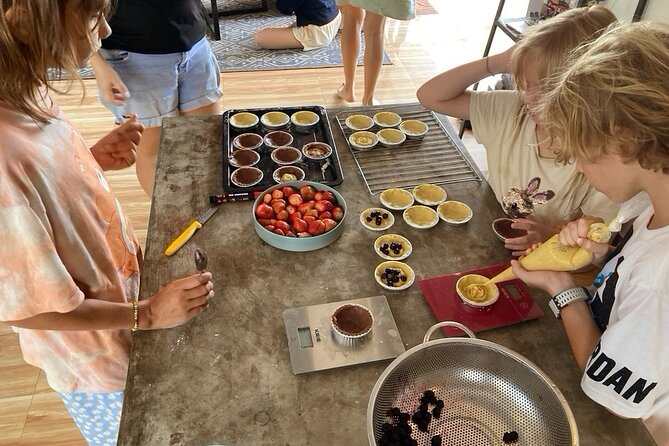
The home setting matters. A private kitchen can feel less formal than a hotel cooking studio, especially for children who are shy in a large group. The class has a maximum of 10 people, and you can ask about a private lesson. That smaller format gives your child a better chance to handle ingredients, ask questions, and receive help before a simple mistake turns into a kitchen disaster.
The chef is French, but a personal name is not provided, so do not book this expecting a named celebrity instructor. The useful point is the setting and the hands-on format. You are not simply watching someone make a cake while children wait at a table.
What Happens During the 90-Minute Lesson
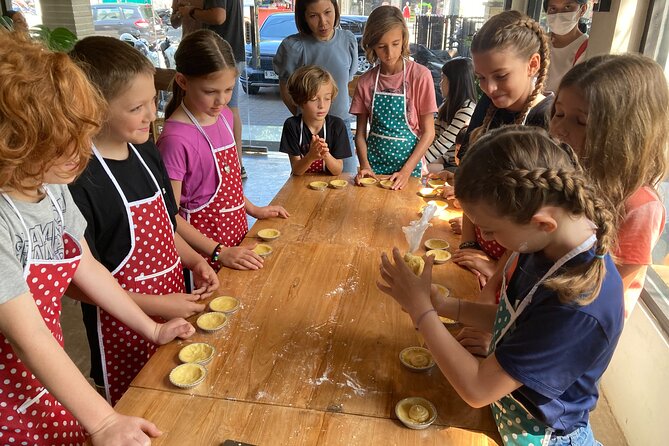
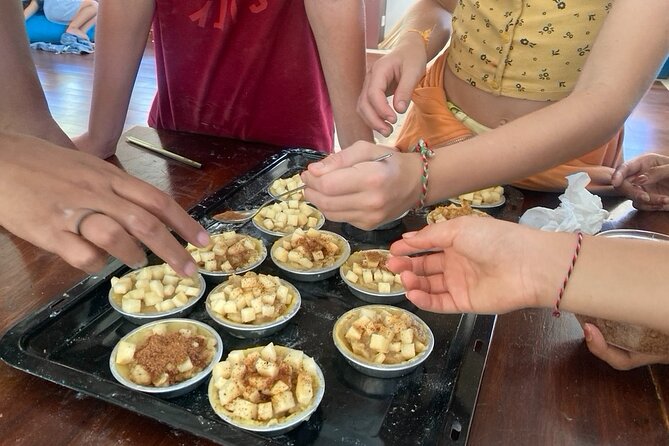
The exact pastry depends on the session. Children may work with tarts, pies, biscuits, cheesecake, cookies, cupcakes, snacks, or another pastry theme. That flexibility is helpful for repeat visitors, but it also means you should ask ahead if your child has a strong preference.
The lesson starts with basic kitchen organization and measuring. Children learn to weigh ingredients, work with numbers, and follow a recipe in the correct order. For a young baker, this is valuable practice in patience and accuracy. Baking is not very forgiving when a child adds a little of this and a little of that without measuring.
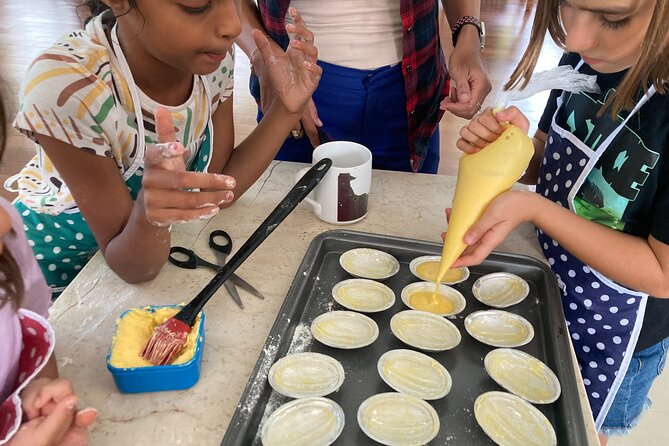
Next comes the preparation. Depending on the recipe, children may mix a batter, knead dough, fill a tart with cream from a plastic pouch, or prepare ingredients for decoration. The class presents these jobs as practical tasks rather than a lecture. Your child gets to see how separate ingredients become a pastry with a change in texture, temperature, and timing.
Decorating is where creative freedom enters. Children may experiment with flavors, toppings, or designs. The information provided does not promise a specific decoration for every lesson, so I would treat the finished look as part of the fun rather than expect a professional bakery result.
The class also explains the science behind baking. Children can learn why measurements matter, how ingredients change during mixing and baking, and how timing affects the final result. The science level will depend on the group, but even a short explanation can help a child understand why a cake rises or why dough needs proper handling.
At the end, the pastry is available to eat right away or take home. Packaging is provided, along with the equipment and ingredients needed for the class. That is a practical touch for families who want to save the creation for later, though Bali’s heat means delicate items may not travel well for long periods.
More Cooking Classes in Bali
- Balinese Farm Cooking Class by Pemulan Bali
★ 5.0 · 410 reviews - Balinese Cooking class with traditional morning market visit
★ 5.0 · 161 reviews - Jambangan Bali Cooking Class
★ 5.0 · 142 reviews
More Than Recipes: Games, Videos, and Food Facts
The class adds several activities that make it suitable for children with different interests. One food game helps children learn how fruits and spices grow and what they look like. This connects the pastry on the table with the plants and ingredients behind it.
There are also quizzes involving fruits, vegetables, and desserts. These games can give younger children a way to take part even if they are not ready for every technical baking task. An older child may enjoy the recipe work, while a younger child may be more interested in identifying ingredients or choosing decorations.
The program may include videos about leading pastry chefs and chocolate creations. This is not a substitute for hands-on work, but it gives children a look at professional techniques and the wider world of baking. The class also introduces pastries such as croissants, macarons, and bread, even if the main recipe on your visit is something else.
I particularly like the focus on writing recipes. You are asked to bring a pen and notebook, so your child can record the method and ingredients. That makes it easier to repeat the recipe at home and gives the lesson a lasting use after the holiday.
The playful approach does not mean the class ignores discipline. Children learn about work organization, timing, and respect for the process. Those are small kitchen habits, but they are exactly the skills that help a child become more independent around food.
Ingredients, Equipment, and Finished Pastries
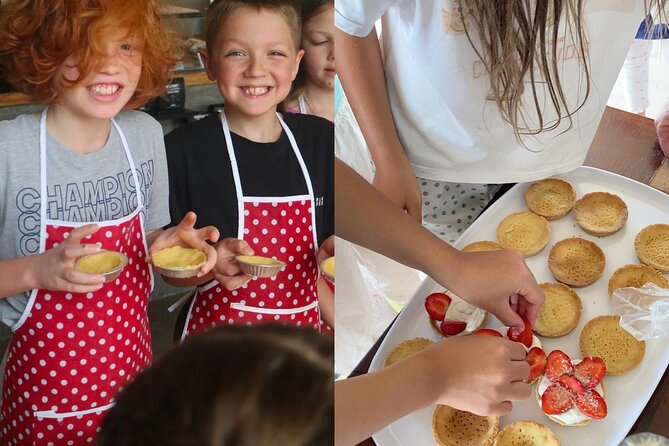
Everything needed for the baking activity is supplied. That includes equipment, ingredients, packaging, and the pastry itself. Bottled water is also available, with fresh mineral water provided from a gallon.
The ingredient policy aims at quality. The class lists imported dairy, Belgian chocolate, and farmer honey among the products used. That should make the lesson more appealing to children who enjoy tasting ingredients, although the exact items will depend on the recipe chosen that day.
Allergies need attention. You should tell the provider about nut allergies or other allergies before the class. The same advice applies to dietary preferences. Vegan recipes are possible for a vegan group, and gluten-free arrangements may also be made. These options are described as group arrangements, so do not assume that every session automatically offers a separate substitute for one child.
The pastry can be eaten at the end or packaged to bring home. I would use the packaging as a bonus rather than plan a long excursion afterward with a fragile cake in your bag. If your child makes something sturdy, taking it back to your accommodation can be a nice way to share the experience with family members who did not attend.
Why the Small Group Matters for Children
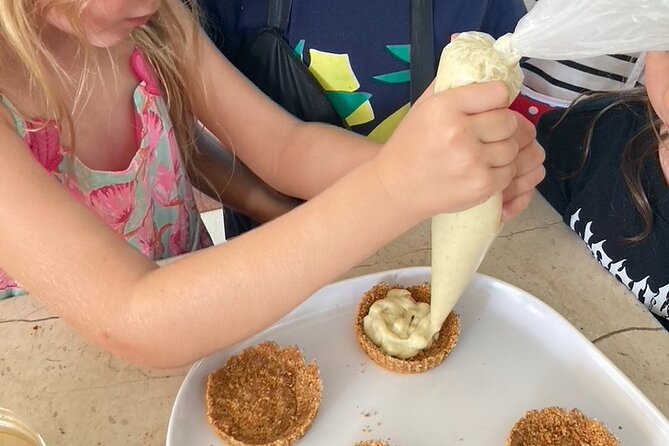
A 10-person limit is one of the strongest practical features here. Children vary widely in age, confidence, and ability. A child aged 12 may be ready to work independently, while an eight-year-old may need help reading a recipe, measuring, or handling dough.
The class can accommodate both kinds of learners better than a very large demonstration. The published experience does not promise a particular adult-to-child ratio, so I would still ask how many children will be in your session. The smaller the actual group, the more time each child should have with the ingredients and equipment.
A private lesson is also possible. That may suit a family with children of different ages, a child who needs extra support, or a group that wants a recipe tailored around vegan or gluten-free baking. Private instruction may affect the price, so ask before booking.
The class is not only for children. Adult pastry lessons are available too. That gives parents a useful choice: take part beside your child, arrange an adult session separately, or use the activity as a shared family project.
A completely different kind of day out in Bali:
- Bali Full-Day Traditional Village Sightseeing Trip All Inclusive
★ 5.0 · 3,069 reviews - ️ Bali Instagram Tour: The Most Famous Spots (Private & All-Inclusive)
★ 5.0 · 2,857 reviews - Full-Day Tour to Water Temples and UNESCO Rice Terraces in Bali
★ 5.0 · 2,539 reviews - ATV Quad Bike Through Tunnel and Waterfall in Bali
★ 5.0 · 2,098 reviews
The Strongest Sign of Success
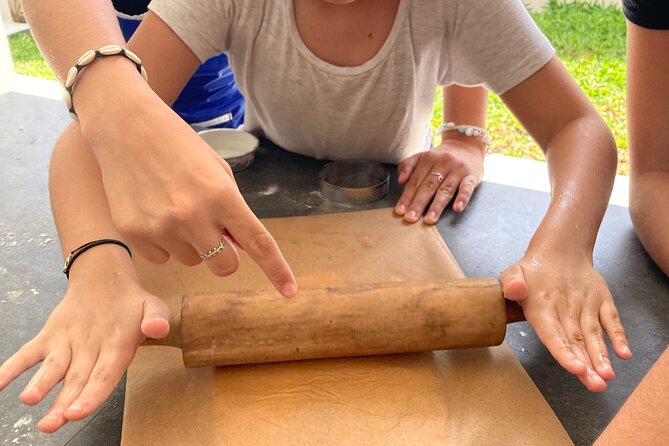
The most useful clue about the class comes from a family with two girls, aged 12 and 8. After taking part, both children wanted to return the next day. That tells me the session has a good chance of holding a child’s attention, which is not a small achievement when the activity lasts around 90 minutes.
The appeal seems to come from the private-home setting and the mix of baking with games and discovery. Children are not asked to sit quietly through a long cooking demonstration. They get a job to do, something to taste, and a finished item to show for the effort.
Of course, one family’s enthusiasm cannot guarantee the same reaction from every child. A child who dislikes mess, food preparation, or following timed steps may be less interested. I would especially consider the class for children who enjoy making things with their hands and like the idea of eating what they create.
Price, Timing, and Overall Value
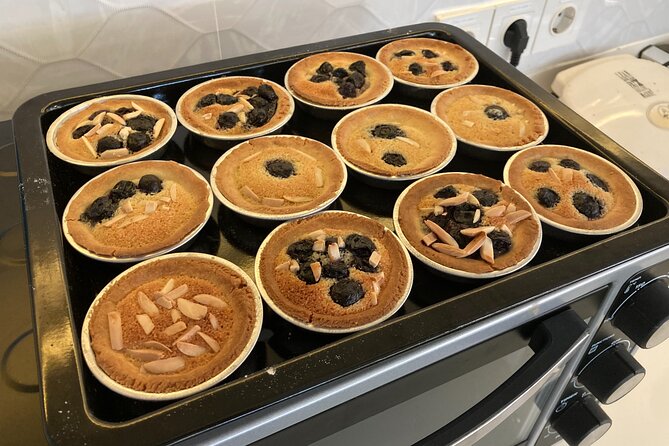
The listed price is $21.29 per person for about 90 minutes. That price includes the ingredients, equipment, bottled water, packaging, and the pastry your child makes. Since transport is not included, your real cost will be higher if you need a taxi or ride service to Kerobokan Kaja.
For a family, the value comes from more than the amount of food produced. You are paying for instruction, a structured activity, ingredient handling, games, recipe writing, and time in a small class. It can be a sensible choice on a hot or rainy Bali day when you want an activity with a clear purpose.
The value is weaker if your child already has little interest in baking or if you are searching for a full-day culinary program. This is a compact lesson, not a complete tour of Balinese cuisine. It focuses on pastries and basic baking skills, with some wider food education added around the main task.
At 90 minutes, the class fits neatly into a family schedule. You can pair it with another activity in Seminyak or Kerobokan, but I would avoid promising your child a rushed lunch or appointment immediately afterward. Children may need a few extra minutes to finish packaging, look at their work, or clean up.
Getting There and Planning the Visit
You must make your own way to the meeting point at 85RH+VM8, Kerobokan Kaja, Kuta Utara, Badung Regency, Bali 80117. Transport is not included. The exact address is worth checking carefully before you leave, especially if you are staying in central Seminyak and relying on a driver unfamiliar with the area.
A mobile ticket is provided, which is convenient for families who do not want to print paperwork. Confirmation is received at booking. Service animals are allowed, and the location is near public transportation, although the experience does not specify which routes or stops serve it.
Tell the provider about food allergies as early as possible. Do the same for vegan or gluten-free needs. This gives the class a chance to plan the recipe for the group instead of trying to change the activity at the last minute.
The cancellation terms are friendly if your plans remain uncertain. You can receive a full refund when canceling at least 24 hours before the start time. Cancellations or changes inside that period are not accepted for a refund. The activity also needs a minimum number of participants, and if the provider cancels for that reason, you can choose another date or experience, or receive a full refund.
Who Should Book This Pastry Class?
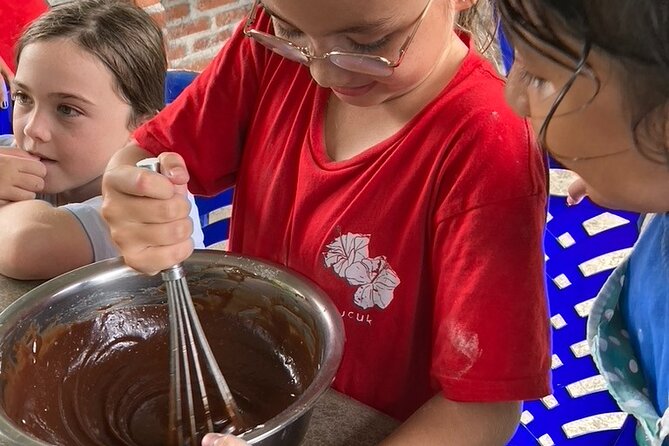
I would recommend this for families with children who like baking, decorating, food games, or hands-on crafts. The eight-to-12 age range is clearly compatible with the format, though the class is not limited to those ages in the information provided.
It also suits parents who want an activity with an educational side. Your child can practice measuring, timing, teamwork, organization, and recipe writing without sitting through a classroom-style lesson.
The class may be less suitable if you need hotel pickup, want a large professional kitchen, or expect a fixed menu guaranteed in advance. It is also not the best choice for a child with a serious allergy unless you have spoken directly with the provider and received clear confirmation about ingredients and cross-contact precautions.
Should You Book It?
Book this Kerobokan pastry class if you want a personal, child-focused activity rather than another sightseeing stop. The private-home setting, small maximum group, games, recipe writing, and finished pastry give the 90 minutes a good mix of learning and fun.
I would confirm the planned pastry, dietary arrangements, class size, and transport before paying. If those details fit your family, $21.29 per person is a fair price for a short lesson that gives children something to make, taste, and remember. If your child is happiest running outdoors or dislikes careful measuring, spend your Bali activity budget elsewhere.
FAQ
Where does the pastry class take place?
The class meets at 85RH+VM8, Kerobokan Kaja, Kuta Utara, Badung Regency, Bali 80117, Indonesia.
How long does the class last?
The lesson lasts approximately 1 hour and 30 minutes.
How many people can join the class?
The class has a maximum of 10 participants.
Can I request a private lesson?
Yes. A private lesson can be requested.
Is transportation included?
No. Transport to and from the meeting point is not included.
What pastries might children make?
Depending on the lesson, children may make tarts, pies, biscuits, cheesecake, cookies, cupcakes, snacks, or other pastries.
Are ingredients and equipment provided?
Yes. The ingredients and equipment needed for the baking activity are provided.
Can children take their pastries home?
Yes. Packaging is provided, and the finished pastry can be eaten immediately or brought home.
Are vegan or gluten-free recipes available?
Vegan recipes can be arranged for a vegan group, and gluten-free options are possible. You should contact the provider before the class to discuss these needs.
What is the cancellation policy?
You can cancel at least 24 hours before the start time for a full refund. Cancellations or changes made less than 24 hours before the start time are not accepted for a refund.
Just added around Bali
- Bali Parasailing Adventure, Jet Ski, Banana Boat , Donat Boat, with Transport★ 5.0 · 11 reviews
- 1.5 Hours Bali ATV Quad Tour★ 5.0 · 8 reviews
- ATV Quad Bike Through Tunnel and Waterfall★ 5.0 · 3 reviews
- Bali Driver Recommendation★ 5.0 · 7 reviews
- Bali Cooking Class Experience with All Inclusive★ 5.0 · 12 reviews
- Bali Private Custom Tour★ 5.0 · 12 reviews
- Penglipuran Village Waterfall Swing Private Guided Tour★ 5.0 · 13 reviews
- Bali Sightseeing Car Hire with English-speaking Guide and Driver★ 5.0 · 24 reviews
Cooking Classes, compared.
Private Authentic Balinese Cooking Class in Ubud at Putu’s Home
Read our review →
Balinese Ubud cooking school (9 Dish Cooking and Market Tour)
Read our review →
Learn to cook Indonesian food at Gili Cooking Classes Trawangan
Read our review →
Browse the lists this tour appears in