
Reviewed · WALKING TOURS
Queen of the East (Old Batavia) Walking Tour
Old Batavia is best understood on foot, where VOC warehouses, city walls, and colonial streets connect Jakarta’s port to its old civic center. This private tour follows that route from the Maritime Museum to Fatahillah Museum, with an English-speaking guide explaining how Batavia became the Dutch East India Company’s Asian headquarters.
I like the private format, which lets you ask questions and set the pace within the planned route. I also like that entrance fees, mineral water, a pocket map, and a batik cloth fan are included. The main drawback is the 4 to 4.5 kilometers of walking in Jakarta’s heat, with a long stretch after the harbour that may feel light on sights.
Key points to know before booking
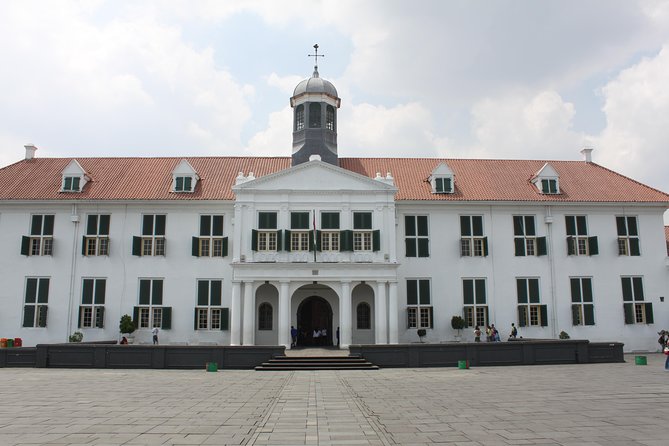
- Start at the Maritime Museum: See a former VOC spice warehouse and look across Sunda Kelapa Harbour from the elevated Controlle area.
- Follow the old Batavia route: The walk links remaining city walls, Dutch-era planning, Toko Merah, and Fatahillah Museum.
- Cross Kota Intan Bridge: This nearly 400-year-old wooden drawbridge is one of the tour’s most distinctive stops.
- Private group of up to 15: You receive a guide for only your party, useful for questions and a more flexible pace.
- Plan for heat and rain: Wear comfortable shoes and carry an umbrella, especially from October through April.
- Finish in Kota Tua: The tour ends at Jakarta History Museum, not at your hotel, so arrange your return transport.
Why Old Batavia makes sense as a walking tour
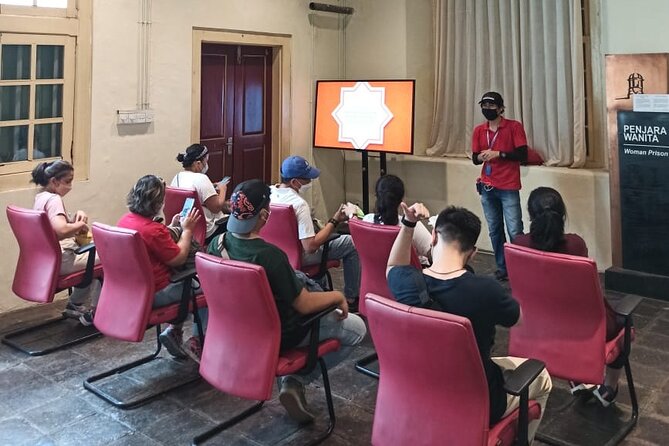
Jakarta can feel sprawling and hard to read at street level. Old Batavia gives you a compact historical route, though it is not a polished open-air museum. You will walk through working city streets, pass old buildings in varying condition, and see how the port, warehouses, walls, bridges, and administrative buildings once fitted together.
The Dutch East India Company, known as the VOC, used Batavia as its main base in Asia. The company’s power came through trade, shipping, storage, and control of valuable spices. This tour focuses on those practical foundations rather than offering only a parade of grand façades.
That makes the route useful for anyone who wants Jakarta’s colonial past explained in place. A guide can connect a warehouse to the harbour, a city wall to defense, and a mansion to the officials who ran Batavia. Without that context, several stops could look like isolated old buildings.
The walk covers about 4 to 4.5 kilometers in roughly three hours. That is manageable for most people, but Jakarta’s weather changes the experience. The city is warm and humid year-round, and the tour runs in both sunny and rainy conditions. Bring water, wear breathable clothing, and use the included mineral water as a supplement rather than your only drink for the morning.
More walking tours in Jakarta:
- Jakarta Walking Tour with Public Transportation Visiting Sites
★ 5.0 · 14 reviews - The Secret Society of Batavia – Walking Tour
★ 5.0 · 4 reviews - Jakarta Private Custom Walking Tour with A Guide
★ 5.0 · 3 reviews
Starting at the Maritime Museum and Sunda Kelapa Harbour
Meet your guide at the Maritime Museum, formally listed at the old Oud Uitkijkpost Bahari location on Jalan Pakin. This is the tour’s first and longest stop, at about 50 minutes, and admission is included.
The museum occupies a former VOC spice warehouse, which gives the building its own historical value before you even begin looking at the displays. Here you start with the commercial machinery behind Batavia: storage, shipping, and the movement of goods through the port.
The harbor view is an important part of the stop. From the elevated Controlle area, you can take in the iconic panorama of Sunda Kelapa Harbour. This helps you see why the location mattered. Batavia was not simply a colonial administrative center. It was tied directly to maritime trade and the movement of supplies.
Allow time for photographs, but listen closely to the guide’s explanation of how the port connected to the city. The harbor is one of the tour’s strongest visual moments, and the port visit is particularly useful for setting up everything that follows.
I would not treat the Maritime Museum as an optional afterthought, but I would keep expectations measured. The building and harbor setting are more important to the route than a long museum session. One practical assessment of this tour is that the Maritime Museum could be shortened if your main interest is architecture and city history rather than maritime collections.
Walking the old walls near the Eastern Warehouse
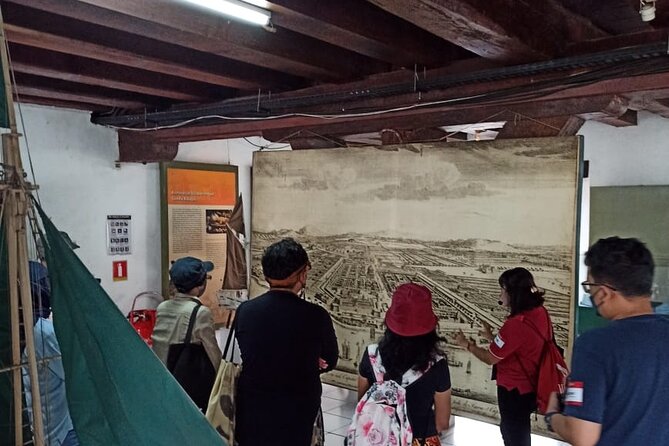
From the museum, the route moves toward the remaining section of Batavia’s old city wall near the Eastern Warehouse. This stop takes about 15 minutes and has no separate admission fee.
Do not expect a complete fortification or a long preserved rampart. You are seeing what remains of a much larger defensive system. Its value comes from location and explanation: the wall helps you picture the boundaries of the colonial city and the way Batavia controlled access to its commercial core.
This is also where the tour shifts from a museum visit to an outdoor history lesson. You will be walking through the old urban plan rather than moving from one formal attraction to another. The guide’s role matters here, since the surviving section may not explain itself.
The route can feel less concentrated after the port. A long walk back from the harbour has been described as having little of note along parts of the way. If you prefer a tightly packed sightseeing schedule, this is the section to consider carefully. If you enjoy seeing a city at street level and do not mind a few quieter stretches, it adds a sense of scale.
Crossing Kota Intan’s nearly 400-year-old drawbridge
Kota Intan Bridge is a short stop of about 15 minutes, with admission included. The bridge is nearly 400 years old and is presented as the oldest wooden drawbridge in Batavia.
This is one of the tour’s most memorable details because it is easy to understand. You are not just hearing that Batavia was old. You are looking at a surviving piece of its transport and defensive system.
The bridge also breaks up the walking with a clear visual landmark. It is a good place for photographs, especially if you want a detail that feels more specific than another colonial façade. Your guide can place it within the city’s old waterways and movement patterns, though the supplied schedule does not specify how long the explanation lasts beyond the 15-minute stop.
Keep in mind that historic outdoor structures can be affected by weather and maintenance. The tour still operates in rain, so an umbrella is sensible. From October through April, rain protection is specifically recommended.
A few more things to do around Jakarta
- Jakarta: Volcano, Tea/Rice Fields, Hot Spring, Local Food
★ 4.9 · 515 reviews - Active Volcano, Rice Field, Hot Spring, Fruit market, Tea Plantation with Lunch
★ 5.0 · 513 reviews - Private Full-Day Guided Tour: Explore Jakarta’s Top Highlights
★ 5.0 · 338 reviews - Jakarta Half-Day Guided Tour with a Private Fun Local Host
★ 5.0 · 292 reviews
Colonial streets, Toko Merah, and the old city plan
Between the bridge and Fatahillah Museum, you walk through Old Batavia’s Dutch colonial planning and architecture from the 17th and 18th centuries. This is the part of the experience where the route itself becomes the attraction.
You will see Toko Merah, the old Governor General’s mansion. The building adds a domestic and political dimension to the story. The warehouses and harbour explain trade, while Toko Merah points toward the people who governed the colonial city.
The tour also includes a bank and an old-city section that can be rewarding for visitors interested in architecture and civic institutions. These details help you see Batavia as a functioning capital, not only as a port.
I like this middle section because it asks you to notice patterns: the relationship between streets, storage buildings, administrative structures, and public spaces. You are not simply checking off monuments. You are learning how the Dutch laid out a city to support trade and control.
The tradeoff is pace. A three-hour tour covering several stops cannot provide a long visit inside every building. If you want detailed architectural study, you may need extra time in Kota Tua after the tour ends. The official finish at Fatahillah Museum gives you a useful base for continuing independently.
Fatahillah Museum and the underground dungeon
The final scheduled stop is Jakarta History Museum, also called Fatahillah Museum, in Taman Fatahillah. The visit lasts about 40 minutes and includes admission.
The museum holds antiques from the 17th through 19th centuries. This is where the earlier outdoor stops come together. After seeing the port, warehouse, wall, bridge, and colonial street plan, you can look at objects tied to the city’s past.
The museum’s grand building makes a strong closing point. Its setting in Taman Fatahillah places you in the center of Old Jakarta’s historic district, surrounded by some of the area’s best-known colonial architecture.
The visit also includes the underground dungeon. That detail changes the tone of the museum stop. It is a reminder that Batavia’s commercial success and administrative order depended on unequal power, coercion, and confinement. The tour is not only about attractive old buildings and spice routes.
You have about 40 minutes here, so expect an introduction rather than a full museum study. If the museum interests you, you may want to remain after the tour ends. The guide can bring you to the main points, but the tour’s schedule does not allow unlimited time with every collection.
What the private format is worth at $67.66
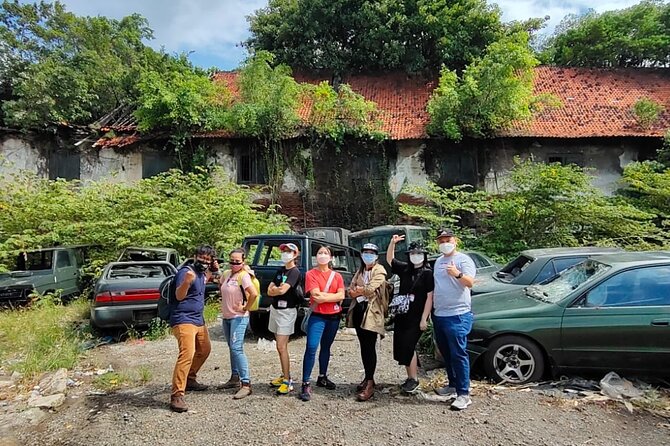
The price is $67.66 per person. That is not a budget walking tour, but the comparison changes when you consider what is included and the fact that the booking is private for your group.
You receive an English-speaking guide, all listed entrance fees, mineral water, a pocket map, and a batik cloth fan. You also avoid the uncertainty of being grouped with strangers. The advertised group size is from one to 15 people, so the value is strongest for a small party that wants a private guide without arranging separate museum admissions.
For one person, the price is harder to justify unless you place a high value on a dedicated guide and a fixed historical route. For two or more people, the private format becomes more appealing, especially if you want to ask questions or adjust the walking speed.
Group discounts are available, but the amount is not specified. Meals, travel insurance, guide tips, and hotel pickup and drop-off are not included. Those costs are easy to overlook, particularly because the starting point and ending point are different.
The experience is booked about 30 days in advance on average, so planning ahead is sensible. The cancellation policy is strict: the booking is non-refundable and cannot be changed for any reason. Make sure your Jakarta plans are firm before paying.
Heat, rain, distance, and the practical side
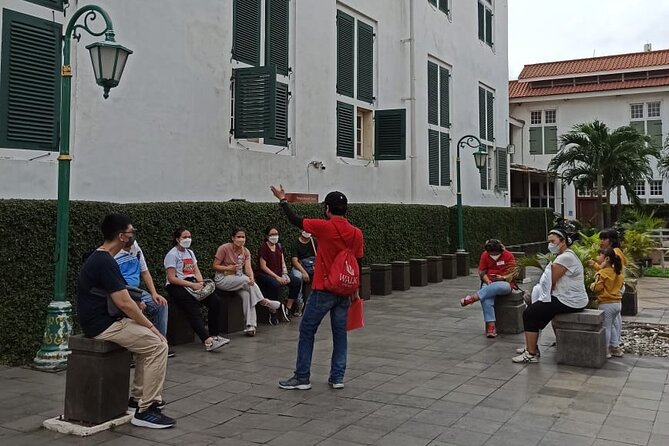
Wear comfortable shoes. The route is not difficult because of steep terrain, but 4 to 4.5 kilometers on foot is enough to feel tiring in humid weather. Light clothing is sensible, and the tour includes a batik cloth fan, a charming practical extra rather than a replacement for proper sun protection.
Carry an umbrella, especially during the rainy season from October through April. The tour operates in both sunny and rainy conditions, so poor weather does not automatically shorten the walk.
The meeting point is near public transportation, but hotel transfers are not included. You need to reach the Maritime Museum on your own and arrange transportation from Fatahillah Museum at the end.
Monday is the one clear blackout day because the museums are closed. Children from ages 3 to 12 pay the same fare as adults, and children must be accompanied by an adult. Most people can participate, but anyone uncomfortable with several kilometers of walking in heat should think twice.
The tour is available for one to 15 people, and only your own group participates. That gives you a more personal setting, but it does not turn the route into a private car tour. You are still walking from the port area through Old Batavia.
Who will get the most from this route
I would choose this tour if you want a clear introduction to Jakarta’s colonial core and prefer a guide to connect scattered sites. It suits first-time visitors who want to understand why Sunda Kelapa Harbour, VOC warehouses, city walls, Toko Merah, and Fatahillah Museum belong in the same story.
It is also a good fit for families with older children who can manage the distance. The bridge, dungeon, harbor view, and old warehouses give the history some physical detail, while the private format lets you ask questions without holding up a large group.
I would be more cautious if you want constant sightseeing action. The walk after the port can feel long, and parts of the route have less to look at. A trishaw could save time on that stretch, but that option is not included and would need to be arranged separately.
You should also skip this choice if you need hotel pickup, a meal, a short walking distance, or a flexible cancellation policy. Those are not part of the package.
Should you book the Queen of the East tour?
Book it if your priority is a private, guide-led introduction to Old Batavia with entrance fees handled for you. The harbor, former spice warehouse, Kota Intan Bridge, Toko Merah, and Fatahillah Museum create a logical three-hour story about trade, colonial government, and the city’s old defenses.
Think carefully if you dislike walking in heat or want every minute filled with major sights. The route is worthwhile, but it includes a quieter stretch and asks you to cover 4 to 4.5 kilometers. At $67.66, the strongest value comes from sharing the private booking with family or friends and making use of the included admissions and guide.
FAQ
How long is the Queen of the East Walking Tour?
The tour lasts approximately three hours.
How far will I walk?
The total walking distance is about 4 to 4.5 kilometers.
Is the tour private?
Yes. The activity is private, and only your group participates. It accepts groups from one to 15 people.
Where does the tour start and finish?
The tour starts at the Maritime Museum, also listed as Musium Oud Uitkijkpost Bahari, on Jalan Pakin. It ends at Jakarta History Museum in Taman Fatahillah.
Are entrance fees included?
Yes. Entrance fees for the specified visits are included in the tour price.
Does the tour operate on rainy days?
Yes. The tour runs in both sunny and rainy conditions. An umbrella is recommended, especially during the rainy season from October through April.
Does the tour run on Mondays?
No. There is no tour on Monday because the museums are closed.
Just added around Jakarta
- Volcano and Domas Crater of Hot Stony Bubble from Jakarta Lunch★ 5.0 · 23 reviews
- The Secret Society of Batavia – Walking Tour★ 5.0 · 4 reviews
- Batik Heritage Introduction Class with Lunch & Souvenir★ 5.0 · 8 reviews
- Situ Gunung Waterfall & Suspension Bridge Sukabumi start Jakarta★ 4.5 · 13 reviews
- Soekarno Hatta International Airport by Plaza Premium Lounge★ 4.0 · 46 reviews
- Private Tour: Half Day Jakarta Old City Tour★ 4.0 · 4 reviews
- Jakarta Indonesian Culture in half Day★ 5.0 · 50 reviews
- Jakarta Scooter Lessons and Motorcycle Lessons★ 5.0 · 9 reviews
Walking Tours, compared.

Tetebatu Walking Tour – Rice Terraces, Waterfall & Monkey Forest
Read our review →
Small-Group Walking and Food Tour by Night in Yogyakarta
Read our review →
Bali Private Food Walking Tour With Locals: The 10 Tastings
Read our review →
Sidemen Trekking: A Walk from a Different Perspective
Read our review →
Ubud yoga, rice terrace walk and floating Breakfast tour
Read our review →

Ubud Countryside Tour: Campuhan Ridge Walk and Rice Terrace
Read our review →Browse the lists this tour appears in