
Reviewed · HIKING & TREKKING
Sidemen Trekking: A Walk from a Different Perspective
Sidemen is best seen on foot, not from a car window. This easy-going walk takes you from the traditional market into rice fields, village lanes, irrigation channels, and small farming paths, with Mount Agung often providing the backdrop. You get a close look at how rural Bali works, not just a photo stop beside a rice terrace.
I like two things in particular: the guides, including Adi, Darya, Daria, and Wayan, bring the area to life with stories about rice, crops, temples, food, and local customs; and the route uses paths you would be unlikely to find alone. The main consideration is balance, not stamina. Some rice-field paths are narrow, raised, slippery, and uneven, so this is not the right walk for anyone who is unsteady on their feet.
Key Points to Know Before You Book
- A rural route from market to rice fields: You begin at Pasar Sidemen and move quickly from village life into working farmland.
- Local guides make the difference: Adi and other guides explain rice growing, seasonal crops, Balinese Hindu practices, and village life.
- Easy in effort, tricky underfoot: The walk is not a hard hike, but narrow terraces and wet irrigation paths require care.
- Mount Agung views depend on conditions: The volcano is part of the visual appeal, though clouds and weather can affect what you see.
- The finish is away from the start: You end at Warung Ume Anyar, so arrange a driver before setting out.
- A strong value at $13.75: Bottled water is included, and the small-group format is capped at 10 people.
Starting at Sidemen’s Traditional Market
The meeting point is Pasar Sidemen, the traditional market in Sidemen. Look for the shop with the sign Upa Boga. This detail matters because a market can be a busy place, and knowing the exact shop saves you from wandering around looking for a guide.
If you can arrange a morning session, the market offers an extra reason to arrive early. It is open from 5:00 AM to 10:00 AM, so you may be able to look around before the walk begins. The market visit is optional, not a separate included tour, but it gives you a useful first glimpse of local buying and selling before you head into the countryside.
The walk begins with the village and its roads. You are not dropped straight into a polished photo setting. Instead, you start in a working community and gradually move toward the fields. That change in scenery helps you understand that Sidemen’s rice terraces are part of daily life, not simply a backdrop for holiday pictures.
More Hiking Tours in East Bali
- Mount Agung Sunrise Trekking Tour
★ 5.0 · 156 reviews - Mount Agung Sunrise Trekking Private Tours
★ 4.5 · 128 reviews - Dekwar Mount Agung Sunrise Trekking
★ 5.0 · 66 reviews
Following the Water Into the Rice Fields
From the village, the route heads upward toward the rice paddies. There is no clear, paved stairway through much of this section. You follow local routes and the irrigation system, which means the guide’s role is important. A person who knows the area can lead you along paths that are easy to miss from the road.
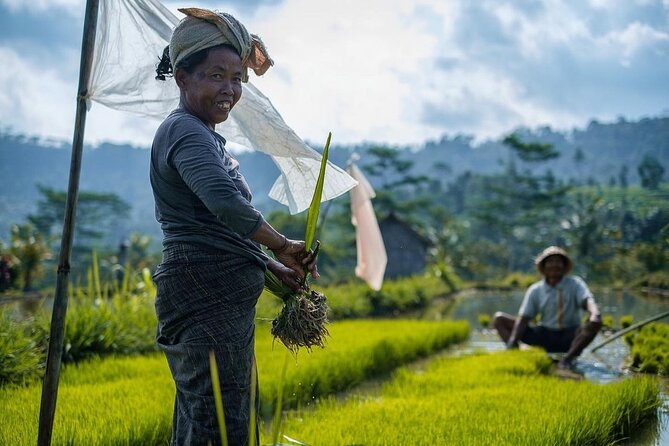
The irrigation channels are one of the most interesting parts of the walk. Water from the hills supports the fields, and the route lets you see how closely farming is tied to the surrounding villages. You may pass crops beyond rice, including chilies, flowers used for offerings, and other plants that appear in local cooking.
This is also where your footwear matters most. Several parts of the route use narrow raised edges beside the paddies or waterways. They may be dry and easy on one day, then muddy or slick after rain. Good walking shoes or hiking shoes are required, and you should be comfortable placing each step with care.
The physical effort is generally moderate. The route goes up and down village streets and field paths, but the walk is not designed as a strenuous mountain hike. The challenge is more about balance and footing than cardio fitness. One useful way to think of it is an easy rural walk with a few awkward sections, not a formal trek with steep climbs.
Crossing the Wooden Bridge and Meeting Village Life
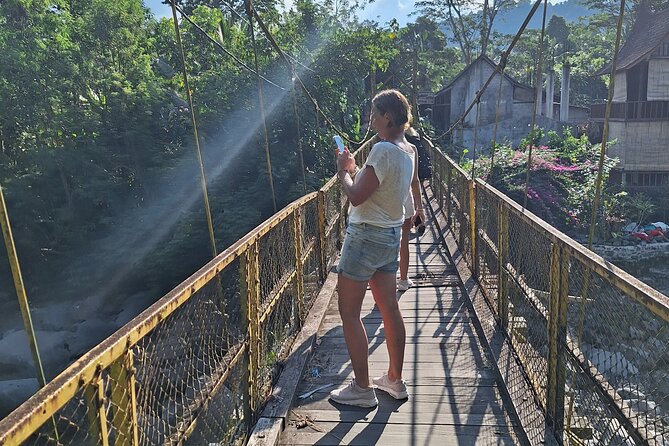
One memorable section takes you across a hanging wooden bridge used by both people and motorbikes. That tells you something about the route and about local life. This is not a staged attraction built only for visitors. It is part of the everyday network connecting the villages and fields.
The bridge may feel exciting if you are comfortable with heights and uneven surfaces. If you dislike movement underfoot, take your time and follow the guide’s instructions. The walk has plenty of places where a careful pace is wiser than trying to keep up with the group.
The route also passes through the village and by a temple used by local residents for prayer. Your guide can explain how Balinese Hindu customs appear in ordinary routines, from temple visits to offerings and farming traditions. The religious sites are not treated as isolated monuments. They are part of the community you are walking through.
That connection is one of the strongest reasons to book this experience. You are not only looking at fields. You are seeing the relationship between water, crops, homes, temples, food, and work. Guides such as Adi and Darya are especially valued for making these connections clear and for answering questions along the way.
What the Guides Add to the Walk
The route itself is attractive, but I would not book it without considering the guide. The paths can be hard to find, and much of the value comes from knowing what you are looking at.
Adi is praised for his humor and relaxed manner, as well as his explanations of rice farming and local customs. Darya and Daria are also named as guides who share practical information about village life, agriculture, religion, and the changes affecting the area. Wayan is described as considerate and easy to talk to, with a strong connection to his home village.
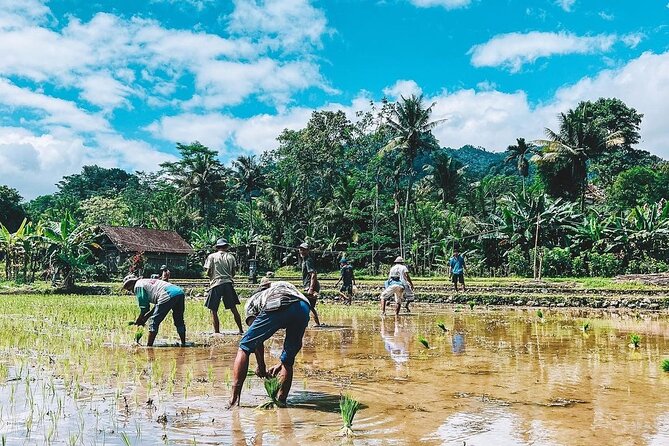
The guides are not simply pointing at plants and saying what they are. They can explain how rice is grown, what happens after harvest, which crops are planted at different times, and how ingredients are used in Balinese cooking. If you visit in December, you might find some rice already harvested, with other crops taking its place. That seasonal change is worth noticing because the fields will not look the same all year.
The best conversations also go beyond farming. You can ask about local religious practices, community life, and the effects of change in Bali. The experience is most rewarding when you take an interest in the people and systems around you, rather than treating the walk as a series of viewpoints.
Group size is limited to 10 people. That is small enough for questions and conversation, though the exact feel will depend on how many people book your time. Private tours are not promised, but a smaller booking could give you a more personal pace.
A completely different kind of day out in East Bali:
- East Bali Tour: Gate of Heaven, Water Palace, Sleeping Gajah
★ 5.0 · 1,726 reviews - All Inclusive : Bali Blue Lagoon Snorkeling, Lunch, and Transport
★ 5.0 · 1,097 reviews - Bali Blue Lagoon Snorkeling – Lunch and Transport All Inclusive
★ 5.0 · 588 reviews - Blue Lagoon Snorkeling – Lunch – Kantolampo – Tibumana Waterfall
★ 5.0 · 542 reviews
Rice Terraces, Mount Agung, and the Changing View
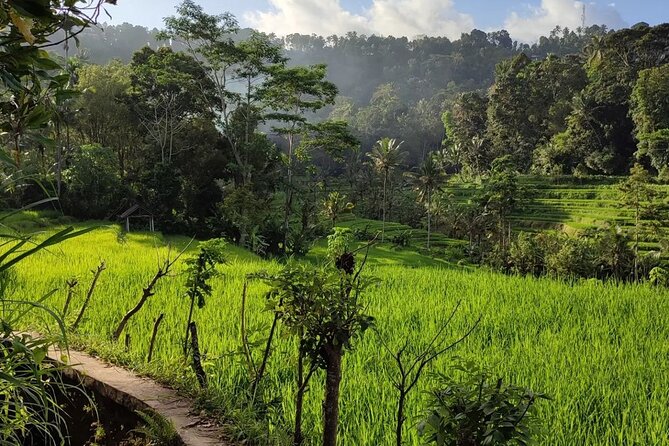
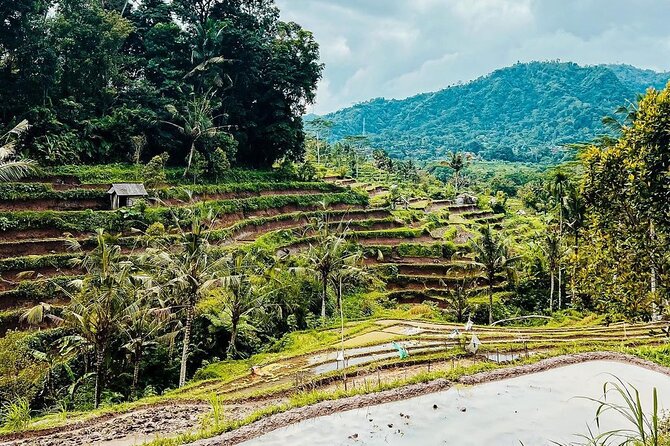
The rice terraces are the visual heart of the route. You see them from different angles, including from field paths and higher viewpoints where the terraces spread out below you. These are not always the broad, distant views you get from a roadside lookout. At times, you are walking directly beside the crops, with farmers’ paths under your feet.
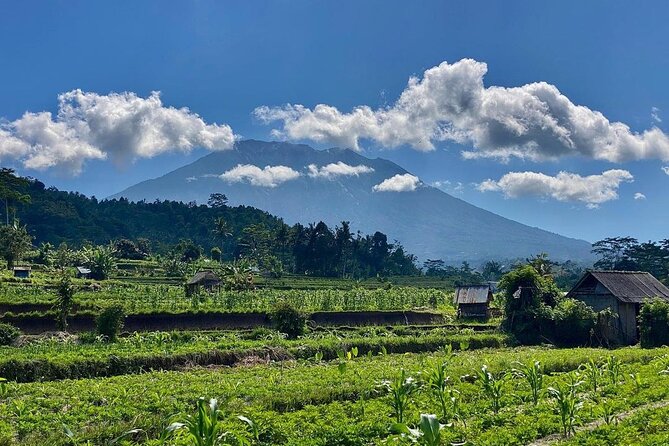
Mount Agung adds another layer to the scenery. The volcano can appear beyond the fields, giving the walk a strong sense of place. Clear weather will make the best conditions for views, but mountain weather can change, and no guide can guarantee a cloud-free sight.
The scenery is also seasonal. In a green growing period, the paddies may look full and lush. After harvest, the same route may show stubble, exposed soil, or replacement crops. That is not a weakness of the experience. It is a reminder that you are seeing working farmland rather than a permanent display.
Bring a sun hat, sunscreen, and sunglasses. The open fields can feel exposed, especially around the middle of the day. A bottle of water is provided, but you may want extra water if you are sensitive to heat or tend to walk slowly.
How Difficult Is This Sidemen Trek?

The description calls for a moderate level of physical fitness, and that is a fair way to approach it. Most people who can walk for two hours should find the exertion manageable, but the route may not suit anyone with poor balance, limited mobility, or difficulty handling uneven ground.
The narrow paths deserve special attention. In places, you may be walking along a raised strip between rice plots or beside an irrigation channel. Some sections can be slippery. You need shoes with a firm sole, and you should not wear footwear that you would be upset to get muddy.
This is not a good choice if your idea of trekking means a demanding hill walk. One guide description calls it an easy walk with photo stops, and that is closer to reality than a strenuous hike. At the same time, it is not a fully smooth stroll. You need agility for the field sections.
The walk is also not ideal for someone who wants to rush. The best pace allows time to stop, listen, take photos, and let the guide point out small details. If you have another appointment afterward, allow the full two to two and a half hours.
Finishing at Warung Ume Anyar
The route ends at Warung Ume Anyar in Ogang Village. This is a useful finish because you can relax with a drink or meal after the walk. It also gives the route a clear beginning and endpoint, rather than sending you back through the same fields.
The ending point is about 3 kilometers from the market, roughly 30 to 40 minutes on foot along the main road if you need to return to the start. Walking back is possible, but most people will find it easier to arrange transport.
Plan your ride before the trek begins. If you have a private driver, ask for pickup at Warung Ume Anyar around two to two and a half hours after the walk starts. Grab operates in the area, but there are few drivers, and some may ask for offline or additional payment. Prearranged transport removes an avoidable wait at the end.
Hotel pickup and drop-off are not included. If you are staying in Sidemen, arrange a ride through your hotel. Grab may be able to drop you off, but some hotels do not allow Grab drivers to collect guests from the property.
Is $13.75 Good Value?

At $13.75 per person, this is an inexpensive way to see Sidemen with a local guide. The price includes bottled water, but not transport, food, or tips. You are paying mainly for route knowledge and interpretation, not for an elaborate attraction with facilities or equipment.
I think the value is strongest if you are staying in Sidemen and can reach the market easily. The cost of arranging transport may become a bigger part of the outing if you are coming from elsewhere in Bali. Still, the walk gives you two hours of guided access to village paths and rice fields that would be difficult to understand fully on your own.
The small-group limit also helps. With no more than 10 people, the guide can usually keep the group together on narrow sections and respond to questions. Group discounts are available, which may make the price even more appealing for families or friends, provided everyone is comfortable with the footing.
Mobile tickets are offered, and confirmation arrives at booking. The cancellation policy is simple: cancel at least 24 hours before the start for a full refund. If poor weather forces cancellation, you can receive a different date or a full refund.
Who Should Book This Walk?
I would recommend it to you if you want rural Bali, enjoy learning how places work, and prefer a local guide to a fixed sightseeing circuit. It suits people who are curious about farming, Balinese Hindu customs, village life, and the small details of the countryside.
It is also a good fit if you want photos with more context. You will see rice terraces and Mount Agung, but you will also learn why the fields look different from season to season and how the crops connect to local food and work.
I would be cautious if you need smooth, paved paths or have trouble with balance. The walk is easy in terms of effort, but narrow and slippery sections can make it demanding in a different way. Anyone expecting a dramatic mountain hike may also find it too gentle.
Wear hiking shoes, carry sun protection, and leave room in your schedule. You may get a little mud on your shoes, and that is part of the deal.
Should You Book Sidemen Trekking?
Book this walk if you want to see Sidemen as a living village rather than a collection of viewpoints. The strongest parts are the local guides, the farmer paths, the irrigation route, and the chance to connect rice farming with everyday Balinese life.
Skip it if you want a polished attraction, a hard workout, or a route with perfectly even footing. For most reasonably fit walkers who can handle narrow paths, the $13.75 price is fair, the setting is memorable, and the experience offers a useful look at a side of Bali that is easy to miss from the main road.
FAQ
Where does the Sidemen trek begin?
It begins at Pasar Sidemen, the Sidemen Traditional Market, at the shop marked Upa Boga.
Where does the walk finish?
The trek ends at Warung Ume Anyar Restaurant in Ogang Village.
How long does the experience take?
Allow about two to two and a half hours from the start of the trek.
Is hotel pickup included?
No. Hotel pickup and drop-off are not included, so you need to arrange transport to the market and from the restaurant.
Is the walk difficult?
It requires moderate physical fitness. The walking is not strenuous, but some rice-field paths are narrow, uneven, elevated, or slippery, so good balance is important.
What should I bring?
Bring a sun hat, hiking boots or sturdy walking shoes, sunscreen, and sunglasses.
Is bottled water included?
Yes. Bottled water is included in the experience price.
Can I visit the market before the walk?
Yes, you can visit Pasar Sidemen before trekking if you book a morning session. The market is open from 5:00 AM to 10:00 AM.
How do I get back after the trek?
Arrange a driver to collect you at Warung Ume Anyar around two to two and a half hours after the trek starts. Grab is available, but only a few drivers operate in the area. You can also walk about 3 kilometers back to the starting point, which takes roughly 30 to 40 minutes along the main road.
More Walking Tours in East Bali
- Snorkeling at Blue lagoon For walking customers
★ 4.0 · 4 reviews - Tetebatu Walking Tour – Rice Terraces, Waterfall & Monkey Forest
★ 5.0 · 349 reviews - Small-Group Walking and Food Tour by Night in Yogyakarta
★ 5.0 · 313 reviews - Bali Private Food Walking Tour With Locals: The 10 Tastings
★ 5.0 · 243 reviews
Just added around East Bali
- Fun Diving Tulamben Bali – For Certified Divers★ 5.0 · 33 reviews
- Dive at Tulamben Bali USS Liberty Ship Wreck★ 4.5 · 7 reviews
- Telaga Waja Rafting and Bali ATV Ride Packages★ 5.0 · 18 reviews
- Telaga Waja White Water Rafting and Besakih Temple Tour★ 5.0 · 3 reviews
- The Gates of Heaven Lempuyang Tours All Inclusive★ 5.0 · 10 reviews
- Snorkeling in Blue Lagoon Padang Bai Bali : Snorkel in the clear blue waters★ 4.5 · 9 reviews
- Private Tour Bali: Lempuyang Temple / Gate of Heaven, tirtagangga, waterfall.★ 5.0 · 3 reviews
- Snorkeling At Blue lagoon And Hidden waterfall★ 5.0 · 18 reviews
Hiking & Trekking, compared.
Mount Batur Sunrise Hike and Natural Hot Spring Option
Read our review →
Mount Batur Sunrise Trekking Private All Inclusive
Read our review →
Mount Batur Sunrise Trekking Private Tour with Breakfast and Hotel Transfer
Read our review →
Mount Batur Sunrise Trekking (Private Tour and Breakfast at Restaurant)
Read our review →
Private Tour Mount Batur Sunrise Trekking and Natural Hot Spring
Read our review →
Private Tour : Mount Batur Sunrise Trekking With Private Guide
Read our review →Browse the lists this tour appears in