
Reviewed · SURABAYA & MALANG
Half Day – Malang Batik Class
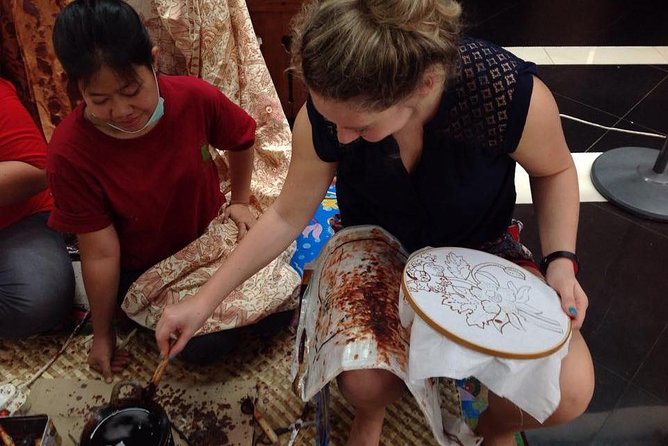
The best part of this Malang class is that you do not simply watch batik being made. You work through the full process yourself, from the first pencil lines to waxing and dyeing, in a local artisan home. I like the hands-on pace and the chance to meet women who make batik as part of a home-based craft cooperative. I also like that the class uses a traditional canting and organic ingredients rather than reducing the craft to a quick souvenir demonstration.
The main point to consider is timing. Five hours is a fair amount of time for a craft class, but it may feel long if you only want a short cultural stop. Food is not normally included in the stated price, even though one family described lunch as part of their own arrangement, so confirm that detail before booking.
Key Points Before You Book
- You make a complete batik piece: The class covers drawing, waxing, and coloring rather than stopping after a simple demonstration.
- The setting is a local artisan home: This feels more personal than a large commercial workshop.
- Traditional tools are part of the lesson: You use a canting to place wax over the design.
- Organic dye creates earthy colors: The coloring process connects the finished cloth to local materials and methods.
- Pickup and drop-off are included: The tour begins at 8:00 am and is offered as a private activity for your group.
- Your cloth may need drying and finishing time: Ask about the finished piece if you are leaving Malang soon.
Why This Five-Hour Malang Class Feels Different
Batik is not just a printed pattern on cotton. It is a resist-dyeing process in which wax protects selected parts of the cloth while other areas take on color. You repeat that basic idea through several careful stages, and small flaws become part of the handmade result.
Indonesia’s batik tradition is recognized as UNESCO Intangible Cultural Heritage. That gives this class more weight than a generic art lesson. You are learning a craft with a strong place in Indonesian culture, while also seeing how it supports local women working from home.
The class takes place in a local artisan house rather than a formal museum or large factory. That setting matters. You can interact with the women producing the batik and see a more direct connection between the lesson and everyday home-based work.
The experience is arranged as a private activity, so only your own group participates. That should make it easier to ask questions, work at your own speed, and get help when the wax lines do not go exactly where you planned.
More craft workshops in Surabaya & Malang:
- Crafting Heritage Batik Painting Workshops
★ 5.0 · 164 reviews - Batik Master Class with Full Process
★ 5.0 · 103 reviews - Borobudur: Village Tour with Pottery and Tofu Making
★ 5.0 · 34 reviews
Arriving at the Artisan Home at 8:00 am
Pickup and drop-off at your hotel are included, along with a driver or guide. The stated start time is 8:00 am, and the class itself lasts about five hours. That makes this a morning-to-early-afternoon plan, not a quick activity to squeeze between several tightly timed attractions.
The exact house is not described in detail, so you should think of the setting as a working local home rather than a polished visitor center. That can be a strength if you want a more personal encounter. It may also mean a simpler environment, with practical work areas rather than displays designed for large groups.
The tour has shown some flexibility with pickup timing. One booking was arranged at short notice, with a later pickup accepted at the group’s request. I would not assume that a late start is guaranteed, but it is worth asking if your schedule does not fit the standard 8:00 am departure.
Your driver or guide helps with the transfer and introduction. Individual guides can vary. Namira is one guide associated with the class, and Martha has handled prompt follow-up after booking. You may also hear about Nuu, who joined a group from a hostel. The important point is to confirm who will meet you and where, especially if you are staying at a hostel or smaller property.
Choosing a Malang Pattern Before the Wax
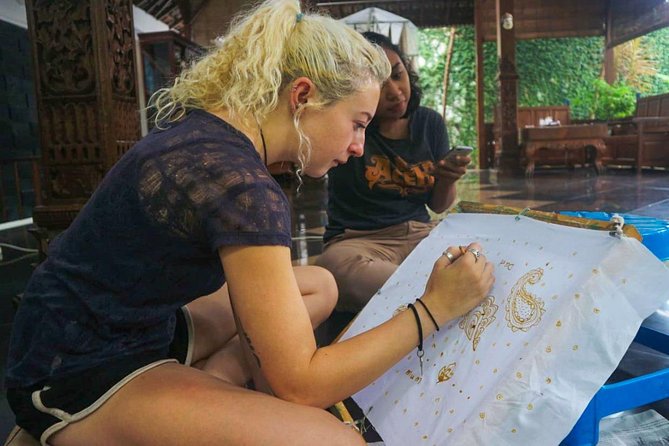
The first practical step is drawing the design. You can select from patterns provided on a tracing table, combine elements, or create a freehand design. This is useful if you like the idea of making something personal but are not confident with a blank sheet of fabric.
Typical Malang-style patterns are part of the lesson, so you are not left to guess what makes a design local. You can copy a suggested motif or adapt it to suit your own taste. The tracing option also helps families and people who feel they cannot draw. The finished cloth depends more on patience and careful handling than on formal art training.
Take your time at this stage. A simple design with clean, open shapes is likely to be easier to wax than a crowded pattern filled with fine details. The staff can help you decide what will work, and the class is meant to teach the process rather than test your drawing ability.
This is also where the private format helps. If you are working with children or a mixed-age group, each person can choose a different level of detail. An eight-year-old can take part, provided an adult accompanies the child, and the class can be approached as a shared family project.
Using the Canting and Organic Wax
After the drawing comes the most distinctive part of the class: waxing. The traditional canting is a small tool used to apply liquid wax along the lines of the pattern. The wax creates a barrier, helping keep dye from reaching the protected areas.
This step requires a steady hand. The wax needs to follow the drawn lines, and it may take a little practice to control the flow. The instructors guide you through the technique and help when you need it. That practical support is important because the tool may be unfamiliar, even if you have done other craft classes.
You should expect the process to be slower than simply painting a design. That is not a flaw. The point is to understand how the pattern is built and why the wax matters. Once the fabric is dyed, the wax-covered sections retain their earlier color or remain lighter, creating the classic batik effect.
The class uses organic wax, according to the experience description. That detail will appeal if you are interested in traditional materials and lower-impact craft methods. The information provided does not specify every ingredient or explain how the wax is removed, so ask the instructor about the exact materials if that is important to you.
A few more things to do around Surabaya & Malang
- Half-Day Private Majapahit Historical Tour from Surabaya
★ 5.0 · 38 reviews - Half Day Bali Tour
★ 5.0 · 556 reviews - Half-Day Ubud Electric Cycling Tour to Tirta Empul Water Temple
★ 5.0 · 315 reviews - Jakarta Half-Day Guided Tour with a Private Fun Local Host
★ 5.0 · 292 reviews
Adding Earthy Color With Organic Dye
Coloring comes after the wax has been applied. The fabric is dyed using organic ingredients, producing earthy shades rather than the highly uniform colors you might see on factory-made cloth.
This stage shows why the earlier work matters. The dye does not simply cover the fabric. It interacts with the waxed sections, leaving the protected lines to form the pattern. The result may not be perfectly even, and that is part of the appeal of a handmade piece.
I would treat the coloring stage as a chance to make choices, not just follow instructions. Ask what tones are available and how the organic ingredients affect the final shade. The provided information does not promise a fixed color palette, so the result may vary from one class to another.
Once the coloring is finished, the fabric needs to be dried and have the wax removed or otherwise finished. One family had the cloth prepared so it could continue on their journey, but that service is not stated as a standard guarantee. If you are catching a train, flight, or another tour, ask when your finished piece will be ready and how it will be packed.
Meeting the Women Behind the Craft
The social side of the class is as important as the finished cloth. The workshop introduces you to local women artisans who produce batik from home and help other housewives develop the craft. This gives the activity a direct community connection.
One description identifies the class as an organic batik workshop run by a women’s cooperative connected with a local NGO called Yagazu. The information does not spell out the current structure in detail, so I would confirm the organization’s role when you arrive. Still, the focus on women working together gives the lesson a useful social context.
You are not just buying a finished item from a shop. You are spending time with people who can explain how the cloth is made and how the work fits into their lives. That human contact is especially valuable in Malang, where a half-day craft activity can show you a side of the city that a standard sightseeing route may miss.
The class also leaves room for questions. Namira was praised for taking time with curious questions, which is exactly what you want in a craft lesson. Ask about the pattern, the wax, the dye, or how long the finishing process takes. A good question can turn a simple activity into a clearer understanding of the whole craft.
What the $35 Price Covers
At $35 per person, the price includes the class activities, bottled water, a driver or guide, and hotel pickup and drop-off. Since the session lasts about five hours and covers three major stages of batik production, the value is strongest if you want a full workshop rather than a short demonstration.
The private format also affects the value. You are not paying only for transport. You are getting a dedicated activity for your group, with room to ask questions and receive help. For couples, families, or friends who prefer a personal schedule, that can make the price reasonable.
Food and drinks are not included unless specifically stated. This is worth checking because one family’s arrangement included lunch, but the general inclusions do not promise it. Bring your own plan for food, or ask before the day begins so there are no surprises.
The finished cloth is another part of the value. You leave with an object you helped design and make, rather than a mass-produced souvenir. Do not expect museum-level perfection. The appeal is that your piece records your own attempt at the process, including the small irregularities that show it was handmade.
Who Will Enjoy This Class Most
This is a strong choice for anyone who likes making things with their hands. You do not need to be an artist, and the tracing table gives you a practical starting point. The instructors can help you through the wax and dye stages, so patience matters more than drawing skill.
Families can also make good use of the class. Children must be accompanied by an adult, and the activity gives older children a clear sequence to follow. Younger children may need close supervision around hot wax and craft tools, although the supplied information does not give a specific minimum age or safety arrangement.
The class suits visitors who want local contact without committing to a full-day cultural program. Five hours is long enough to understand the process, yet still leaves part of the day available for other plans if the schedule runs as expected.
It may not suit you if you want a polished, fast-moving attraction with a fixed finished product. Batik takes time, the colors may vary, and your cloth may require finishing after the class. You should also allow some flexibility if you need the souvenir ready before moving on.
Practical Details for a Smoother Visit
Book at least 24 hours ahead if you want the option of a full refund. Cancellation less than 24 hours before the 8:00 am start is not refundable, and changes inside that period are not accepted. The cut-off follows local time in Malang.
Confirmation is provided when you book. Since hotel pickup is included, enter your accommodation details carefully and confirm the meeting point. The stated meeting information lists Ourtrip1st Day Tours, but the practical pickup point should be settled before the morning of the class.
Wear something suitable for a hands-on activity. The supplied details do not state a dress code or provide a laundry guarantee, but wax and dye are part of the work. I would choose comfortable clothing and avoid anything you would be upset to mark.
Bring questions, not just a camera. Ask about the organic dye ingredients, the Malang patterns, the women’s cooperative, and the finishing time. Those details will help you understand the work behind the cloth and decide how to care for your finished piece.
Should You Book the Malang Batik Class?
Book it if you want a personal, practical cultural experience and like the idea of taking home a piece you helped create. The local home setting, private format, full drawing-to-dyeing process, and contact with women artisans give this class more substance than a brief craft demonstration.
I would be cautious only if your schedule is tight, you dislike slow handwork, or you need a guaranteed finished cloth immediately. Confirm lunch, pickup timing, and the finishing arrangements before paying.
For most visitors with a free half-day in Malang, the $35 price is fair. You get transport, guidance, materials, and several hours of direct instruction. The class asks for patience, but it gives you something better than a quick photo stop: a clearer sense of how Indonesian batik is made and a handmade reminder of your time in Malang.
FAQ
How long does the Malang batik class last?
The experience lasts approximately five hours.
What time does the class start?
The stated start time is 8:00 am.
Is hotel pickup and drop-off included?
Yes. Hotel pickup and drop-off are included, along with a driver or guide.
Is the activity private?
Yes. Only your own group participates in this private activity.
What does the batik class include?
It includes all activities, bottled water, a driver or guide, and hotel pickup and drop-off.
Is food included?
Food and drinks are not included unless specifically stated. Confirm this before booking, as arrangements may vary.
Can children take part?
Yes. Children can participate, but they must be accompanied by an adult.
What will I learn during the class?
You will draw a pattern, apply wax with a traditional canting, and color the fabric using organic ingredients.
Can I cancel for a full refund?
Yes, if you cancel at least 24 hours before the experience’s start time. Cancellations or changes made less than 24 hours before the start are not accepted for a refund.
Just added around Surabaya & Malang
- 1 Day – Malang Beaches and Island Hopping // 06:30 – 17:30★ 5.0 · 7 reviews
- Private Airport Transfer Surabaya★ 5.0 · 6 reviews
- Majapahit Heritage Archaelogy tour via surabaya★ 4.5 · 16 reviews
- Half-Day Private Majapahit Historical Tour from Surabaya★ 5.0 · 38 reviews
- Trowulan Tour Ruin of Majapahit Kingdom from Surabaya★ 5.0 · 25 reviews
- Surabaya Shore Excursion For Cruise Passengers★ 4.5 · 52 reviews
- Private Day Tour Surabaya Historiculture★ 4.5 · 84 reviews
- Surabaya Private Tour★ 5.0 · 86 reviews
Surabaya & Malang, compared.
Half-Day Private Majapahit Historical Tour from Surabaya
Read our review →
Trowulan Tour Ruin of Majapahit Kingdom from Surabaya
Read our review →

1 Day – Malang Beaches and Island Hopping - 06:30 – 17:30
Read our review →
Browse the lists this tour appears in