
Reviewed · WORKSHOPS
Batik Master Class with Full Process
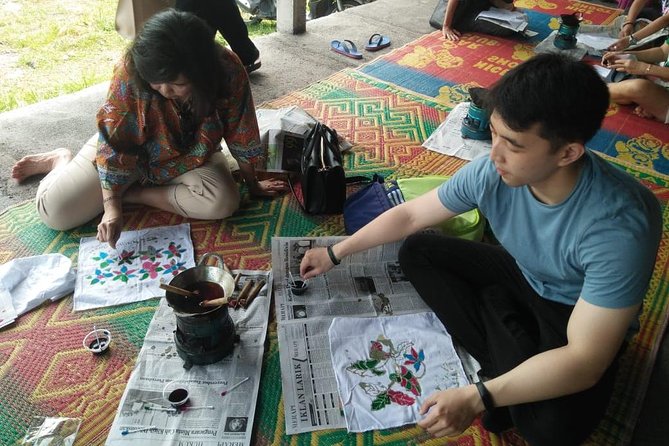
The most rewarding part of this Yogyakarta experience is that you do not simply paint a souvenir. You make batik from the first pencil lines through waxing, coloring, drying, and washing, using the same basic tools that give this Indonesian textile its character. The class takes place near Prambanan, making it an easy cultural stop after the temple.
I especially like the one-on-one guidance, which helps when your hand slips or the wax line wanders. I also like the warm local touch: coffee, tea, and Indonesian snacks arrive while you work. The main consideration is time. Three hours can stretch to four, and your piece may still be damp when you leave.
- Traditional canting work: Trace a pattern and outline it with melted wax by hand.
- A useful Prambanan pairing: The workshop is close to Prambanan Temple and includes Sojiwan Temple in the itinerary.
- Take-home artwork: Finish with a handkerchief-sized piece, or pay extra for a tote bag.
- Patient instruction: A local batik master leads the work, with English explanation available.
- Small comforts included: Enjoy local snacks, coffee, and tea while the dyeing process continues.
- Good family activity: Children can take part, especially during the coloring stage.
Making Batik From Wax Line to Finished Cloth

Batik is one of Yogyakarta’s signature arts, but it is easy to misunderstand it as simple fabric painting. The key step is the wax. You apply hot wax to selected lines and areas, then dye the cloth. The wax blocks the color, leaving the pattern behind when the cloth is treated and washed.
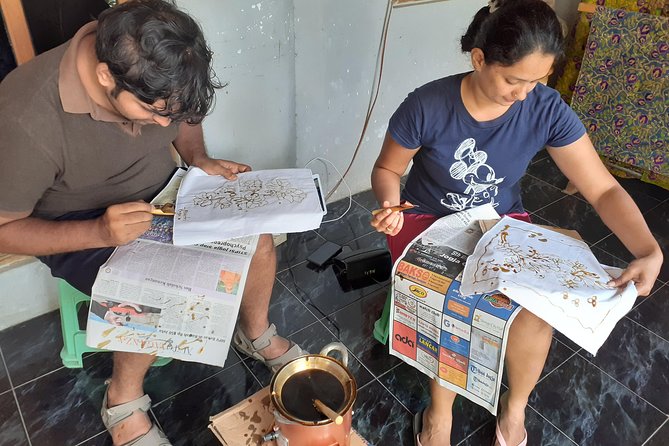
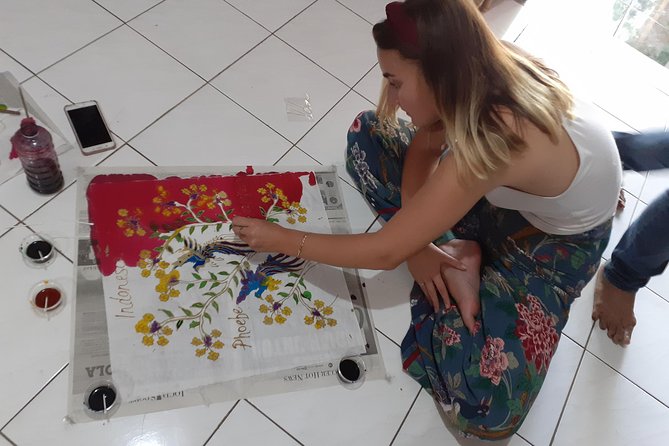
This class lets you follow that entire chain instead of watching a short demonstration. You start with an introduction to batik, the tools, and the correct way to handle them. Then you trace a design, use the canting tool to lay down melted wax, add color, and continue through the final treatment.
I like this full-process format because the finished object carries the marks of your hand. The lines may not be perfectly even. That is part of the point. The instructor is patient with beginners and encourages you to treat mistakes as part of making art, not as a reason to give up.
You work on a handkerchief-sized piece as part of the standard activity. If you want something more practical, a tote bag is available for an additional cost. Ask about that option before you begin so you can plan your design and budget.
The workshop lasts about three hours, though the actual pace depends on your design and how quickly you work. One person finished in roughly three to four hours, and another left with the cloth still wet. Do not schedule a tight appointment immediately afterward.
What the Master Craftsman Shows You
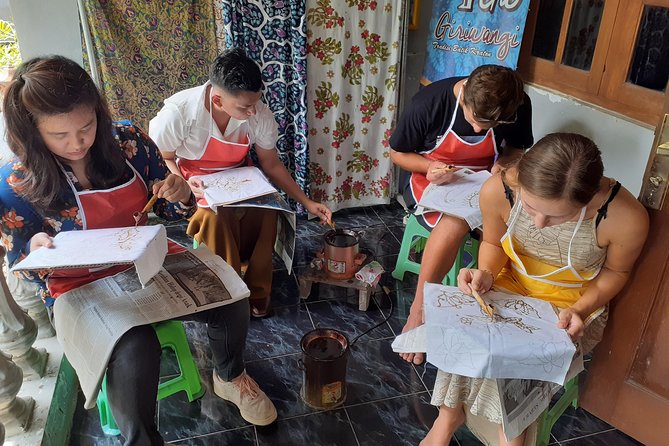
The local instructor begins by explaining the background of batik and introducing the equipment. The important tool is the canting, a small traditional pen-like instrument used to carry hot wax onto the fabric.
You will need a steady hand, but you do not need to arrive with art-school training. The teaching is practical. You learn how to hold and guide the tool, where to place the wax, and how the pattern will respond when dye reaches the cloth.
An English translator is available during the class. That matters because this is a hands-on process, and small instructions can affect the final result. The class is not simply a demonstration in which you watch someone else work. You receive help as you make your own piece.
I would expect the instructor to spend more time with beginners who need it, though the exact amount of individual instruction can vary with the size of the group. The maximum group size is 30 people, but the strongest feedback centers on personal help and patient teaching. If you want the most direct guidance, a smaller booking may feel more comfortable than a full session.
The teacher also documents the process, giving you a visual record of your work from the early drawing stage through the finished cloth. That is a useful extra, especially if you want to remember how the wax and color stages fit together.
More craft workshops in Yogyakarta:
- Borobudur: Village Tour with Pottery and Tofu Making
★ 5.0 · 34 reviews - Borobudur: Pottery Making Workshop
★ 5.0 · 5 reviews - Crafting Heritage Batik Painting Workshops
★ 5.0 · 164 reviews
A Calm Workshop Near Prambanan
The workshop is in a peaceful area near Prambanan, away from the main temple crowds. That setting makes sense as part of a day focused on Central Javanese culture. You can visit the great Hindu temple complex, then spend a slower afternoon working with your hands.
The listed meeting point is Pasar Prambanan, on Jl. Merpati No. 60 in Klurak Baru, Bokoharjo, Sleman. The activity ends back at the same meeting point. You receive a mobile ticket, and booking confirmation is provided at the time of booking.
From Malioboro, the area is about 35 minutes by car according to the practical timing given for the experience, though your actual journey may vary. One participant hired a private car and driver for the trip. That can be a sensible choice if you plan to visit Prambanan and Sojiwan Temple on the same day, since the workshop is outside central Yogyakarta.
The class is listed at $19.50 per person. For about three hours of instruction, materials, snacks, drinks, and a finished piece to take home, I consider that a fair price. It is particularly good value if you already plan to be in the Prambanan area and do not need to make a separate long trip just for the workshop.
The tote bag costs extra, so factor that in if a handkerchief feels too small. The standard piece is a modest souvenir, but it is also easier to complete within the scheduled time.
Stop One: Prambanan Temple Complex
Prambanan is the major landmark connected with this experience. It is one of Indonesia’s great Hindu temple complexes, with tall stone shrines and carved details that make it a major reason to visit the area.
The batik class is not a substitute for touring Prambanan. Think of it as a companion activity. You can visit the temples first, then go to the workshop for a slower, creative session. The close location makes the pairing practical, with one activity providing monumental architecture and the other offering a direct craft experience.
I would allow enough time for the temple complex before the class rather than trying to squeeze in a rushed visit. Batik requires concentration, and you will enjoy it more if you are not watching the clock.
The information for the experience presents Prambanan as the first stop, but the exact amount of guided sightseeing at the temple is not specified. Confirm the day’s timing if you are booking this as part of a larger private tour. The workshop itself begins at Pasar Prambanan, not necessarily at the temple entrance.
Stop Two: Sojiwan Temple and a Quieter Cultural Pause
Sojiwan Temple is listed as the second stop. Compared with the larger Prambanan complex, it offers a quieter temple visit and helps round out the day around the Prambanan area.
The available details do not specify how long you spend at Sojiwan or whether a guide gives a full temple explanation. I would treat it as a useful added stop rather than the central purpose of the booking. The main activity is still the batik class.
This combination works well for visitors who want more than a quick photograph at Prambanan. You see major religious architecture, visit a second temple, and then take part in a living craft tradition. That makes the day feel connected rather than like a string of unrelated attractions.
A few more things to do around Yogyakarta
- Borobudur Sunrise from setumbu Hill , Merapi Volcano & Prambanan Full Day Tour
★ 5.0 · 1,030 reviews - Borobudur Temple Climb To The Top & Prambanan Temple – 1 day tour
★ 5.0 · 638 reviews - Menoreh Village Cycling
★ 5.0 · 611 reviews - Yogyakarta: Borobudur Top Access & Prambanan Temple Private Tour
★ 5.0 · 390 reviews
Snacks, Tea, and the Rhythm of the Work
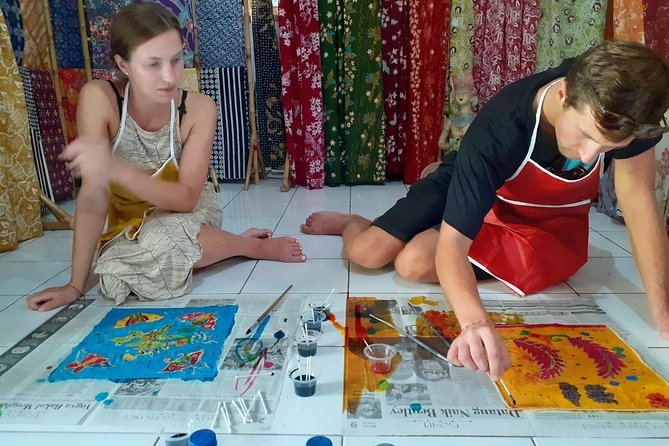
Food is a small but welcome part of the class. Local snacks, coffee, and tea are served as you work. This gives you a chance to pause between the more careful stages, especially when you are waiting for color or wax treatment.
Do not expect the refreshments to turn the workshop into a meal. They are best viewed as a local welcome and a pleasant break. If you need a full lunch, plan that separately.
The slower pace is one of the better features of the experience. Batik is not a quick craft where you slap on paint and leave. You draw, apply wax, color the fabric, and wait for the later treatments. The pauses make the process easier to understand, and they give you time to look at the work developing in front of you.
Families can enjoy this rhythm. Children often respond well to the coloring stage, which feels more immediate than the careful waxing. Adults may prefer the precision of the canting tool. The activity suits both, although younger children may need close help with hot wax and delicate equipment.
What Happens After the Colors Go On
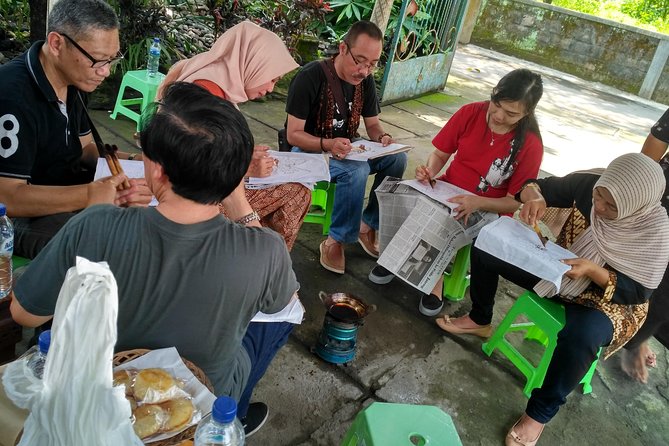
Once your pattern is waxed and colored, the fabric goes through the final part of the process. It is dried, treated in a chemical solution, and rinsed in water. The exact order and timing can vary, but the point is to remove or fix the materials so the finished pattern becomes clear.
You may not leave with a completely dry piece. One person had to place the work on newspaper in the car and hotel to let it finish drying. Bring that possibility into your plans. Keep the cloth flat and protected if you are continuing on to another activity.
This is also why the full-process class takes longer than a short painting lesson. The dyeing and drying stages are not just decoration. They show you how batik becomes a durable textile rather than a painted piece of cloth.
When the process is complete, you can take the work with you as a souvenir. The finished item will be personal in a way a shop-bought batik is not. It may show an uneven line or a color that spread farther than planned, but you will know exactly how it came together.
How Much Skill and Stamina Do You Need?
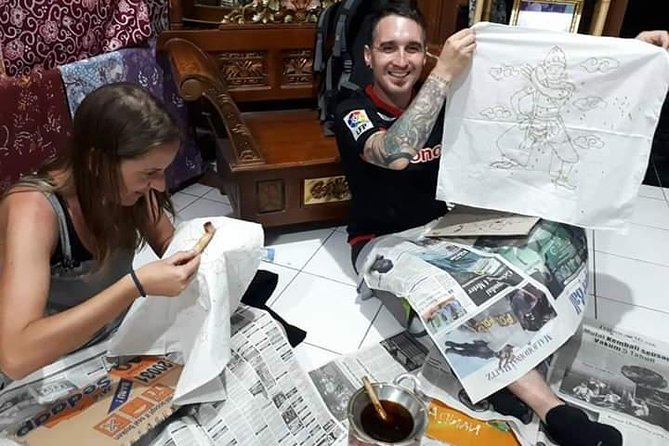
The activity calls for a moderate level of physical fitness. You should be comfortable spending several hours focused on a craft and handling the tools used in the process.
No advanced drawing ability is required. The instructor provides a pattern to trace, which takes away some of the pressure of inventing a design from scratch. The more difficult part is controlling the canting and keeping the wax flowing where you want it.
I would choose this class if you enjoy hands-on activities, local craft, and souvenirs with a story. It suits families, couples, solo visitors, and anyone who wants a break from temple sightseeing.
It may not suit you if you want a fast activity, dislike careful repetitive work, or have only a short window between transport connections. Three hours is an approximate duration, and the final drying stage may add time to the day.
The maximum group size is 30, so the atmosphere can depend on the booking. The strongest part of the instruction is the patient individual help. If you are concerned about receiving enough assistance, ask how many people are expected when you book.
Is $19.50 Good Value?
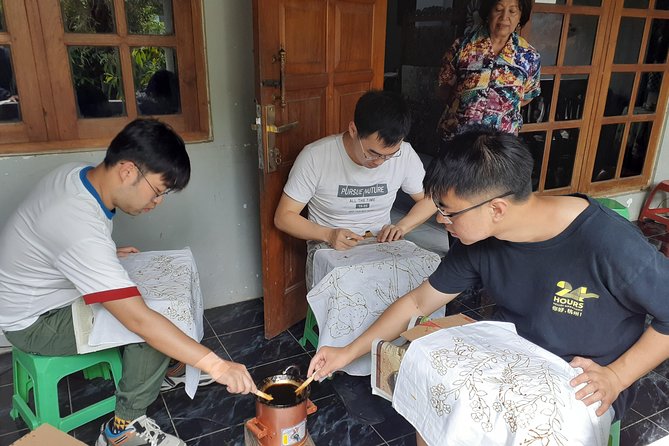
At $19.50 per person, this is a low-cost way to take part in a traditional craft near one of Yogyakarta’s most important sights. You are paying for instruction, tools, fabric, dyes, refreshments, and the finished item, not just admission to a demonstration.
The value is strongest when you combine it with Prambanan and Sojiwan Temple. You avoid making a separate journey from central Yogyakarta, and the workshop gives the day a more personal focus.
The extra cost for a tote bag is worth considering if you want a souvenir you can use. The included handkerchief-sized piece is enough for the basic activity, but the larger format may give you more room for color and design.
I would not judge the value by expecting a polished professional textile. The result is made by a beginner in a few hours. The real value is the process, the instruction, and the chance to carry home something you made in Yogyakarta.
Booking, Weather, and Practical Planning
You can cancel for a full refund up to 24 hours before the start time. Changes or cancellations made less than 24 hours before the activity are not accepted for a refund. The cut-off uses local time.
The experience requires good weather. If poor weather causes a cancellation, you are offered another date or a full refund. Since the activity is linked to an outing near Prambanan, check the forecast before setting up a tightly timed temple day.
The activity is booked an average of 10 days ahead, so I would not leave it until the last moment if your Yogyakarta schedule is fixed. Use the mobile ticket and confirmation details to verify the meeting point at Pasar Prambanan.
Plan for the possibility that the finished cloth remains damp. If you are using a hired car, ask the driver to keep newspaper or another protective layer available. That small bit of planning can prevent dye or moisture from making a mess.
Should You Book This Batik Class?
I would book it if you want to understand batik by making it, not just buying it. The patient master craftsman, English explanation, local refreshments, and full process make this more substantial than a quick souvenir painting.
It is especially useful after Prambanan, when you want a quieter activity that still connects you with Javanese culture. Families and first-time crafters should find the format approachable, while experienced artists can enjoy the challenge of working with wax.
Skip it if your schedule cannot spare three to four hours, or if you need to leave the area with a completely dry souvenir. For everyone else, $19.50 buys a thoughtful, hands-on addition to a Prambanan day, with a finished piece that carries your own imperfect but genuine mark.
FAQ
Where does the batik class begin?
The meeting point is Pasar Prambanan, Ps. Prambanan, Jl. Merpati No. 60, Klurak Baru, Bokoharjo, Sleman, Yogyakarta 55572, Indonesia.
Where does the activity end?
The activity ends back at the meeting point at Pasar Prambanan.
How long does the batik experience last?
The scheduled duration is approximately three hours. Depending on the pace of your work and the drying process, it may take closer to three or four hours.
What will I make during the class?
The standard activity produces a handkerchief-sized batik piece. You can choose to make a tote bag for an additional cost.
Can I take my batik home?
Yes. Once the process is finished, you can take the result with you as a souvenir. It may still be wet when the class ends.
Are snacks and drinks included?
Yes. The experience includes local snacks, coffee, and tea while you work.
Is the class suitable for children?
The activity is suitable for families, and children can take part, particularly during the coloring stage. A moderate level of physical fitness is recommended.
Can I cancel for a full refund?
Yes. You can cancel at least 24 hours before the experience start time for a full refund. If poor weather causes the activity to be canceled, you are offered another date or a full refund.
Just added around Yogyakarta
- Snorkeling and Island Hopping Tour in Karimunjawa (sharing tour)★ 5.0 · 3 reviews
- From Semarang Port: Borobudur Temple Private Shore Excursion★ 5.0 · 11 reviews
- Semarang Private City Tour★ 5.0 · 17 reviews
- From Semarang port: Borobudur Temple excursion – Cruise Ship Traveler★ 5.0 · 36 reviews
- Semarang Private Tour For Cruise Passengers★ 4.5 · 11 reviews
- Semarang Tour For Cruise Passengers★ 4.5 · 33 reviews
- Prambanan Private Tour From Semarang Cruise Port★ 5.0 · 7 reviews
- Borobudur Private Excursion From Semarang (Upper level access)★ 5.0 · 35 reviews
Workshops, compared.
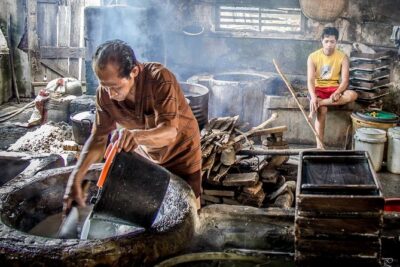
Borobudur: Village Tour with Pottery and Tofu Making
Read our review →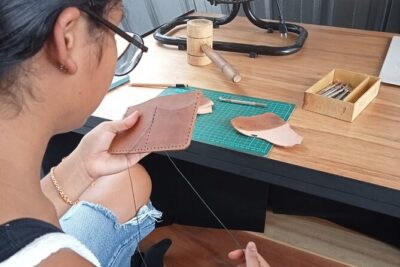
Bali Leather Craft Workshop – 6 hours ( canggu / seminyak)
Read our review →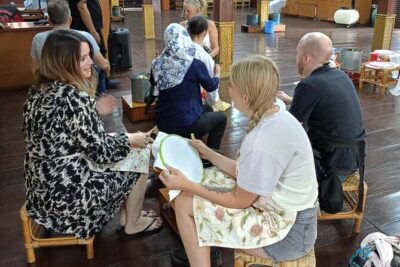
Batik Heritage Introduction Class with Lunch & Souvenir
Read our review →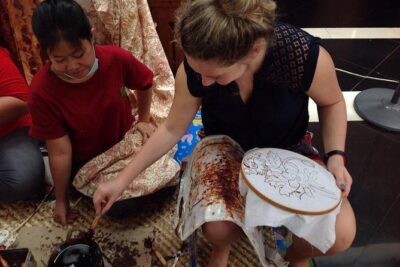

Your Fragrance Selection: Bali Perfume Workshop and Creations
Read our review →Browse the lists this tour appears in