
Reviewed · COOKING CLASSES
From Ubud: Authentic Bali Farm Cooking School & Organic Farm
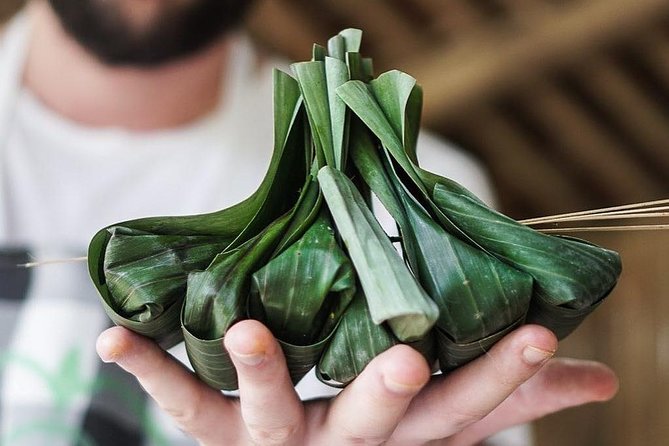
The best part of this Ubud cooking class happens before you reach the stove. You visit a local market on the morning option, then head to an 8,000-square-meter organic farm in Taro Village to pick ingredients for your meal. It feels closer to a village food lesson than a standard kitchen demonstration.
I like the farm-to-table rhythm and the generous menu: you prepare six or more dishes, including dessert, then sit down to eat the whole spread. I also like the warm, patient instruction, with recipes written for home kitchens and ingredient substitutions included. The main caution is time. At five and a half hours, the class is a full half-day, and some of the chopping can feel repetitive.
Key Points Before You Book
- Morning market visit: See local produce, spices, fruit, and delicacies before heading to the farm.
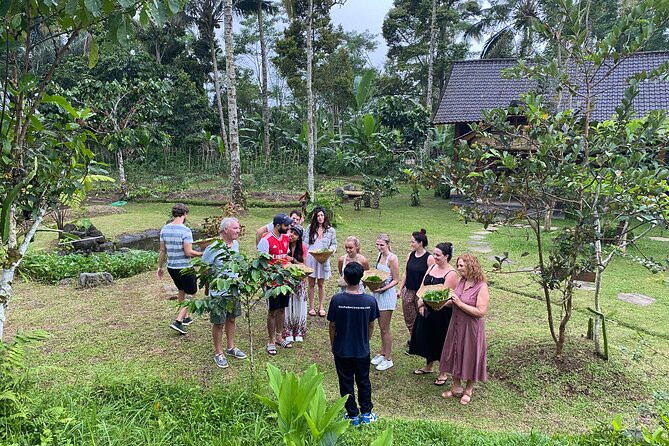
- Farm-picked ingredients: Walk through the organic garden and harvest some of what you will cook.
- Six or more dishes: Prepare a full Balinese meal, with appetizers, main dishes, and dessert.
- Community setting: The cooking school supports a local farm and offers a relaxed, social class.
- Useful take-home recipes: Receive printed and PDF recipes with substitutions, tips, and technique-video links.
- Allow five and a half hours: The class includes transport, garden time, cooking, and a substantial meal.
From Ubud to Taro Village: A Food Lesson with a Sense of Place
This class takes you north of central Ubud to Taro Village, where the cooking school sits on a family organic farm. The drive changes the mood. Instead of spending another morning among Ubud’s shops and traffic, you head into greener countryside and a quieter village setting.
The farm covers about 8,000 square meters. That matters because the garden is not a decorative backdrop for a cooking lesson. You use it. You walk among the plants, learn about the farm’s growing methods, and pick fresh ingredients for the dishes ahead.
I like that the class connects food with its source. You see produce in the soil before it appears on your cutting board. For anyone curious about Balinese food beyond restaurant menus, this is the useful part: you begin to understand why fresh herbs, chilies, spices, and vegetables shape the cooking.
The setting is also comfortable. Cooking takes place in a shady area, with an apron, utensils, bottled water, and coffee or tea supplied. The facilities have been described as clean and well kept, though one report noted that the bus could use better cleaning. That is a minor point, but worth knowing if transport standards matter greatly to you.
More Cooking Classes in Ubud
- Ubud Cooking Class Bali with Balinese Chef
★ 5.0 · 1,609 reviews - PRIVATE Authentic Balinese Cooking Class in Ubud at Putu’s Home
★ 5.0 · 644 reviews - Balinese Ubud cooking school (9 Dish Cooking and Market Tour)
★ 5.0 · 540 reviews
The Morning Market Adds Local Context
Choose the morning session if you want the fullest version of the experience. It begins with a visit to a traditional market, where you can see the produce, fruit, spices, and unusual local foods that give Balinese cooking its character.
The market is more than a shopping stop. It helps you identify ingredients before the class uses them. You might see fruit you have never encountered, along with familiar vegetables presented in a different way. The guides explain what the foods are and how they fit into local cooking.
This part is especially useful for first-time visitors to Bali. A restaurant menu can tell you what a dish is called, but a market shows you the raw materials and the everyday setting behind it. You get a better sense of how much Balinese cooking depends on fresh ingredients prepared close to home.
There is one practical catch: the market visit applies to the morning experience. Afternoon participants should not assume it is included. One booking also involved confusion about whether a market visit was part of the pickup arrangement, so confirm the exact session details before setting out if this stop is important to you.
The market can also add energy and unpredictability to the day. If you prefer a short, tightly timed class, this extra stop may make the outing feel long. If you enjoy food culture and local scenes, it is likely to be one of the strongest parts.
Picking Vegetables in the Organic Garden
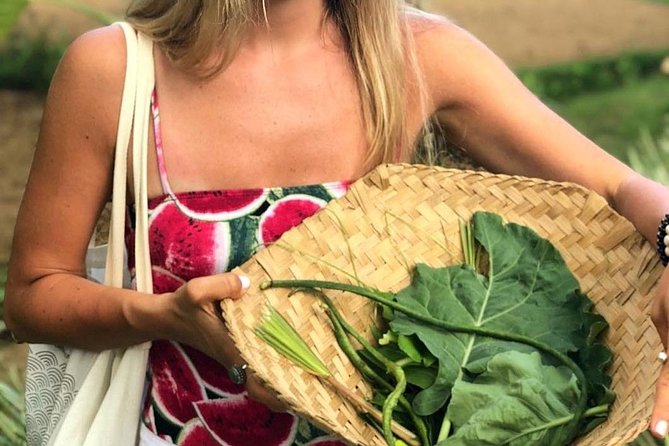
Back at the farm, you help collect ingredients from the garden. This is a simple activity, but it gives the class its strongest sense of place. You are not just receiving bowls of pre-measured food. You are handling ingredients that were growing on the property.
The staff also explain sustainable farming practices. The lesson is not a technical farming course, but it gives you a practical look at how a community-run cooking school links agriculture and food preparation.
I particularly like this stage for families and mixed-age groups. Children can take part in a clear, hands-on task, while adults get a better feel for Balinese produce. It also breaks up the cooking instruction. After the market and the farm walk, you arrive at the kitchen with some idea of what you are about to use.
The garden is kept attractive and orderly, with a calm feel that several parts of the class depend on. You are spending much of the day outdoors, so light clothing, sun protection, and comfortable shoes make sense. The provided information does not specify a dress code, but you should dress for garden paths and food preparation.
Six Dishes, Plenty of Chopping, and Clear Instruction
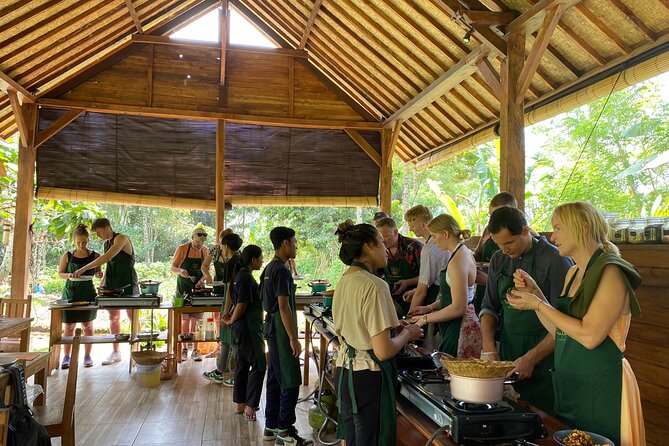
The cooking portion covers six or more Indonesian dishes, including dessert. You help prepare the meal from scratch, then eat everything you make. The menu can accommodate various diets, but you should communicate dietary needs and allergies when booking or before the class begins.
The instructors demonstrate each step in clear English and guide you through the process. You are not left to guess how ingredients should be combined or cooked. The teaching style is friendly, humorous, and patient, which helps if you rarely cook or are unsure about unfamiliar ingredients.
Expect plenty of chopping. One useful criticism of the class is that students may spend more time cutting onions and chilies than learning how to combine new flavors. That will not bother everyone. If you enjoy hands-on work, preparing each ingredient yourself is part of the fun. If you want a shorter, more technique-focused lesson, the repeated cutting may test your patience.
The class appears designed for broad ability levels. You do not need to be an experienced cook, and the recipes are meant to be recreated at home. The instructors help you get the seasoning and texture right while explaining the ingredients along the way.
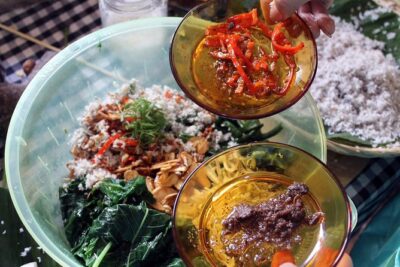
The menu is also large enough to make the cooking feel worthwhile. You are not preparing one small dish for a quick tasting. You are building a full meal, with savory dishes and a sweet finish. Come hungry. Coffee or tea is included, and alcoholic drinks and soft drinks are available for purchase.
A completely different kind of day out in Ubud:
- All-Inclusive Ubud Private Tour
★ 5.0 · 14,344 reviews - Best of Ubud Full-Day Tour with Jungle Swing
★ 5.0 · 8,571 reviews - Ubud: Monkey Forest, Jungle Swing, Rice Terrace, and Water Temple
★ 5.0 · 7,160 reviews - Best of Ubud 1-Day Private Tour
★ 5.0 · 4,451 reviews
Eating the Meal You Prepared
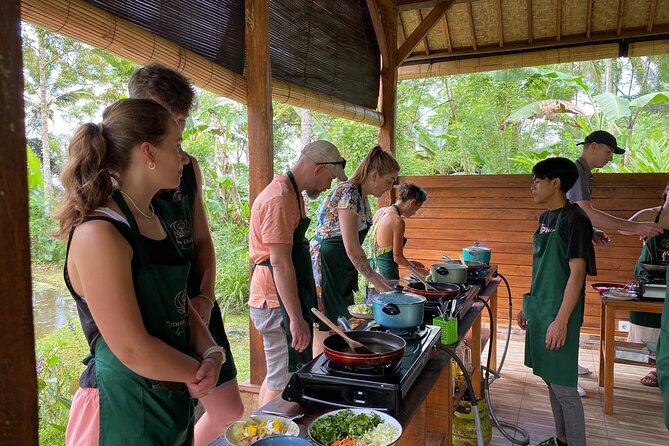
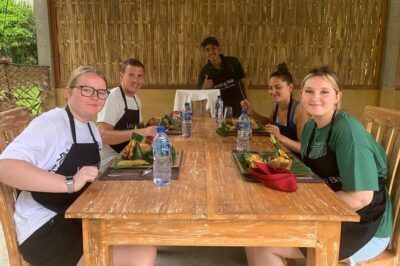
After the work comes the best reward: lunch in the shaded farm setting. You eat the food prepared by the group, so the meal is part of the lesson rather than a separate restaurant course.
This arrangement changes how you taste the dishes. You know which ingredients went into them, how much chopping they required, and which steps created the final flavor. Even a simple vegetable dish becomes easier to understand when you helped make it.
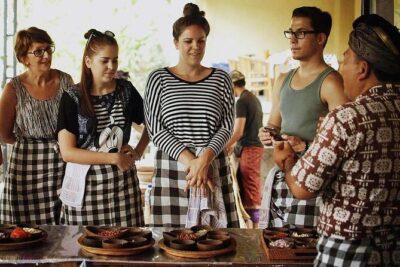
The meal can also be social. The maximum group size is 20, large enough to meet people from different places but still manageable for a cooking class. You may work alongside couples, families, solo visitors, and people with very different levels of kitchen experience.
The food is one of the strongest reasons to book. The dishes are described as flavorful and easy to make again, not as complicated restaurant creations that require specialist equipment. That is important value. A cooking class is more useful when you can actually repeat the results at home.
The Recipe Book Makes the Experience Last Longer
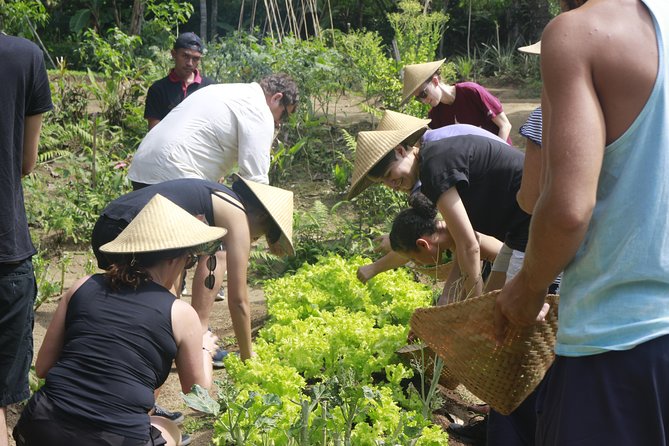
You receive both printed and PDF recipes. They include ingredient substitutions, cooking tips, and links to technique videos. This is a real advantage over a class that ends when lunch is cleared away.
Some Balinese ingredients can be difficult to find outside Indonesia. Substitutions help you adapt the recipes to your own kitchen rather than abandoning them when a local herb or spice is unavailable. The video links may also help you remember techniques that are easy to forget after a busy holiday.
I would keep the recipe material somewhere accessible and mark the dishes you liked best while the flavors are still fresh in your mind. The large menu can blur together by the end of a long morning. A quick note about your favorite dish will make the take-home recipes more useful.
Timing, Meeting Point, and Transport
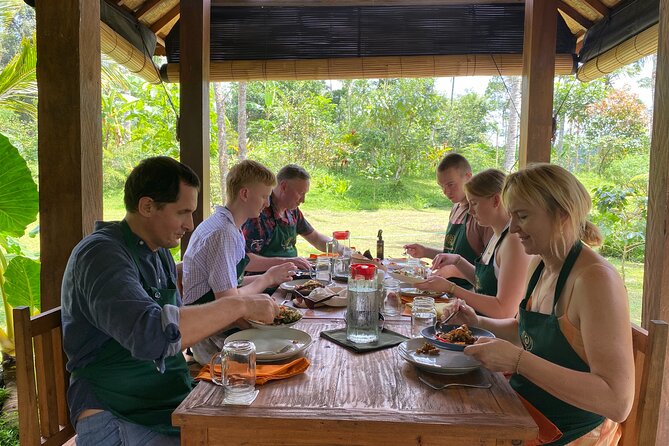
The experience lasts about five hours and 30 minutes. It begins and ends at Ubud Central Parking, at Jl. Suweta No. 18. A shuttle transfer is available from the central parking area, and some arrangements may include pickup details, so check your confirmation carefully rather than assuming a hotel transfer.
The duration is fair for what is included. You are fitting in transport, a market visit on the morning option, a farm walk, ingredient picking, several cooking stages, lunch, and the return trip. At $38 per person, the price is strong if you value the full combination rather than only the cooking lesson.
Think of the cost as covering a half-day outing, not a two-hour class. You receive transport in an air-conditioned vehicle, ingredients, kitchen equipment, an apron, bottled water, coffee or tea, lunch, and the recipe book. Alcohol and soft drinks cost extra.
The group can reach 20 people. That is not a private cooking lesson, and the atmosphere will depend partly on the day’s mix of participants. The upside is a lively social setting. The downside is that individual attention may be less constant than in a small private class.
The experience requires good weather and a minimum number of participants. If poor weather or low enrollment cancels the activity, you are offered another date, another experience, or a full refund. You can cancel for a full refund up to 24 hours before the start time. Changes or cancellations inside that period are not accepted.
Who Will Get the Most from This Class
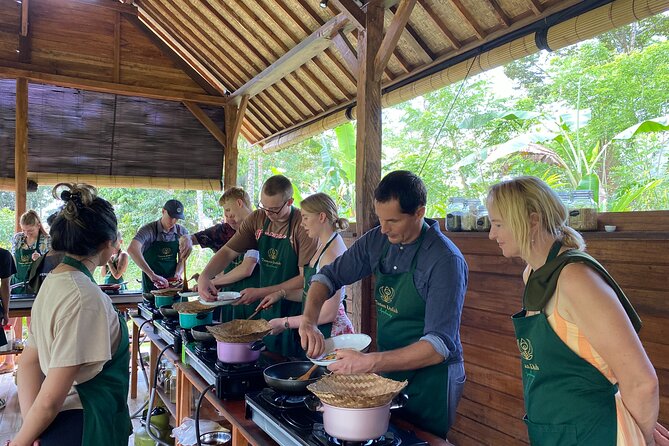
I would recommend this class to you if food is one of the main ways you get to know a place. You will see a market, work in a farm garden, learn about local produce, and cook a meal rather than simply watch a demonstration.
It also suits people who want a gentle introduction to Balinese cuisine. The instructors provide step-by-step help, and the recipes are designed for home use. You do not need advanced cooking skills.
Families can benefit from the range of activities, especially the market and garden portions. People traveling alone may like the shared table and group setting. The class also works well for couples who want something more active than a restaurant meal.
You may want to choose another activity if your main goal is a short lesson, private instruction, or advanced culinary training. The class has a broad, friendly approach rather than a specialist one. The chopping is hands-on, and the full schedule takes most of a day.
The morning option is the clear choice if the market matters to you. The afternoon option may suit you better if you prefer to skip the market and focus on the farm and kitchen, but confirm what your selected departure includes.
Should You Book the Bali Farm Cooking Class?
Yes, if you want a practical and reasonably priced food experience that connects Ubud’s cuisine with village agriculture. The strongest combination is the traditional market, the organic garden, the large meal, and the recipe book you can use later.
Book with realistic expectations. This is not a polished private chef lesson, and it is not a quick tasting. You will spend time chopping, share the day with a group, and travel outside central Ubud. In return, you get a generous menu, a peaceful farm setting, helpful instruction, and a clearer understanding of how Balinese food comes together.
For the best version, select the morning session, arrive ready to eat, tell the staff about allergies in advance, and allow the full five and a half hours. At $38, it offers good value for a half-day of cooking, eating, countryside scenery, and practical recipes.
FAQ
How long does the Bali farm cooking class last?
The experience lasts approximately five hours and 30 minutes, including the market visit for morning sessions, farm activities, cooking, lunch, and transport back to the meeting point.
Where does the experience start and finish?
It starts and ends at Ubud Central Parking, Jl. Suweta No. 18, Ubud, Bali. Shuttle transfer is available from the central parking area.
Is the traditional market visit included?
The market visit is included with the morning experience. It is not listed as part of the afternoon session, so confirm the details of your selected departure before booking.
How many dishes will I prepare?
You will prepare six or more Indonesian dishes, including dessert. You eat the food you cook as lunch.
Is lunch included?
Yes. Lunch includes all the food prepared during the cooking class. Coffee, tea, bottled water, cooking utensils, and an apron are also included.
Can dietary needs and allergies be accommodated?
The class caters to various diets. Tell the provider about allergies or dietary requirements in advance so the instructors can prepare appropriately.
What happens if I need to cancel?
You can receive a full refund if you cancel at least 24 hours before the experience starts. Cancellations or changes made less than 24 hours before the start time are not accepted.
Just added around Ubud
- Ubud private tours★ 5.0 · 4 reviews
- Ubud Village, Tegalalang Rice Terrace Swing, Tirta Empul Temple and Waterfafall★ 5.0 · 7 reviews
- Ubud Instagram: Waterfall Tours★ 5.0 · 57 reviews
- Ubud Waterfalls and Rice Terraces Private Day Tour★ 5.0 · 12 reviews
- Bali Half Day-Tour: Ubud Night Trip Packages★ 5.0 · 5 reviews
- Ubud VW Safari Bali Tour – Volkswagen Classic Car Trip★ 5.0 · 21 reviews
- Ubud Full Day Tour Waterfall Monkey Forest Rice Terrace★ 5.0 · 4 reviews
- Hidden Ubud: Waterfalls & Sacred Temples★ 5.0 · 6 reviews
Cooking Classes, compared.
Private Authentic Balinese Cooking Class in Ubud at Putu’s Home
Read our review →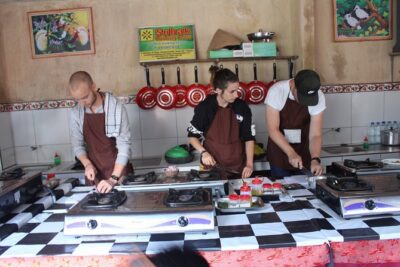
Balinese Ubud cooking school (9 Dish Cooking and Market Tour)
Read our review →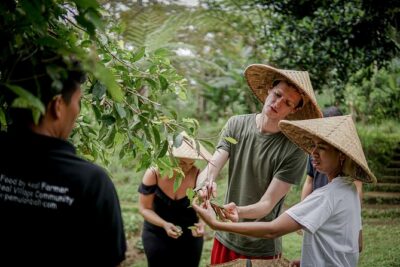
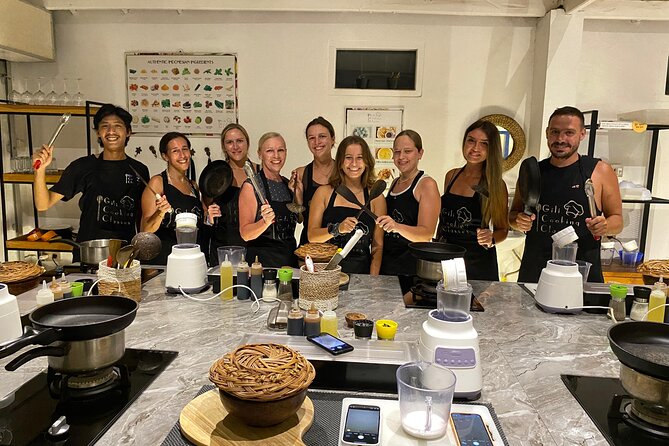
Learn to cook Indonesian food at Gili Cooking Classes Trawangan
Read our review →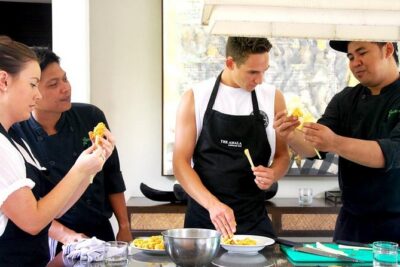
Browse the lists this tour appears in