
Reviewed · VILLAGE & CULTURAL TOURS
Bali Spiritual: Blessing Ceremony, Pristine Nature and Transfer
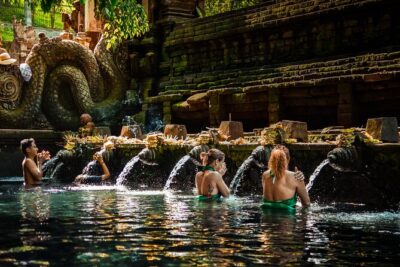
The heart of this day is a Balinese purification ceremony at a jungle temple beside a quiet river. A Mangku, or local priest, helps you prepare flowers and incense, then leads a blessing while you wear traditional temple clothes. This is a personal religious ceremony, not a staged performance, so you should arrive with respect and an open mind.
I like the small group size, limited to six people, and the way the day links spiritual life with ordinary village work. The homemade lunch, garden visit, rice planting, and farm stop give you more than a quick temple photo. I also like the chance to learn Rindik, a bamboo instrument, and taste honey from stingless Trigona bees.
The main consideration is that this is not a standard sightseeing circuit. The ceremony has rules, the day begins at 7:30 am, and the mountain roads and outdoor stops may not suit anyone seeking a slow resort morning. The blessing is not permitted during menstruation or pregnancy, so check that point before booking.
Key Things to Know Before Booking
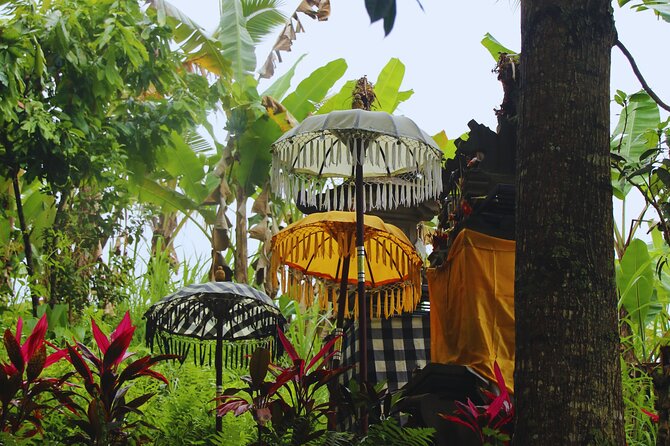
- The purification ceremony is personal: You prepare offerings with the Mangku and take part in a blessing at a jungle temple beside a river.
- The group is capped at six: That makes it easier to hear the guide, ask questions, and approach the ceremony with some quiet.
- The day supports a village community: Food, gardens, farm activities, and hosting are tied to local families and their work.
- You get a full mix of culture and nature: Expect a flower market, Jamu drink, Rindik music, rice planting, a hot spring, and a waterfall.
- Lunch and temple clothing are included: Rental clothing and ceremony offerings are covered, along with a personal photo sent by email.
- Plan for an early start: Pickup begins at 7:30 am, and the whole experience lasts about eight hours.
A Different Side of Bali at Mount Batukaru
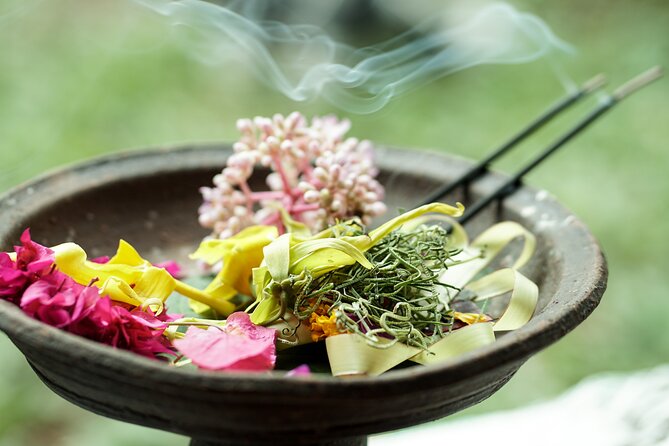
This experience takes you away from Bali’s busiest visitor routes and into a small mountain village at the foot of Mount Batukaru. Rice terraces and thick tropical growth form the setting, but the appeal is not simply the scenery. You spend the day learning how a community connects religious practice, farming, food, and hospitality.
The small group limit matters here. A ceremony can feel awkward if a large crowd presses in with cameras and questions. With no more than six people, you have a better chance of listening carefully, following the priest’s instructions, and keeping the mood calm.
Pickup is offered in an air-conditioned vehicle, and the start time is 7:30 am. The vehicle is useful after the early departure, especially since this is an active day with several stops rather than one fixed site. You should allow roughly eight hours from the beginning to the return in the late afternoon.
The guide is English-speaking. Other languages can be arranged for an added charge. Since the experience includes religious customs and hands-on activities, clear communication is useful. If you have dietary needs, mention them when booking. Vegetarian food can be accommodated.
More Cultural Tours in Bali
- Bali Full-Day Traditional Village Sightseeing Trip All Inclusive
★ 5.0 · 3,069 reviews - Bali Cultural Experience
★ 5.0 · 92 reviews - Balinese Village Experience
★ 5.0 · 49 reviews
A Flower Market and a Jamu Welcome
The day includes a stop at a colorful flower market before you settle into the village experience. Flowers are not just decoration in Bali. They are used in daily offerings, and this first stop helps you recognize the small materials that later become part of the ceremony.
You also receive a healthy Jamu welcome drink. Jamu is a traditional Indonesian herbal drink, and this gives you a simple introduction to local flavors before lunch. The exact ingredients are not specified, so consider it a taste of the local household rather than a formal tasting session.
At the welcome area, you can learn to play the Rindik, a traditional Balinese bamboo instrument. The soft sound fits the setting better than a loud performance would. I like this part because it asks you to do something rather than stand back and watch.
Do not expect a concert or a long music lesson. The value is in trying an instrument connected with Balinese culture, even if your first attempt produces more clatter than melody.
Preparing for the Temple Blessing
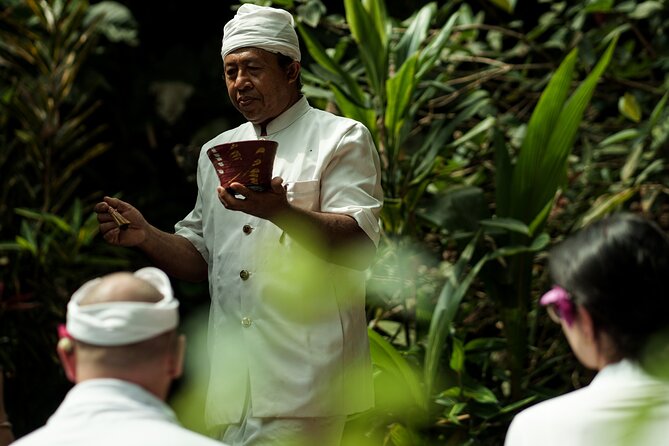
The purification ceremony is the centerpiece of the day. You change into Balinese temple clothing, with the rental included, and prepare offerings of flowers and incense with the Mangku.
The temple is described as a quiet place in the jungle beside a river. That setting is important. The ceremony is framed by moving water and forest, not by a busy temple courtyard filled with tour groups. You should treat the location as a religious place first and a sightseeing stop second.
The Mangku leads the cleansing and blessing. The ceremony is offered especially for you, but that does not make it a performance. You are taking part in a local spiritual practice, and the right approach is to listen, follow instructions, and avoid treating the ritual as a photo opportunity.
A personal photo is sent by email afterward, along with memories of the purification. That is a useful touch for anyone who wants a record of the day without interrupting the ceremony with constant picture-taking.
There are firm restrictions. The purification and blessing are not permitted during a woman’s menstruation period or during pregnancy. This is not a minor footnote, so confirm that the experience is suitable for everyone in your group before paying.
Homemade Lunch at a Village Warung
After the ceremony, you eat a homemade Balinese lunch at an authentic village warung. A warung is a small local eating place, often simpler and more personal than a restaurant built for international tourism.
I like the way lunch fits the rest of the day. You are not merely transported between scenic stops. You eat food prepared within the community that is hosting you, and the meal gives you time to sit down after the ceremony and outdoor activities.
Drinks and personal expenses are not included, so budget a little extra if you want something beyond the included meal. Dietary requests, including vegetarian meals, can be accommodated if you state them in the special requirements section when booking.
Because the exact menu is not provided, you should not book this expecting a particular dish. Instead, think of lunch as a chance to eat home-style Balinese food in a village setting.
More Yoga Retreats in Bali
- Meditate with a Shaman
★ 5.0 · 77 reviews - Balinese Healing Experiences
★ 5.0 · 38 reviews - TULA Wellness Half Day Experience with Sound Healing
★ 5.0 · 34 reviews - Bali Spiritual Shamanic-Palm Reading, Temple Healing Tour
★ 5.0 · 32 reviews
Gardens, Rice Planting, and the Balikaru Farm
The guided walk through the Balikaru garden adds a practical side to the spiritual theme. You stroll among colorful flowers and tropical herbs and spices, while learning how plants fit into village life and local traditions.
This is also where the community focus becomes easy to see. The garden, food, and hosting are presented as work supported by local families. Your spending helps maintain those activities and gives the village a reason to keep sharing its traditions.
At the Balikaru farm, you join a farmer in planting rice. This should appeal to you if you want contact with daily rural life rather than another viewpoint or temple entrance. It is a simple activity, but it connects the rice terraces you see with the work required to produce food.
The farm also has animals and stingless Trigona bees. You learn about these bees and taste their unusual honey. The honey is described as rare and healthy, but the main value is the close look at a small-scale farm activity that many visitors would otherwise miss.
This part of the experience may be less polished than a purpose-built attraction. That is part of its appeal, but it also means you should expect a working village and farm, not a museum with a fixed display.
Belulang Hot Spring: An Optional Soak
Belulang Hot Spring is one of the listed stops, and bathing is optional. That gives you some flexibility. You can enjoy the setting without getting into the water, or use the stop for a warm soak if conditions and your schedule suit you.
The tour information does not provide water temperature, changing facilities, or the amount of time available for bathing. For that reason, do not build your whole day around a long spa visit. Treat it as an optional natural stop within a broader cultural tour.
Bring practical clothing for an outdoor day. You will already need temple clothes for the ceremony, and the combination of walking, farm activities, a possible hot spring visit, and a waterfall stop makes it wise to plan for changing conditions.
Pengempu Waterfall and the Mountain Village Walk
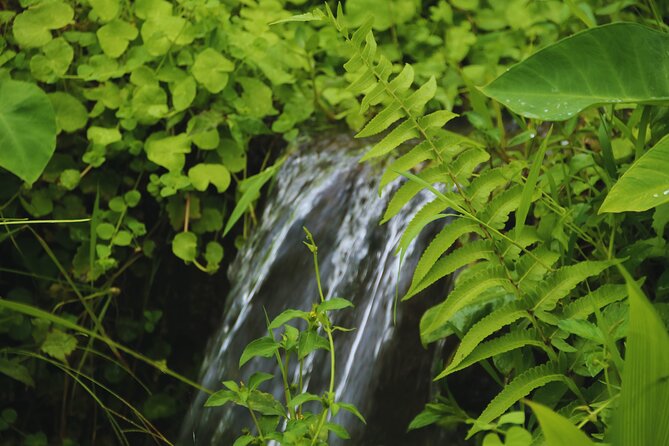
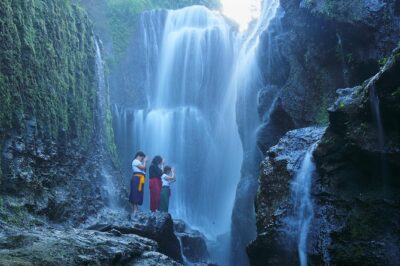
The final nature stop is Air Terjun Pengempu, described as a hidden waterfall. It gives the day a quiet ending after the more structured ceremony, lunch, and farm visit.
You also walk through the picturesque mountain village. This matters because the village itself is part of the experience, not just a route between attractions. You get a closer look at the place where the hosts live and work, rather than seeing only a temple and a viewpoint.
The details of the path, swimming conditions, and walking distance are not provided. If you have mobility concerns, ask the provider before booking. Most people can participate, and service animals are allowed, but a day involving a village walk, garden, farm, hot spring, and waterfall may involve uneven outdoor surfaces.
The waterfall is best understood as a scenic stop, not a guaranteed swimming session. The supplied details do not promise swimming, so bring the right expectations.
What the $115 Price Includes
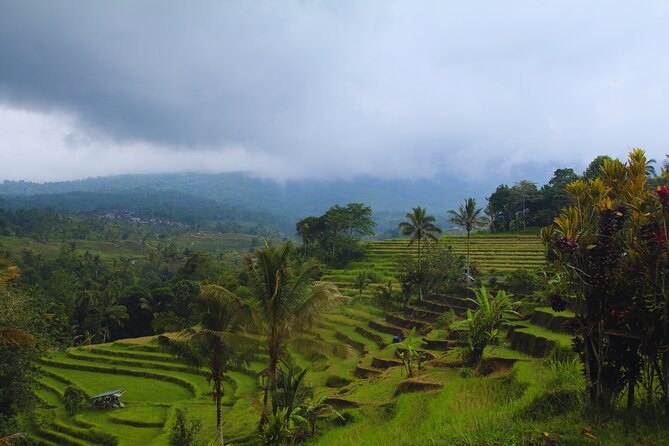
At $115 per person, this is not the cheapest way to spend a day in Bali. It is also more than a simple transfer to a waterfall or a short temple visit. The price includes an air-conditioned vehicle, an English-speaking guide, the flower market stop, Jamu, the Rindik activity, temple clothing rental, ceremony offerings, lunch, the garden tour, the farm visit, the hot spring stop, the waterfall stop, a farewell gift, and a personal ceremony photo by email.
That is a substantial package for an eight-hour outing, especially with a maximum of six people. You are paying for transport, a guide, food, several activities, and access to a ceremony that is not presented as a public show.
The value depends on your interests. If you want beach time, nightlife, or a fast list of famous sights, this will feel slow and possibly expensive. If you care about village life, spiritual customs, local food, and small-scale hosting, the combination makes more sense.
Group discounts are available, though the amount is not specified. The free cancellation policy allows you to cancel at least 24 hours before the start for a full refund. If poor weather causes the provider to cancel, you can choose another date or receive a full refund.
Who Will Enjoy This Day Most
I would recommend this experience to you if you want a quieter Bali day with a strong cultural focus. It suits people who enjoy nature, simple local meals, hands-on activities, and respectful contact with religious traditions.
It is also a good fit if you prefer small groups. Six people is still enough for shared conversation, but small enough to avoid the feel of a large coach excursion.
You may want to skip it if you dislike early starts, outdoor walking, changing clothes for a ceremony, or activities with a spiritual purpose. The blessing is not something to treat casually, and the tour is built around participation rather than passive sightseeing.
Families and mixed-age groups may find the garden, animals, bees, music, and waterfall appealing, but the ceremony requires calm attention. Most people can take part, and service animals are allowed, yet it is sensible to ask about specific mobility needs before booking.
Practical Tips for a Better Visit
Wear comfortable clothing that works for walking and outdoor activities. You will receive temple clothes for the ceremony, but you should still dress in a way that shows respect and allows easy movement.
Tell the provider about dietary requirements when you book. Vegetarian meals can be arranged, but last-minute requests are less reliable than information given in advance.
Keep some money available for drinks and personal expenses. Tips are not included, and the included lunch does not cover every purchase during the day.
Treat the ceremony as a religious act, not a staged attraction. Listen to the Mangku, follow the clothing and offering instructions, and let the guide explain what is happening before taking photos.
The day requires good weather. If rain or other poor conditions lead to cancellation, you will be offered another date or a full refund. Even on a suitable day, mountain weather can affect outdoor stops, so pack with some flexibility.
Should You Book the Bali Spiritual Experience?
Book this tour if you want to connect with Bali through a village, a priest-led ceremony, local food, farming, and nature. The strongest parts are the small group, the personal purification ritual, and the way the day puts local families at the center of the experience.
Think twice if your ideal Bali excursion is mostly about famous sights, long free time, or a polished spa-style outing. This day has structure, an early start, and clear religious boundaries.
At $115, the experience offers good value for you if you will use the full package: ceremony, clothing, offerings, lunch, transport, garden and farm visits, hot spring, waterfall, gift, and photo. For a respectful visitor seeking a meaningful mountain day rather than a checklist of attractions, it is a thoughtful choice.
FAQ
What time does the tour start?
The tour starts at 7:30 am and lasts approximately eight hours, returning in the late afternoon.
How many people can join the tour?
The group has a maximum of six participants.
Is the purification ceremony included?
Yes. The Balinese purification and blessing ceremony with a local Mangku is included, along with offerings and rental temple clothes.
Can I join the ceremony during pregnancy or menstruation?
No. The purification and blessing ceremony is not permitted during pregnancy or during a woman’s menstruation period.
Is lunch included, and can vegetarian food be arranged?
A homemade Balinese lunch at a village warung is included. Vegetarian and other dietary needs can be accommodated if you provide the details when booking.
What happens if bad weather cancels the experience?
If poor weather causes cancellation, you will be offered a different date or a full refund. You can also cancel for a full refund if you do so at least 24 hours before the start time.
Just added around Bali
- Bali Parasailing Adventure, Jet Ski, Banana Boat , Donat Boat, with Transport★ 5.0 · 11 reviews
- 1.5 Hours Bali ATV Quad Tour★ 5.0 · 8 reviews
- ATV Quad Bike Through Tunnel and Waterfall★ 5.0 · 3 reviews
- Bali Driver Recommendation★ 5.0 · 7 reviews
- Bali Private Custom Tour★ 5.0 · 12 reviews
- Bali Cooking Class Experience with All Inclusive★ 5.0 · 12 reviews
- Penglipuran Village Waterfall Swing Private Guided Tour★ 5.0 · 13 reviews
- Bali Sightseeing Car Hire with English-speaking Guide and Driver★ 5.0 · 24 reviews
Village & Cultural Tours, compared.
Bali Full-Day Traditional Village Sightseeing Trip All Inclusive
Read our review →
Ubud Tour – Balinese Healing By Shaman And Self Purification
Read our review →Melukat Ceremony and Temple Tour at Tirta Empul Temple
Read our review →
Full Day Kintamani Volcano View and Ubud Village Tour
Read our review →
Browse the lists this tour appears in