
Reviewed · WALKING TOURS
Ubud Guided Walking Tour
Ubud’s story makes more sense when you walk it in sequence, from Gunung Lebah Temple and Campuhan Ridge to the royal courtyards and art museum that helped shape the town. I like the way this tour links religion, colonial history, painting, and palace life instead of treating Ubud as a string of pretty photo stops. I also like the small maximum of eight people, which gives guides such as Windari, Win, Ira, and Ilia room to answer questions.
The catch is simple: this is a real city walk, not a gentle stroll. You’ll handle temple steps, steep sections, patchy sidewalks, and up to three hours on your feet. Bring a reusable water bottle, wear shoes with a sure grip, and accept that heavy rain may affect the start time.
Key points to know before you book
- Five distinct stops in three hours: The route covers a temple, colonial-era bridge, art museum, royal palace, and private Balinese compound.
- A small group capped at eight: The format should feel more personal than a large coach-style outing.
- Museum entry is included: The Rp 95,000 ticket for Museum Puri Lukisan is part of the tour price.
- Special access at Puri Kantor: You visit a Balinese compound connected with Ubud’s former prince, Tjokorde Gede Raka Sukawati.
- No hotel pickup: You must reach the starting point at Cantina Rooftop Restaurant in UbudSayan.
- The route rewards curious walkers: The focus is on history, culture, architecture, and local context rather than shopping or food tasting.
Why this Ubud walk is useful early in your stay
At $28.36 per person, this is priced as an accessible introduction to central Ubud. The value comes less from the number of stops than from the links between them. You get a local English-speaking guide, the museum admission, special access to a Balinese compound, and local discounts, all within about three hours.
I would place it near the start of an Ubud visit. The opening discussion of Hinduism and temple design gives you a better frame for later visits across Bali. The art museum explains why Ubud became known for painting. The palace stops show how royal families still matter to the town’s identity.
The group size also matters. With no more than eight people, you are less likely to lose the guide in a busy street or miss a question while standing in a courtyard. Several guides are praised for clear explanations, humor, patience, and an interactive style. Ira, for example, is described as thoughtful and careful with questions, while Windari and Win are praised for making the information easy to follow.
This is not a tour for ticking off landmarks as fast as possible. The guide’s storytelling is the main product. If you prefer to wander alone, stop for coffee, and set your own pace, the fixed route may feel restrictive. If you want help making sense of Ubud, the cost is fair.
More walking tours in Ubud:
- Tetebatu Walking Tour – Rice Terraces, Waterfall & Monkey Forest
★ 5.0 · 349 reviews - Ubud yoga, rice terrace walk and floating Breakfast tour
★ 5.0 · 85 reviews - Ubud Countryside Tour: Campuhan Ridge Walk and Rice Terrace
★ 5.0 · 72 reviews
Gunung Lebah Temple and the beginning of Ubud’s story
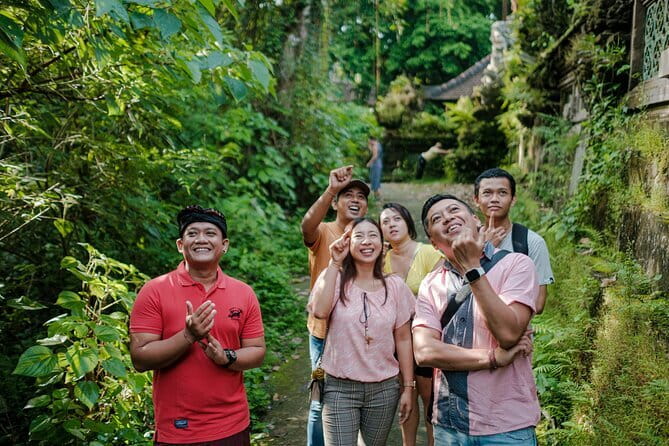
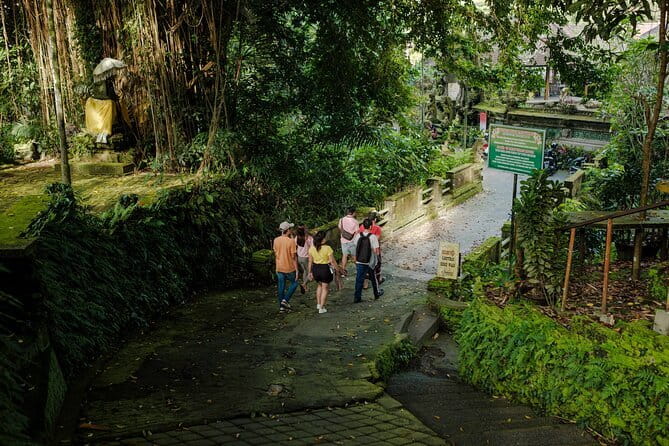
The first stop is Gunung Lebah Temple, described as Ubud’s oldest temple. You spend about 20 minutes outside the temple learning how Hinduism arrived in Bali, then look at the building’s architectural features and community role.
That opening is well chosen. Balinese temples are active places of worship and community life, not just old structures placed on a sightseeing route. A guide can point out how the temple serves local people and help you understand why its layout and decorative details matter.
The short time here is both a strength and a limit. You get a clear introduction without using half the tour on one site, but this is not a long temple visit. The emphasis is on explanation and observation. Dress and behave respectfully at the site, and be ready for uneven stairs.
This stop also gives you useful context for Bali beyond Ubud. The island’s Hindu traditions shape ceremonies, architecture, family life, and public spaces. Starting here keeps the tour grounded in living culture before it moves into art and royal history.
Campuhan Ridge and the Dutch colonial connection
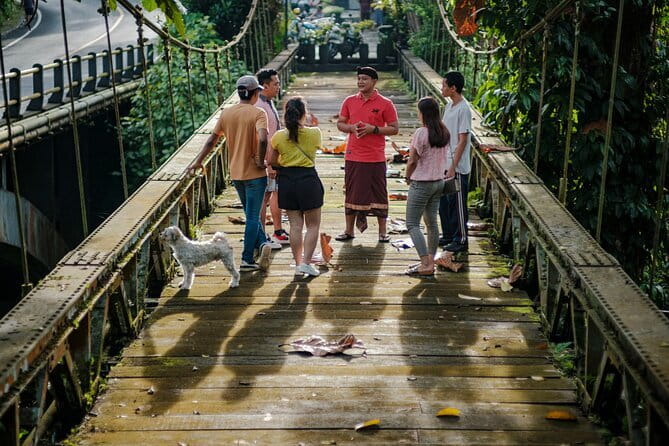
Next comes Campuhan Ridge Walk, with around 20 minutes near a modest bridge dating from the Dutch colonial period. The stop brings Indonesia’s complicated colonial past into a town often presented only through temples, yoga, art, and rice fields.
The guide discusses the Dutch East India Company and the ways Dutch colonial policy affected Indonesia. That subject adds weight to the walk. Ubud’s present character did not develop in isolation, and the bridge provides a physical clue to a much larger story.
Do not expect a long hike along the ridge during this schedule. The time allocation suggests a focused stop and explanation rather than an extended countryside walk. You may get a taste of the area and its setting, but the tour’s purpose here is historical context.
This is also one of the places where footwear matters. Bridges, slopes, and sidewalks can be uneven. If you have mobility concerns, the operator says the route includes steep gradients and temple stairs, so you should judge your comfort honestly before booking.
Museum Puri Lukisan and Ubud’s art story
The longest stop is Museum Puri Lukisan, with about 45 minutes inside Ubud’s oldest art museum. Admission is included, with the stated ticket value of Rp 95,000.
I consider this the intellectual center of the walk. The museum helps explain the partnership between Balinese and Western artists during the 20th century. That exchange played a major part in giving Ubud its reputation as an art center, and it shows why the town attracted more than visitors seeking scenery.
A guide can make a museum visit much easier. Without context, paintings may look attractive but disconnected. With the story of local artists, visiting Western painters, and the growth of Ubud’s art identity, you have a clearer sense of what you are seeing and why the museum matters.
Forty-five minutes is enough for a guided introduction, though not enough for a slow look at every room. If you are an art specialist, you may want to return on your own. For a first visit, the included admission and focused explanation offer solid value.
This stop also balances the religious and political parts of the route. After a temple and colonial-era site, you see how culture, patronage, and artistic exchange helped change Ubud’s public image.
A few more things to do around Ubud
- All-Inclusive Ubud Private Tour
★ 5.0 · 14,344 reviews - Best of Ubud Full-Day Tour with Jungle Swing
★ 5.0 · 8,571 reviews - Ubud: Monkey Forest, Jungle Swing, Rice Terrace, and Water Temple
★ 5.0 · 7,160 reviews - Best of Ubud 1-Day Private Tour
★ 5.0 · 4,451 reviews
Ubud Palace and the role of Balinese royalty
The walk then reaches Ubud Palace, where you spend about 15 minutes in the outer courtyards. The guide explains the past and present role of Balinese royalty, along with palace design and traditional cremation rituals.
The short visit gives you a useful orientation rather than full palace access. You are looking at the outer courtyards, so you should not expect every private area to be open. Still, the location helps connect Ubud’s royal family with the town’s ceremonies, architecture, and public identity.
The discussion of cremation rituals is especially useful because such ceremonies are important across Balinese Hindu life. The guide can explain the custom in its cultural setting rather than leaving you with a quick photograph and no background.
Palace architecture can be easy to skim past. A guide’s explanation helps you notice how courtyards, gates, stonework, and ceremonial spaces work together. The value here is not simply entering a famous address. It is understanding how royal compounds function.
Puri Kantor and a closer look at royal Ubud

The final stop is Puri Kantor, the palace of Tjokorde Gede Raka Sukawati, identified as the Prince of Ubud. You receive special access to a Balinese compound and spend about 20 minutes learning about his role in shaping modern Ubud and co-founding the Pitamaha Foundation.
This is the tour’s most distinctive feature. Many walks can take you past Ubud Palace. Fewer include access to a royal compound connected with a specific member of Ubud’s ruling family. The setting gives the final part of the tour a more personal scale.
The Pitamaha Foundation connection also returns the story to art. The tour has moved from temple tradition to colonial history, then to the collaboration between Balinese and Western artists. At Puri Kantor, those strands meet around royal support and Ubud’s development as an art center.
The tour ends here on Jalan Suweta, rather than returning you to the starting point. That is useful if you plan to continue exploring central Ubud, but you need to arrange your own way back. There is no accommodation pickup or drop-off.
What the guides add to the experience
The strongest part of this walk is the guide’s ability to turn separate stops into one story. The information provided names Windari, Win, Ira, and Ilia among the guides praised for clear explanations, humor, thoughtfulness, and a considerate manner.
You should expect an interactive tour rather than a speech delivered at each landmark. Questions are welcome, and the guide’s role is to explain how Ubud works, not just name buildings. Past feedback particularly highlights answers in clear English and a style that keeps the history engaging.
An Indonesian guide is also available. If you book with a language preference, confirm the available guide details at the time of booking. The stated primary service is an English-speaking local guide.
The small group helps here. Eight people is still enough for varied questions, but small enough for the guide to keep the conversation moving. If you want a private tour with a schedule built around your own interests, this is not exactly that. It is a shared walk with a deliberately limited group.
Walking conditions, weather, and meeting points
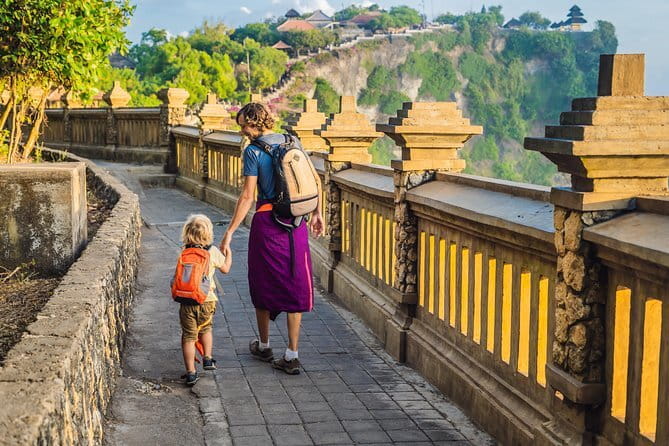
The tour starts at Cantina Rooftop Restaurant in UbudSayan and ends at Puri Kantor, Jalan Suweta No. 1. Pickup and drop-off from your accommodation are not included, so plan extra time to reach the start.
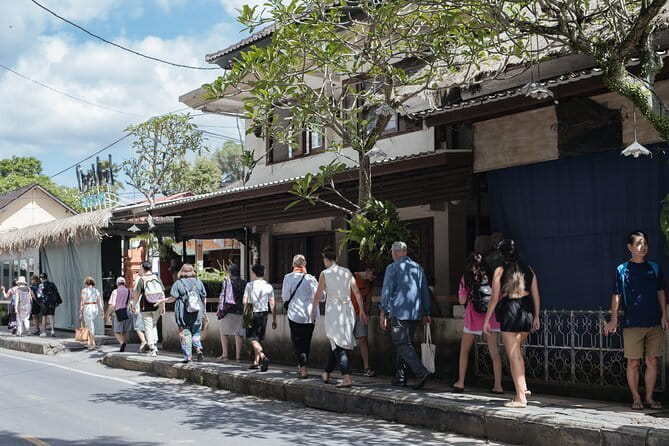
The route passes historic places where the ground cannot always be modified. Expect uneven temple stairs, steep gradients, and patchy sidewalks. The operator says most people can participate, and service animals are allowed, but you should be physically able to climb steps and walk through an urban environment for roughly three hours.
Bali’s weather can change the timing. The walk operates in rain or shine, but an intense downpour may lead to a phone call before departure and a changed start time. Use a weatherproof bag for your phone and keep your plans flexible.
The environmental request is practical: bring a reusable bottle for water refills. It is a small step, but useful in a place where reducing plastic waste matters. Food and drinks bought outside the tour are your own expense, so carry water and eat beforehand if needed.
Who will get the most from this tour
I would recommend this walk to a first-time Ubud visitor who wants a clear introduction to the town’s religious, artistic, colonial, and royal connections. It also suits you if you prefer stories and conversation over a long list of photo stops.
It works well for solo visitors, couples, and small groups who want a more personal format without paying for a fully private guide. Art lovers should especially value the time at Museum Puri Lukisan, while anyone interested in Balinese traditions will benefit from the temple and cremation discussions.
You should think twice if you dislike walking on uneven ground, need a completely step-free route, or want hotel transportation. The schedule is also too short for a slow, independent exploration of each site. You are buying a guided overview, not a full-day cultural study.
Cancellation and booking details that matter
Confirmation is provided at booking, and mobile tickets make access straightforward. Free cancellation is available if you cancel at least 24 hours before the local start time. Cancellations or changes made within 24 hours are not accepted and do not receive a refund.
The tour has had more than five bookings in the last month and a 5.0 rating from 79 reviews, with 100 percent recommending it. I would treat those figures as a sign of consistent satisfaction, but the practical details still matter more: this is a walking tour with fixed stops, no hotel pickup, and weather exposure.
Should you book the Ubud Guided Walking Tour?
Book it if you want Ubud explained rather than simply photographed. The combination of Gunung Lebah Temple, Campuhan Ridge, Museum Puri Lukisan, Ubud Palace, and special access to Puri Kantor gives you a well-shaped introduction for $28.36.
I especially like the museum admission, the group limit of eight, and the link between royal history and Ubud’s art world. The main caution is physical: stairs, slopes, uneven sidewalks, and three hours of walking are part of the deal.
If those conditions suit you, this is a useful first-day activity. It gives you enough background to make later temple, palace, and museum visits more meaningful, while the guides’ personal style keeps the history from turning into a dry lecture.
FAQ
How long does the Ubud walking tour last?
The tour lasts approximately three hours.
Where does the tour start?
It starts at Cantina Rooftop Restaurant in UbudSayan, Ubud, Gianyar Regency, Bali, Indonesia.
Where does the tour end?
It ends at Puri Kantor on Jalan Suweta No. 1, Ubud, Bali.
Is hotel pickup or drop-off included?
No. The tour does not provide pickup or drop-off from your accommodation.
What places are visited?
The route includes Gunung Lebah Temple, Campuhan Ridge Walk, Museum Puri Lukisan, Ubud Palace, and Puri Kantor.
Is museum admission included?
Yes. The entrance ticket to Museum Puri Lukisan is included, with a stated value of Rp 95,000.
How many people can join the tour?
The tour has a maximum group size of eight people.
Can I cancel for a full refund?
Yes, if you cancel at least 24 hours before the experience start time. Cancellations within 24 hours are not refunded, and changes during that period are not accepted.
Just added around Ubud
- Ubud private tours★ 5.0 · 4 reviews
- Ubud Village, Tegalalang Rice Terrace Swing, Tirta Empul Temple and Waterfafall★ 5.0 · 7 reviews
- Ubud Instagram: Waterfall Tours★ 5.0 · 57 reviews
- Ubud Waterfalls and Rice Terraces Private Day Tour★ 5.0 · 12 reviews
- Bali Half Day-Tour: Ubud Night Trip Packages★ 5.0 · 5 reviews
- Ubud VW Safari Bali Tour – Volkswagen Classic Car Trip★ 5.0 · 21 reviews
- Hidden Ubud: Waterfalls & Sacred Temples★ 5.0 · 6 reviews
- Ubud Full Day Tour Waterfall Monkey Forest Rice Terrace★ 5.0 · 4 reviews
Walking Tours, compared.

Tetebatu Walking Tour – Rice Terraces, Waterfall & Monkey Forest
Read our review →
Small-Group Walking and Food Tour by Night in Yogyakarta
Read our review →
Bali Private Food Walking Tour With Locals: The 10 Tastings
Read our review →
Sidemen Trekking: A Walk from a Different Perspective
Read our review →
Ubud yoga, rice terrace walk and floating Breakfast tour
Read our review →

Ubud Countryside Tour: Campuhan Ridge Walk and Rice Terrace
Read our review →
Private Tour: Campuhan Ridge Walk, Ubud Rice Terrace & Ubud Palace
Read our review →Browse the lists this tour appears in