
Reviewed · COOKING CLASSES
Private Balinese Cooking Class in Ubud with Dewa with Transfers
The best part of this Ubud cooking class happens before you touch a knife. Dewa leads you through his village and family garden, explaining plants such as galangal, cacao, nutmeg, and lemongrass before you cook with them in his traditional home. I like the garden-to-table setting and the fact that you eat what you prepare. The private format also gives you room to ask questions and work at your own pace.
I especially like the walk through Keliki and the use of a pestle, mortar, and wood-fired stove. You get a look at everyday Balinese life, not a polished restaurant kitchen. The main consideration is that this is a cultural home visit with cooking, not a formal culinary school. If you want precise chef training or a slick demonstration, this may feel relaxed and informal.
Key points at a glance
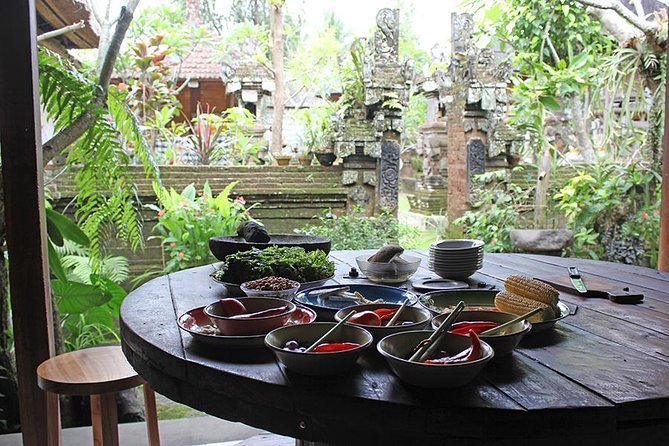
- Dewa’s family compound: Cook and eat in a traditional walled home with open pavilions around a central courtyard.
- Village and garden walk: Learn about Balinese plants, farming, religion, and daily life before preparing lunch or dinner.
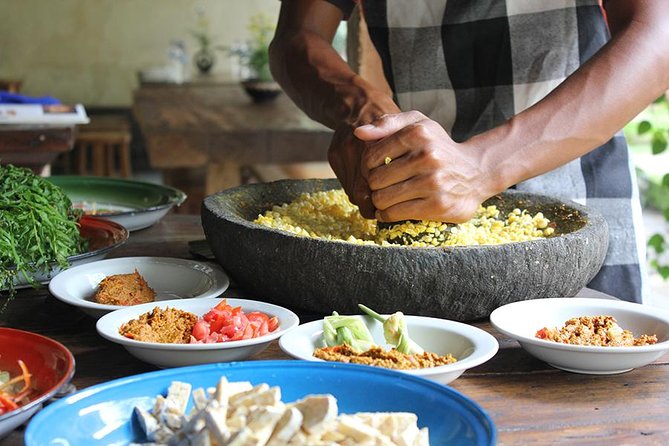
- Hands-on cooking: Make dishes such as pepes ikan, bumbu kuning, and bregedel using traditional tools.
- Private four-hour outing: Only your group participates, with round-trip transfers available from Ubud hotels and vacation rentals.
- Recipes to take home: Bring a small recipe book or written recipes back to your own kitchen.
- Plan ahead: The experience often fills well before the date, so booking roughly a month in advance is sensible.
A cooking class that begins in the village
Many cooking classes start with a counter covered in pre-measured ingredients. This one begins on the road north of Ubud, then continues on foot through Keliki, a village in Bali’s terraced foothills.
Dewa is the host, although another family member may lead the visit if he is unavailable. His wife, Jero, helps with the cooking. Together, they show you how food fits into family life, local customs, and Balinese beliefs.
That wider setting is what gives the experience its value. You are not simply learning that turmeric belongs in a certain sauce. You are seeing where local ingredients grow, hearing how plants are used, and entering a family compound where cooking remains part of ordinary household life.
The four-hour schedule is long enough to avoid a rushed class, but short enough to fit neatly into a morning or afternoon in Ubud. Depending on the time you choose, you will finish with lunch or dinner.
More Cooking Classes in Ubud
- Ubud Cooking Class Bali with Balinese Chef
★ 5.0 · 1,609 reviews - PRIVATE Authentic Balinese Cooking Class in Ubud at Putu’s Home
★ 5.0 · 644 reviews - Balinese Ubud cooking school (9 Dish Cooking and Market Tour)
★ 5.0 · 540 reviews
The ride from Ubud to Keliki
The experience includes private two-way transportation from hotels and holiday rentals in the Ubud area. That matters in Bali, where traffic can make a short distance take much longer than expected. You can leave the driving to someone else and focus on the changing view as Ubud gives way to greener foothills and village roads.
If you are staying outside Ubud, transport is not included. You will need to make your own way to the meeting point at Rumah Makan Jero Nini in Keliki, at the listed address on Jl. Arjuna. The activity ends back at that meeting point unless your included Ubud transfer applies.
Confirm the pickup area when you book. The phrase Ubud can cover a wide zone, and this experience specifically limits complimentary transport to Ubud hotels. Guests staying farther away may still participate, but the transfer question becomes their responsibility.
The meeting point detail is also useful if you prefer to arrange your own driver. Keliki is north of central Ubud, and the class takes place in Dewa’s home village rather than in the center of town.
Walking through gardens, farms, and local life
The first real stop is not a kitchen. Dewa takes you through gardens and village paths to point out the ingredients that shape Balinese cooking.
You may see and smell plants including galangal, cacao, nutmeg, herbs, and other local produce. The tour also covers medicinal uses, farming practices, and the way families work with what grows nearby. This makes the later cooking easier to understand. A spice paste is no longer just a list of ingredients. It becomes part of a local food system.
The walk can include streets, forested paths, rice fields, and community garden areas, according to the route on the day. Wear comfortable shoes. This is not a difficult trek, but it is a walking tour as well as a food class, and some of the most praised moments come before the meal begins.
Dewa also talks about Balinese religion, village customs, and the influence of Hinduism, Buddhism, and animism. His approach is personal and reflective. You are likely to hear as much about balance, family, and living with nature as you do about recipes.
That can be a major strength if you want cultural context. It may feel less focused if you came expecting four straight hours of cooking. The experience gives equal weight to the people and beliefs behind the food.
Entering a traditional Balinese family compound
After the walk, you enter Dewa’s family home. The compound has several open pavilions arranged around a central courtyard, a traditional layout that gives you a useful sense of how family space is organized.
You may meet members of the extended family or other local community members. The setting is simple, open, and domestic. It is not designed as a tourist showpiece, which is precisely why it can feel more personal than a purpose-built cooking venue.
You are being welcomed into someone’s home, so a respectful manner matters. Follow Dewa’s lead about where to sit, what to photograph, and how to move around the compound. The experience is built on conversation and hospitality rather than a strict performance.
The home setting also makes the class more practical. You can see the kitchen arrangement, cooking equipment, and the pace of food preparation used by a Balinese family. It is a chance to compare your own kitchen habits with a very different household routine.
A completely different kind of day out in Ubud:
- All-Inclusive Ubud Private Tour
★ 5.0 · 14,344 reviews - Best of Ubud Full-Day Tour with Jungle Swing
★ 5.0 · 8,571 reviews - Ubud: Monkey Forest, Jungle Swing, Rice Terrace, and Water Temple
★ 5.0 · 7,160 reviews - Best of Ubud 1-Day Private Tour
★ 5.0 · 4,451 reviews
Grinding spices and cooking over wood fire
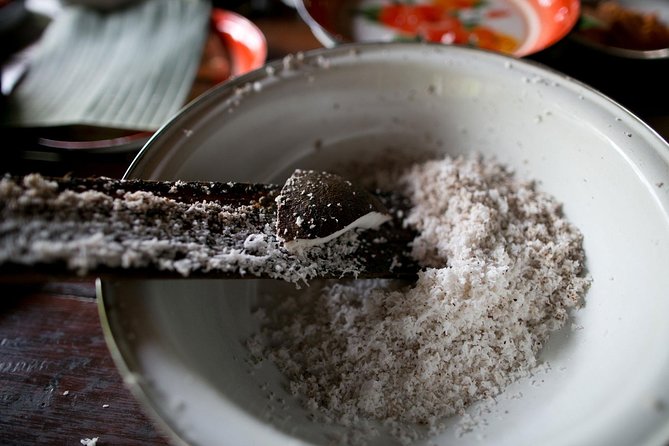
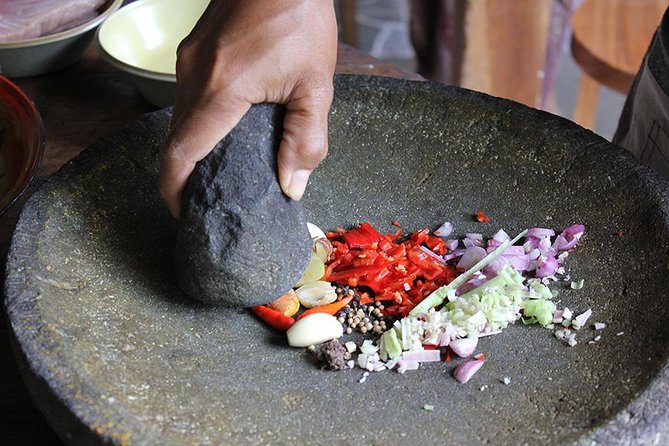
The cooking portion is hands-on. You will work with traditional equipment including a pestle and mortar, then cook over a wood-fired stove in the open kitchen.
This is slower than using a food processor and gas range, but it gives you a feel for how texture and aroma develop. Grinding ingredients yourself helps you understand why Balinese dishes often begin with a fresh spice paste rather than a bottled sauce.
The exact menu can vary, but the dishes named for the class include pepes ikan, tuna grilled in banana leaves; bumbu kuning, chicken in a fresh turmeric and coconut milk sauce; and bregedel, hand-ground corn fritters. Other descriptions of the meal refer to five, six, or seven recipes, including a mix of salads, main dishes, and dessert.
Do not expect restaurant-style plating or a professional kitchen lesson. You are learning family methods, and the pace may include pauses for conversation, explanations, and shared preparation. You may chop, grind, mix, wrap, and cook rather than simply watch Dewa demonstrate.
The food is designed around fresh local ingredients and traditional seasoning. The class information notes that the cooking emphasizes health and local produce rather than heavy use of salt. That gives you a better sense of home cooking in Bali, but it also means the flavors may differ from the stronger seasoning used in some restaurant dishes.
Vegetarian food is available if you request it when booking. Do not wait until the day of the class, since the family needs time to plan the ingredients.
Eating the meal you helped prepare
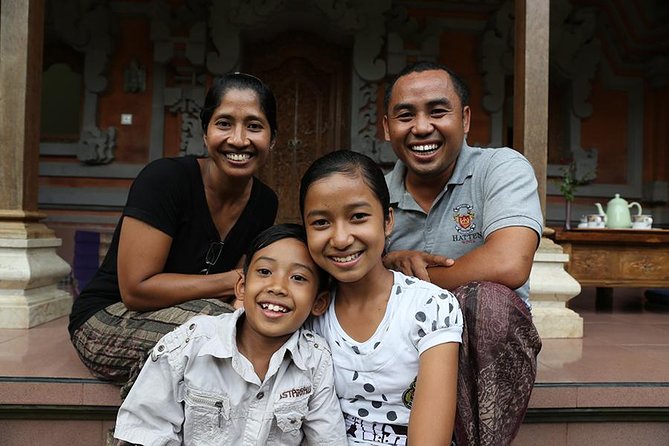
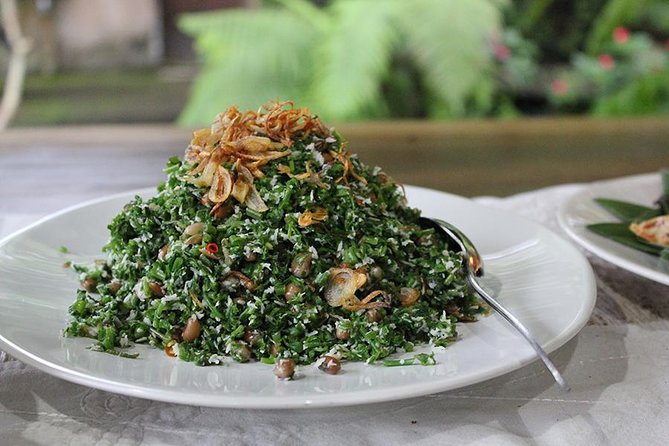
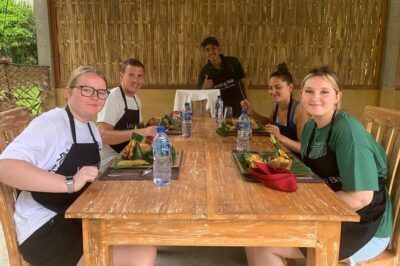
The reward comes at the end, when you sit down to eat the dishes made during the class. Meals are served in the family setting, often with the greenery of the compound around you.
Beer and water are included. Alcohol is not the main point of the visit, but a cold local beer can be a pleasant finish after the cooking. If you do not drink, water is available.
The menu offers more than one dish, so you get to compare different techniques and flavor combinations. The banana-leaf-wrapped fish, turmeric and coconut chicken, and corn fritters each show a different side of Balinese cooking. You are not just making one curry and calling it a class.
Bring a notebook if you want extra space for notes, although a small handmade or locally made recipe book is provided in many sessions. Several descriptions of the experience note that the recipes are easy to recreate at home. That is a real value for a cooking class: the memory does not end when you leave Bali.
What the private format changes
This is a private activity, so only your group participates. That makes a difference in a home kitchen. You can ask about ingredients, religion, family customs, or cooking techniques without trying to compete with a large class.
A private booking also suits mixed groups. One person can focus on food while another asks about village life. Children, older relatives, and people with different cooking interests may find it easier to participate at their own level, although the walking portion and home setting should be kept in mind.
The tradeoff is that a private class does not necessarily mean a formal, individualized chef lesson. Dewa and his family are home cooks sharing their methods, not a culinary institute. You will get personal attention, but not a certificate, professional knife training, or a standardized menu.
For most people, that is the point. The class feels like a visit with a local family that happens to include a very good meal.
Is $69 a fair price?
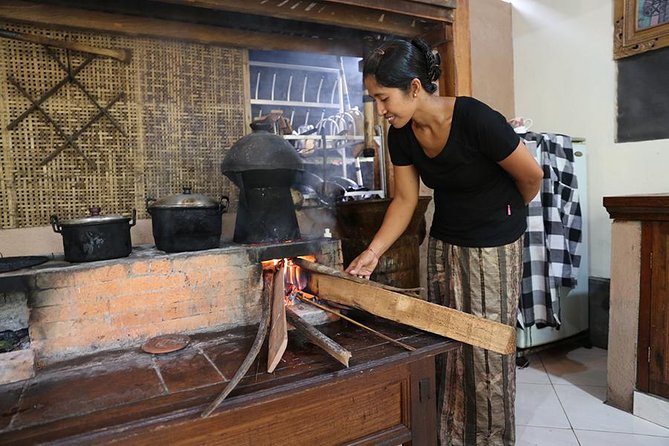
At $69 per person, the price covers much more than ingredients and instruction. You are paying for a private Ubud transfer, a village walk, garden access, cultural interpretation, hands-on cooking, a multi-dish meal, beer, water, and time with a local family.
Compared with a standard restaurant meal, it is expensive. Compared with a private half-day activity that combines transport, food, and cultural access, the price is reasonable. The value is strongest if you care about the setting and conversation, not just the number of recipes.
I would not choose this class solely to learn advanced cooking technique. I would choose it because it combines food with place. You see the plants, meet the family, enter the compound, help prepare the dishes, and then sit down to eat them.
The activity is often booked about 36 days in advance on average. That suggests you should not leave it until the final few days of an Ubud stay, especially if your schedule is fixed.
Who will enjoy this experience most
This is a strong choice for first-time visitors who want to see a quieter side of Bali beyond central Ubud. It also suits food lovers who want recipes they can repeat at home.
I would recommend it to:
- Couples looking for a private cultural activity
- Families who enjoy cooking together
- Food-focused visitors who want local ingredients and home methods
- People interested in Balinese religion, customs, and village life
- Anyone who prefers conversation and personal contact over a large group class
It may be less suitable if you want a tightly timed professional workshop, a luxury setting, or a class with no walking. The village tour is central to the experience, not an optional extra.
Service animals are allowed, and the activity is near public transportation. Still, because the visit takes place in a family compound and includes walking through village areas, ask the provider about your specific needs before booking.
Practical details before you reserve
The activity lasts about four hours. Pickup and drop-off are available from Ubud hotels and vacation rentals, while visitors staying outside the Ubud region must arrange their own transport to Keliki.
Confirmation is sent within 48 hours, subject to availability. Free cancellation is available if you cancel at least 24 hours before the start time. Changes or cancellations made later are not accepted for a refund.
Tell the provider about vegetarian requirements at booking. Also mention any other food concerns early, since the family prepares the meal in advance.
Wear comfortable shoes for the village and garden walk. Keep your schedule flexible enough for the drive, since Bali traffic can affect timing. Most of all, arrive ready to participate. You will get more from the class if you grind, chop, taste, ask questions, and spend time with the family instead of treating it as a quick demonstration.
Should you book Dewa’s cooking class?
I would book this experience if you want food to open a door into Balinese family life. The strongest features are the village walk, the garden ingredients, the traditional cooking tools, and the chance to eat inside a real family compound.
Book it early if your Ubud dates are firm, and request vegetarian food or clarify pickup details at the same time. Choose another class if your main goal is advanced culinary instruction in a polished teaching kitchen.
For an authentic half-day that joins cooking, conversation, local customs, and a generous family meal, this is one of the better uses of a morning or afternoon in Ubud.
FAQ
How long does the Balinese cooking class last?
The experience lasts approximately four hours, including the village and garden walk, cooking session, and meal.
Is hotel pickup included?
Round-trip transfers are included from hotels and vacation rentals in the Ubud area. If you stay outside Ubud, you must arrange your own transportation to the meeting point in Keliki.
Where does the experience take place?
The activity takes place in Dewa’s traditional family compound in Keliki, north of Ubud. The listed meeting point is Rumah Makan Jero Nini on Jl. Arjuna.
Is the cooking class private?
Yes. Only your group participates in the activity.
Can I request a vegetarian meal?
Yes. A vegetarian option is available, but you must request it when booking.
What food and drinks are included?
You prepare and eat several Balinese dishes, which may include pepes ikan, bumbu kuning, and bregedel. Local beer and water are included.
Just added around Ubud
- Ubud private tours★ 5.0 · 4 reviews
- Ubud Village, Tegalalang Rice Terrace Swing, Tirta Empul Temple and Waterfafall★ 5.0 · 7 reviews
- Ubud Instagram: Waterfall Tours★ 5.0 · 57 reviews
- Ubud Waterfalls and Rice Terraces Private Day Tour★ 5.0 · 12 reviews
- Bali Half Day-Tour: Ubud Night Trip Packages★ 5.0 · 5 reviews
- Ubud VW Safari Bali Tour – Volkswagen Classic Car Trip★ 5.0 · 21 reviews
- Ubud Full Day Tour Waterfall Monkey Forest Rice Terrace★ 5.0 · 4 reviews
- Hidden Ubud: Waterfalls & Sacred Temples★ 5.0 · 6 reviews
Cooking Classes, compared.
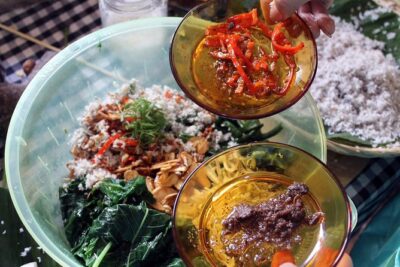
Private Authentic Balinese Cooking Class in Ubud at Putu’s Home
Read our review →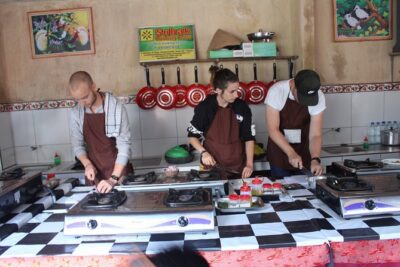
Balinese Ubud cooking school (9 Dish Cooking and Market Tour)
Read our review →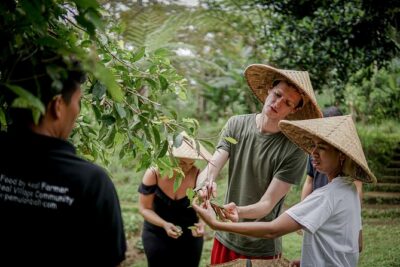
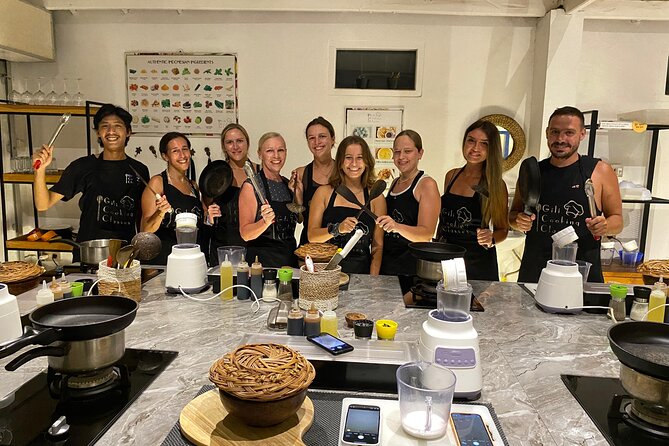
Learn to cook Indonesian food at Gili Cooking Classes Trawangan
Read our review →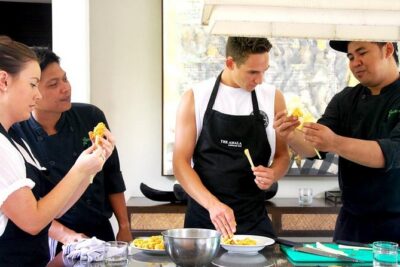
Browse the lists this tour appears in