
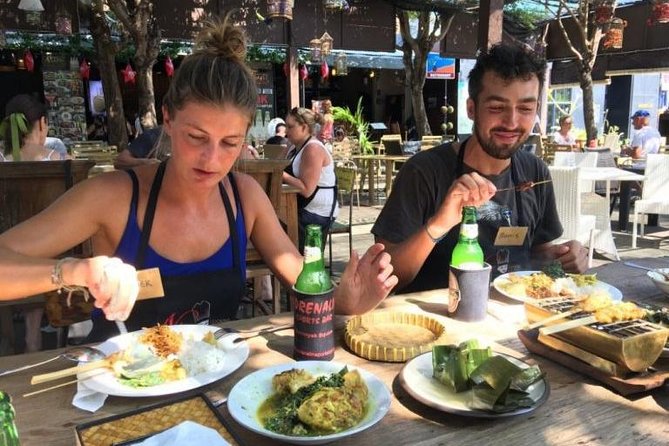
Reviewed · COOKING CLASSES
Nia Bali Seminyak Cooking Class
Nia Bali’s cooking class packs an unusual amount into four and a half hours: a traditional market visit, hands-on preparation, and a full lunch made from up to 12 Balinese dishes. You do not just watch a chef fry a few ingredients. You learn how pastes, sauces, satay, salads, rice, and banana-leaf dishes fit together.
I like the market stop because it gives the cooking a local setting, and I like the generous menu. Most cooking classes leave you with three or four recipes. Here, you may make enough food to fill a proper Balinese table. The main consideration is scale: the class can handle a large group, so it may feel more like a lively kitchen session than a quiet private lesson.
Key points at a glance
- Twelve-dish menu: Prepare dishes such as ayam betutu, sate lilit ikan, nasi goreng ayam, and pecelan.
- Market first: Visit a morning traditional market and learn about meat, fish, spices, poultry, and tropical fruit.
- Food is the main event: Your cooking becomes the included lunch, with coffee or tea along the way.
- Useful take-home items: Every participant receives a cookbook and completion certificate.
- Pickup is limited: Free pickup starts at 8am in the Seminyak area, but there is no drop-off service.
- Good for mixed skill levels: The chef and staff involve people in different preparation jobs, so beginners and confident cooks can take part.
Starting with a Seminyak market visit
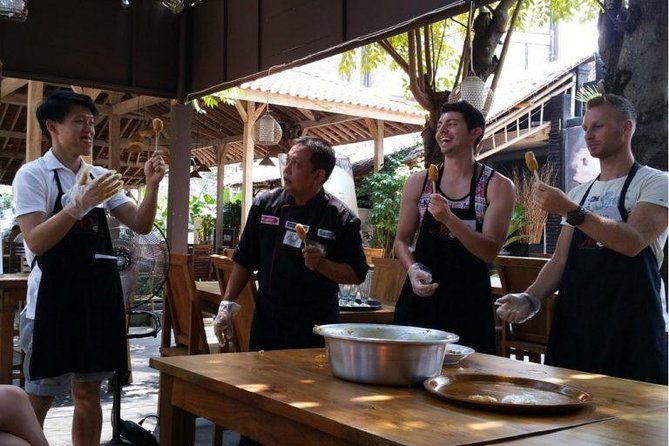
The morning begins at 8am, with free pickup available in the Seminyak area. The stated meeting point is Warung Nia Balinese Food & Pork Ribs at Jl. Kayu Aya No. 19-21, near Seminyak Square. If you are arranging your own way there, allow enough time to reach this address before the start.
The first stop is a traditional morning market. This is more than a quick shopping errand. You get an introduction to the raw materials behind Balinese cooking, including fresh meats, fish, poultry, spices, and tropical fruit.
That matters because Balinese food is built from combinations of ingredients rather than one magic seasoning. The pastes are especially important. You learn to connect the color, smell, and texture of an ingredient with the dish it will become.
The market portion also gives you a better sense of what the kitchen is trying to teach. Instead of treating local food as a restaurant product, you see the ingredients before they are chopped, blended, wrapped, or cooked. The exact market route and amount of time spent there are not specified, so you should expect an introduction rather than a long market tour.
More Cooking Classes in South Bali:
- Balinese Cooking Class in Seminyak
★ 5.0 · 281 reviews - Balinese Cooking Class at The Santai Umalas Kerobokan
★ 5.0 · 20 reviews - Mufu Rendang Cooking Class Kuta
★ 5.0 · 6 reviews
From raw ingredients to twelve dishes
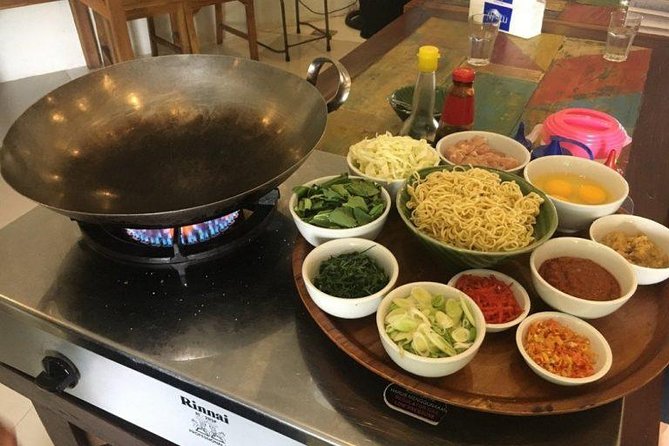
After the market, you move to Nia Cooking Class for the main kitchen session. The class menu covers sauces and pastes, meat and seafood, vegetables, snacks, and rice. That range is the strongest reason to choose this experience over a shorter class.
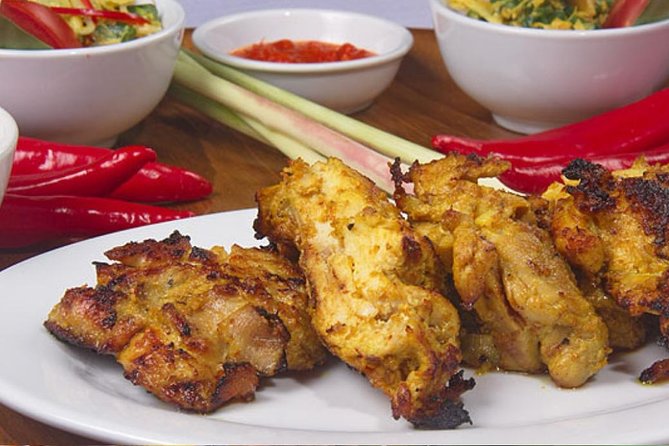
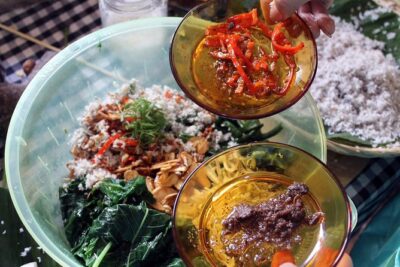
You work with two spice pastes. Base be pasih is used for seafood and has an orange appearance, while base be siap is the yellow paste for chicken. These bases show how Balinese cooks build flavor at the start of a recipe, rather than adding seasoning only at the end.
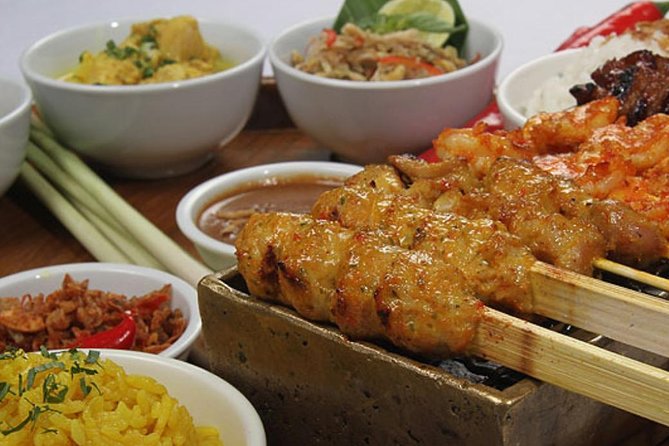
The menu includes Ayam betutu, chicken roasted in banana leaf. You also prepare Be celeng base manis, pork in sweet soy sauce, plus chicken satay and peanut sauce. Seafood appears as sate lilit ikan, minced seafood satay, which gives you a different texture and method from ordinary skewered meat.
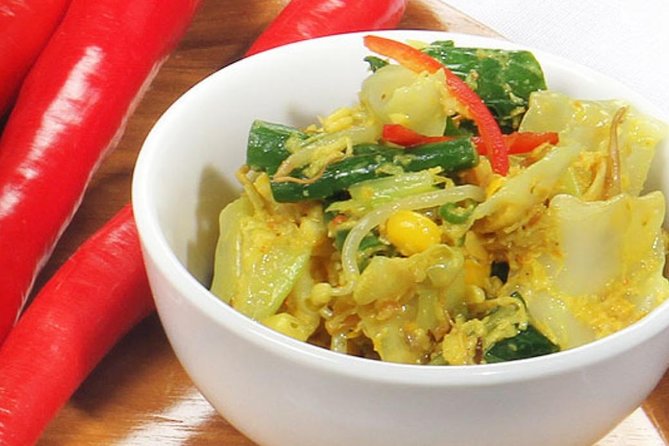
Chicken is used again in tum ayam, minced chicken cooked in banana leaf, and in a green papaya salad. Vegetable dishes include pecelan, a vegetable salad with peanut sauce, and urab jagung, a sweet corn and coconut snack. The final savory item is nasi goreng ayam, fried rice with chicken.
This is a lot of food for one session. You should not expect to make every dish alone from start to finish. In a class with 12 recipes, tasks need to be shared and organized. The format gives you a broad look at Balinese cooking, but it does not provide the same close, individual attention as a tiny lesson focused on two or three recipes.
What the chef adds to the experience
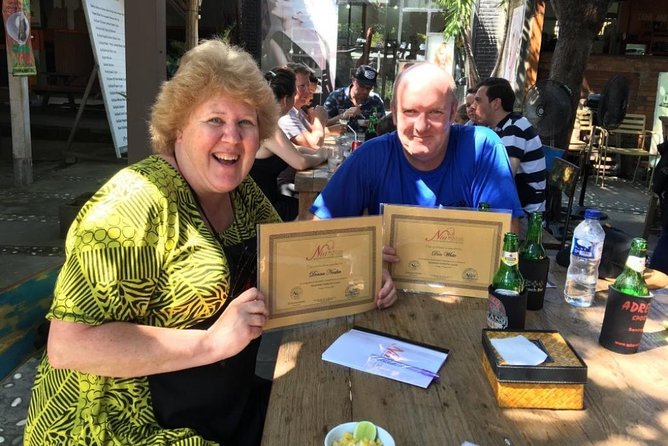
The chef’s role is a major part of the class. The instructor identified in class feedback is Tommee Ford, also referred to as Tommy, and his teaching style is described as funny, energetic, and well informed about the culture behind the food.
That combination is useful. A cooking class can become dull if the instructor only lists measurements. Here, the chef explains the background of the dishes while keeping people involved in chopping, mixing, shaping, wrapping, and cooking.
The class is designed for all skill levels. If you are new to cooking, you can take on manageable preparation jobs. If you already cook, you will still find value in the pastes, banana-leaf methods, satay techniques, and ingredient substitutions.
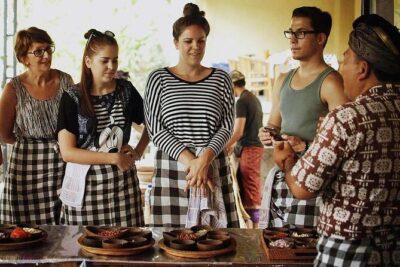
I also like that the lesson has a social side. People are grouped around tables and work toward one shared meal. That can be a pleasant way to meet people from different countries, especially if you are visiting Bali alone. It also suits couples, families with adult children, and friends who want an activity that gives you something to talk about afterward.
The trade-off is that a humorous, active chef-led class depends on the group’s energy. Some people want a calm, highly personal lesson. This is better suited to you if you enjoy participation, conversation, and a full room with plenty happening.
The twelve dishes, and what you actually learn
The recipe list is long, but it has a sensible spread.
Base be pasih and base be siap teach the foundation. These seafood and chicken pastes show how spice mixtures change with the main ingredient. Their orange and yellow colors also make the lesson easy to follow.
Ayam betutu and tum ayam introduce banana-leaf cooking in two forms. One is roasted chicken and the other is minced chicken. You get to see how wrapping food changes both its presentation and the way it cooks.
Sate ayam and sate lilit ikan compare chicken satay with minced seafood satay. The seafood version is especially useful if you want something different from the familiar skewer.
Base sate supplies the peanut sauce. This is a practical recipe to remember because it can serve as a dip or dressing beyond the class.
Green papaya salad and pecelan keep the meal from becoming an all-meat affair. The vegetable salad with peanut sauce gives you another example of how Balinese food balances fresh produce with strong seasoning.
Urab jagung adds a sweet corn and coconut element. Finally, nasi goreng ayam gives you a familiar dish in a local cooking context, with the useful advantage that fried rice is easy to recreate at home.
The class also covers substitutions for ingredients that may be difficult to find outside Bali. That is an important practical touch. A recipe is more useful when you understand what can replace a local ingredient rather than treating the original version as impossible to repeat.
A few more things to do around South Bali
- Waterbom Bali Tickets – Single Day Pass
★ 4.5 · 620 reviews - Canggu: Drag Show with Dinner
★ 5.0 · 414 reviews - Canggu Scooter Lessons
★ 5.0 · 195 reviews - Surf Lesson with a Personal Instructor at Kuta Beach
★ 4.5 · 192 reviews
Lunch is the reward at the end
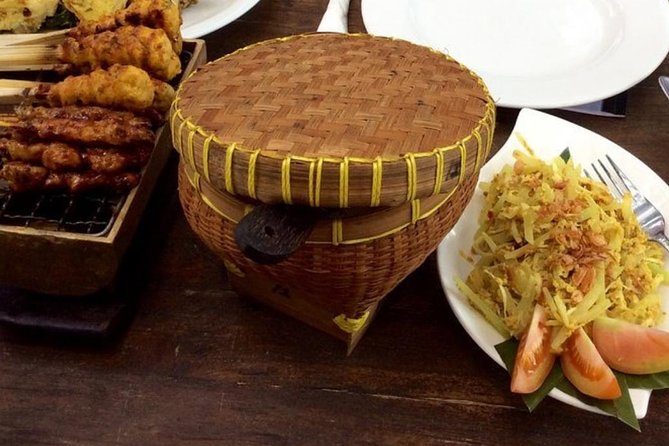
You eat the food prepared during the class, so lunch is not an afterthought. It is the point where the separate tasks make sense as one meal.
The amount of food should be substantial. You are making up to 12 dishes, including rice, salads, meat, seafood, sauces, and snacks. Come ready to eat, but keep in mind that the final quantity depends on the day’s menu and how the kitchen divides portions.
The shared meal also lets you compare the finished dishes. A paste that seemed very strong on its own may work perfectly with rice or vegetables. A banana-leaf parcel may look simple but carry the flavor of the spice mixture throughout the dish.
Coffee or tea is included. The class price also covers lunch, the cooking session, the market visit, a cookbook, and a certificate. Tips are not included, and you should budget for your own return transport.
Dietary needs and food choices
You are asked to report allergies when booking or before the class. Do this early and clearly. The menu includes pork, chicken, seafood, peanuts, and coconut, so the staff needs to know about allergies or dietary restrictions before preparation begins.
The class can adapt dishes for some dietary needs. A pescatarian participant was able to take part and enjoy a full meal after the menu was adjusted. That is encouraging, but it does not mean every restriction can be accommodated.
If you avoid pork, chicken, seafood, peanuts, or other listed ingredients, contact the operator before you commit. Do not wait until the kitchen starts. The menu is broad, which helps with substitutions, but it also means there are many ingredients to discuss.
Is $71.50 good value?
At $71.50 per person, this is not the cheapest food activity in Bali. It is a fair price if you want more than a demonstration.
You are paying for roughly four and a half hours, transportation pickup in Seminyak, a market visit, instruction, ingredients, lunch, tea or coffee, a cookbook, and a certificate. The 12-dish menu makes the price easier to justify, especially when compared with a class that teaches only a few recipes.
The value depends on how you use it. If you want a quiet, chef-to-student lesson focused on perfecting one dish, this may feel too broad. If you want a half-day activity that combines food, local ingredients, social time, and a large meal, the package is stronger.
The cookbook gives the class lasting value. You can use it to try nasi goreng ayam, peanut sauce, satay, or one of the spice pastes at home. The certificate is mainly a souvenir, but it is a pleasant reminder of the morning.
Group size, pickup, and the return trip
Pickup is free only from the Seminyak area and starts at 8am. There is no drop-off service, so you need to arrange your own ride after the class. The activity ends back at the meeting point, Warung Nia.
The information describes this as a private activity for your group, but the class format can also accommodate a large number of people at once. In practice, you should clarify the expected group arrangement if privacy matters to you. The kitchen is organized to give everyone tasks, yet a busy class will not feel like a one-on-one lesson.
The meeting point is near public transportation. You can also start there directly rather than using pickup, but pickup is convenient if you are staying in Seminyak and do not want to find the restaurant in the morning.
Confirmation is sent within 48 hours of booking, subject to availability. The voucher is valid only on the date selected. Since the booking is non-refundable and cannot be changed for any reason, check your schedule carefully before paying.
If the minimum number of participants is not reached and the operator cancels, you are offered another date or experience, or a full refund. That is the main situation in which the supplied terms provide for a refund.
Who will enjoy this cooking class most?
I would choose this class for you if you want to:
- Learn several Balinese dishes instead of mastering one recipe
- Visit a local market with a clear food focus
- Eat a full lunch made during the activity
- Meet other people through a shared cooking session
- Take home recipes you can attempt outside Bali
- Include adult children or friends in a hands-on activity
- Learn about sauces and spice pastes, not just finished dishes
It is also a good choice for solo visitors. The table format gives you a natural way to meet people without having to arrange a separate group.
Families should note that the activity is suitable for children according to the available information, but no specific age range is given. Kids who enjoy food preparation may have a good time, while children who dislike long kitchen sessions may lose interest before lunch.
You may want another option if you dislike shared tasks, have serious dietary restrictions, or need transport back to your hotel. The four-and-a-half-hour length also makes this a substantial part of your morning and early afternoon, not a quick stop between beach plans.
Should you book Nia Bali Seminyak Cooking Class?
Book it if you want a generous, food-centered introduction to Balinese cooking. The market visit, 12-dish menu, skilled and entertaining instruction, and final lunch give you a lot for the price.
I would be especially happy choosing it for a first visit to Bali, a solo day, or a family outing with adult children. Just report allergies early, confirm the group setup if that matters, and arrange your own ride home. If you prefer a tiny class with intense personal coaching, choose a smaller format instead.
FAQ
Where does the cooking class start?
The activity starts at Warung Nia Balinese Food & Pork Ribs, Jl. Kayu Aya No. 19-21, Seminyak, Kuta Utara, Badung, Bali 80361, Indonesia.
What time does the class begin?
The start time is 8:00am. Free pickup begins at 8am for participants staying in the Seminyak area.
How long does the experience last?
The experience lasts approximately four hours and 30 minutes.
Is lunch included?
Yes. Lunch made during the cooking class is included, along with coffee and/or tea.
How many dishes will I learn to make?
The class covers up to 12 Balinese dishes, including spice pastes, satay, salads, banana-leaf dishes, fried rice, and a sweet corn and coconut snack.
Is hotel drop-off included?
No. Pickup is offered from the Seminyak area, but drop-off service is not included. The activity ends back at the meeting point.
Can I report food allergies or dietary requirements?
Yes. You should inform the operator about allergies or specific food requirements. The available information also indicates that some menus can be adjusted for dietary needs.
What do I take home after the class?
Each participant receives a cookbook and a completion certificate.
Just added around South Bali
- Well-Guided Local Textile Tour of Denpasar★ 5.0 · 13 reviews
- 90 Minutes Surfing Lesson in Canggu★ 5.0 · 25 reviews
- 2-Hour Canggu Private Guided Surfing Experience in Bali★ 5.0 · 3 reviews
- Private Experience Surf Lessons in Canggu★ 5.0 · 9 reviews
- Seminyak Horse back riding In the beach★ 4.5 · 4 reviews
- Backlanes and Hidden Sites: A Self-Guided Audio Tour in Seminyak★ 5.0 · 6 reviews
- Seminyak Indonesian Food Tour★ 3.5 · 7 reviews
- Private One on One Surf Lesson in Canggu area – Bali★ 5.0 · 13 reviews
Cooking Classes, compared.
Private Authentic Balinese Cooking Class in Ubud at Putu’s Home
Read our review →
Balinese Ubud cooking school (9 Dish Cooking and Market Tour)
Read our review →
Learn to cook Indonesian food at Gili Cooking Classes Trawangan
Read our review →
Browse the lists this tour appears in