
Reviewed · VILLAGE & CULTURAL TOURS
Private Tour of Ubud Art Village from Bali
Bali’s art villages are working communities, not just souvenir stops. On this private tour, you watch batik artists use melted wax, see silver and goldsmiths shape jewelry, meet woodcarvers and painters, and finish among masks and puppets at Setia Darma. The making is the point, and that gives your shopping a useful story.
I like the private driver-guide setup, especially for hotel or port pickup and help with translation. I also like the range: Batubulan, Celuk, Mas, Batuan, and the museum each show a different side of Balinese craft. The main caution is that shopping is central, so the experience suits you best if you want to browse and perhaps buy. If you want a quiet museum day with no commercial stops, choose another outing.
Key points at a glance
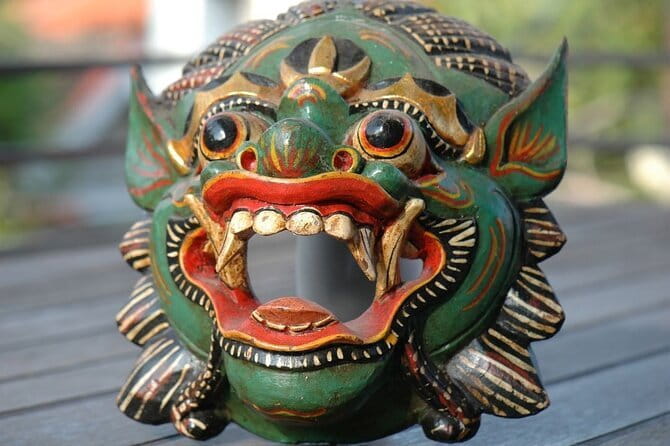
- Five distinct art stops: See batik and weaving in Batubulan, jewelry in Celuk, wood carving in Mas, painting in Batuan, and Indonesian masks and puppets at Setia Darma.
- Private time with a driver-guide: Your own group travels by air-conditioned minivan, with interpretation available at the workshops.
- Guides can shape the day: Parti and Wayan Sudira have been praised for being friendly, flexible, and willing to let visitors browse at their own pace.
- Lunch and drinks are included: The package covers a restaurant lunch, bottled water, and coffee or tea.
- A practical souvenir route: You can compare carvings, silver, gold, paintings, batik, and other art in one organized day.
- Good value for small groups: At $79.99 per person, the price includes private transfers, a guide, meals, entry fees, and taxes, with group discounts available.
Why this tour works for art shoppers
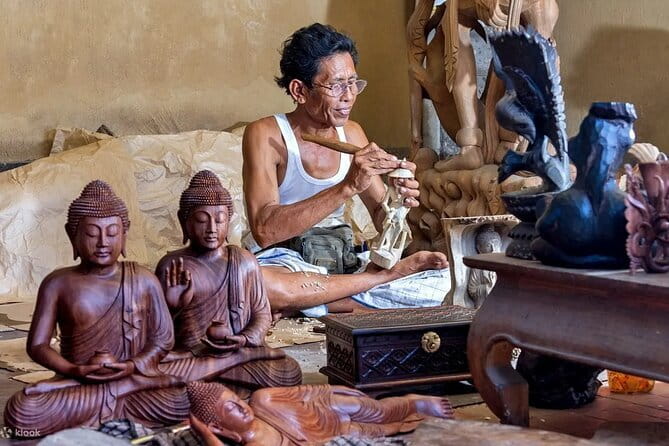
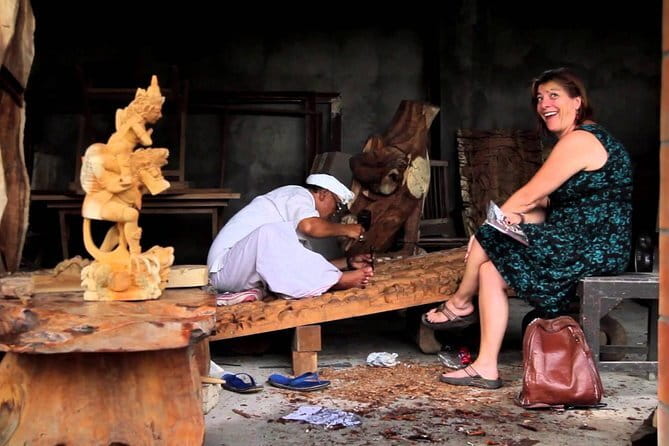
The best reason to take this outing is simple: Bali’s crafts are easier to understand when you see the work in progress. A carved figure in a shop can feel like just another object on a shelf. Watch a craftsperson shape it, and you begin to see the labor, materials, and local skill behind the price.
The route also gives you a broad look at Balinese art. You are not spending five hours on one gallery or one market. Instead, each stop has a different focus. Batik uses wax and dye. Celuk centers on precious metals. Mas is known for wood. Batuan is associated with traditional painting. Setia Darma shifts from workshops to a museum collection of masks and puppets from Indonesia and other countries.
You get a private vehicle, so the day is more adaptable than a large group excursion. The guide can interpret conversations, explain what you are seeing, and help when you want to ask about materials or the making process. Guides named Parti and Wayan Sudira are specifically associated with warm, flexible service. Wayan, in particular, kept the day upbeat during heavy rain and helped one couple find several places selling stone carvings, woodwork, silver, and paintings.
The listed duration is about five to six hours. That makes this a manageable cultural outing from Seminyak, though the number of stops means the day has a steady pace. The five stops are each planned at about an hour, before allowing for transport and lunch. If you want long, unhurried shopping sessions, tell your guide early and expect to spend less time at some other stop.
More Cultural Tours in Ubud
- Ubud Tour – Balinese Healing By Shaman And Self Purification
★ 5.0 · 236 reviews - Melukat Ceremony and Temple Tour at Tirta Empul Temple
★ 5.0 · 218 reviews - Full-Day Highlights and Best of Ubud Village
★ 5.0 · 81 reviews
Batubulan: wax, dye, and handwoven cloth
The first stop is Batubulan, known here for batik and traditional weaving. This is a useful opening because it introduces a process you can understand at a glance: wax is applied to fabric, then dye is used to create the pattern. The wax protects selected areas, allowing the design to emerge in stages.
You can watch the work and learn how Balinese artists make batik paintings. The visit is not only about finished cloth. It shows the steps behind the finished pattern, which helps you judge the amount of handwork involved when you browse later.
For shoppers, Batubulan is a chance to look at batik fabrics and related art. Take your time checking colors, patterns, and fabric quality. The tour includes interpretation, so ask the guide to explain how a piece was made rather than judging it only by its appearance.
The stop is listed at about one hour, with no separate admission charge. Since shopping is not included in the tour price, anything you buy is your responsibility. That is worth remembering from the start, especially if you plan to purchase at several villages.
Celuk Village: watching silver and gold take shape
Celuk is the jewelry stop. The village is associated with many silver and goldsmiths, and the visit lets you see how local makers create jewelry designs. A short workshop may also be available, giving you a closer look at the craft instead of only viewing finished pieces.
This is one of the more practical parts of the day if you are interested in jewelry. The guide can help bridge the language gap while you ask about designs, materials, and the work involved. You may also find this stop useful if you are looking for a small, packable souvenir rather than a large carved object.
As with the other art villages, the commercial side is part of the experience. You are visiting places where art is made and sold. I would approach Celuk as a chance to learn first and shop second. See several designs, decide what fits your budget, and do not feel you must buy simply because you have been shown the workshop.
The visit is planned for about an hour, and admission is included. The package also covers all fees and taxes, so you do not need to manage separate entry payments during the day.
Mas Village: the craft of wood carving

Mas is known for woodcarving. Here, you can visit a woodcarver’s workshop and learn how the work is created. The guide can explain different types of wood used for carving, which gives you a better way to compare the pieces you see.
This stop may appeal most to you if you want a substantial artwork for your home. Wood carvings vary greatly in size and detail, and a private vehicle makes it easier to consider larger purchases than it would on a walking market visit. The tour information does not promise shipping or delivery, so ask about those matters before buying anything too large to carry.
I like the contrast between Celuk and Mas. Silver and gold work is small and precise. Wood carving is more physical and often more imposing. Seeing both in one day helps you understand that Balinese art is not one single style or product.
Again, plan on roughly an hour. If you are serious about buying, this is one place where your guide’s local knowledge and translation help may be especially useful.
A completely different kind of day out in Ubud:
- All-Inclusive Ubud Private Tour
★ 5.0 · 14,344 reviews - Best of Ubud Full-Day Tour with Jungle Swing
★ 5.0 · 8,571 reviews - Ubud: Monkey Forest, Jungle Swing, Rice Terrace, and Water Temple
★ 5.0 · 7,160 reviews - Best of Ubud 1-Day Private Tour
★ 5.0 · 4,451 reviews
Batuan: traditional painting in a working village

Batuan brings painting into the route. The village is known for traditional Balinese painting, and you visit an artist’s workshop to see how the work is made. The setting is important. You are not only looking at finished paintings in a salesroom. You can see that painting is part of a local working tradition.
This stop gives the day a quieter visual change after the metal and wood workshops. Look closely at the detail and ask your guide about the subjects, techniques, and time involved. The supplied information does not specify particular artists or painting styles, so the exact experience depends on which workshop is open during your visit.
One especially appealing part of the route is the chance to visit a family home of painters. That kind of setting can feel more personal than a standard retail stop, though the exact arrangement is not guaranteed. You should treat it as a possible feature rather than a promised private meeting.
Batuan also gives you another chance to shop for art. If you are comparing paintings, keep track of what you have already seen and what price range suits you. With several art stops in one day, it is easy to buy early and then find a piece you prefer later.
Setia Darma: masks and puppets to finish the day
Setia Darma House of Mask and Puppets in Ubud is the museum stop. It displays masks and puppets from across Indonesia, with some pieces from countries including China and Brazil. This gives the final hour a wider frame than the village workshops.
The museum is a good change of pace after a day built around buying and making. You can focus on objects for their cultural and artistic value without needing to decide what to take home. The grounds and buildings are part of the appeal, and the museum was singled out as a particularly enjoyable final stop by one visitor who liked both the interior and exterior.
Admission is included, and the planned visit lasts about an hour. If you have limited interest in shopping, this stop may be the part you value most. If you love folk art, performance traditions, or unusual objects, it gives you a broader view of Indonesian visual culture than the village stops alone.
Lunch, transfers, and the value of a private vehicle

Lunch at a restaurant is included, along with bottled water and coffee or tea. The schedule describes lunch as part of the day after the craft visits, although the exact timing can depend on the route and guide. You do not need to arrange your own midday meal, which keeps the outing simple.
Pickup and drop-off are offered at your hotel or the port. Transport is by air-conditioned minivan, and the tour is private, so only your group participates. That combination matters in Bali, where an organized vehicle can save you from arranging several separate rides between villages.
The private format also lets you ask for help when you need it. You can ask the guide to interpret, explain a craft, or give you time to browse. Past guide experiences with Parti and Wayan Sudira suggest that flexibility is one of the stronger features of the service. Still, the precise guide is not guaranteed in the information provided.
At $79.99 per person, the price is solid if you use the full package. You are paying for private round-trip transport, a driver-guide, lunch, drinks, admission fees, and taxes. A solo visitor may find the cost less attractive than a couple or family, but group discounts can improve the value. Since the vehicle and guide are private, the price makes more sense when shared by several people.
What to know before you buy art
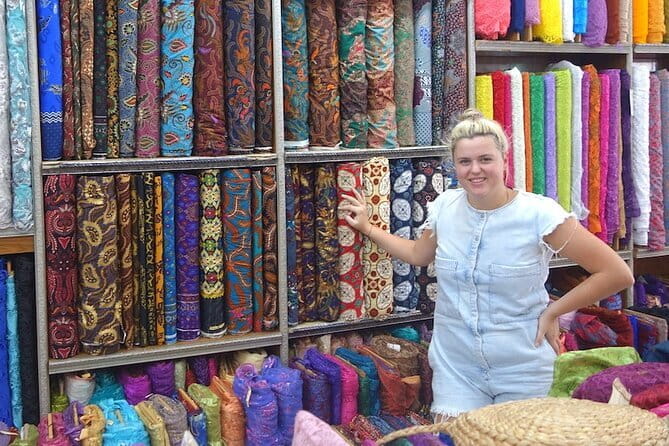
Shopping is not included in the tour price. That sounds obvious, but this route is designed around art villages and markets, so you should decide in advance how much you want to spend.
The day can be useful for comparing different kinds of work, but it can also create decision fatigue. You may see batik, jewelry, wood, paintings, carvings, and puppets before reaching the final market. I suggest taking notes or photographs where permitted, and remembering the name of the village where you saw a piece you liked.
Ask the guide to help with translation and basic explanations. A guide cannot decide what you should buy, but can make it easier to ask about materials, craftsmanship, and practical matters. This is especially helpful at Celuk, where the distinction between silver and gold pieces matters, and at Mas, where wood type and size affect the purchase.
The route is best for you if you enjoy browsing at your own pace but still want a guide nearby. One highly praised feature is exactly that balance: the guide provides local context without forcing you to move through every shop quickly.
Who should book this private Ubud art tour?
I would recommend it to couples, families, and small groups who want to combine sightseeing with souvenir shopping. It is also a good match if you are staying in Seminyak and want door-to-door transport to Ubud-area craft villages without arranging a driver independently.
Art students, craft fans, and curious shoppers will get the most from the workshop visits. The tour also suits you if you want help speaking with local artists and sellers. The museum adds variety, so the day is not only a chain of retail stops.
I would be less likely to choose it for a visitor who wants only Ubud temples, rice fields, or a long uninterrupted market visit. It is also not ideal if you dislike shopping as part of a tour. The schedule covers five stops in about five to six hours, so you should expect a full, organized day rather than a slow afternoon.
Most people can participate, and the activity is private. Confirmation is provided when you book. Free cancellation is available if you cancel at least 24 hours before the start time. Changes or cancellations inside that window are not accepted for a refund.
Should you book it?
Book this tour if you want to see how Bali’s crafts are made, shop with help from a local guide, and avoid transport planning. The strongest parts are the range of workshops, the private vehicle, the included lunch, and guides such as Parti and Wayan Sudira, who are praised for flexibility and friendly service.
Skip it if your goal is a purely historical or scenic Ubud day. This is a craft-and-shopping route first, with the Setia Darma museum providing a welcome cultural finish. At $79.99 per person, it offers good value for a small group that uses the transfers, meal, guide, and included entries. For anyone who wants to bring home a meaningful piece of Bali and understand where it came from, it is a sensible choice.
FAQ
How long does the private Ubud art tour last?
The tour lasts approximately five to six hours.
Where does the tour pick you up?
Pickup and drop-off are offered at your hotel or at the port.
Is the tour private?
Yes. Only your group participates in the private tour or activity.
What transport is provided?
Round-trip private transport is provided in an air-conditioned minivan.
Is lunch included?
Yes. A restaurant lunch is included, along with bottled water and coffee or tea.
Which art villages are included?
The route includes Batubulan, Celuk Village, Mas Village, and Batuan Village, followed by Setia Darma House of Mask and Puppets in Ubud.
Are admission fees included?
Yes. Admission to the included paid stops is covered, along with all fees and taxes.
Is shopping included in the price?
No. The tour price does not include purchases.
Can I cancel for a full refund?
Yes, if you cancel at least 24 hours before the experience start time. Cancellations or changes made less than 24 hours in advance are not accepted for a refund.
Just added around Ubud
- Ubud private tours★ 5.0 · 4 reviews
- Ubud Village, Tegalalang Rice Terrace Swing, Tirta Empul Temple and Waterfafall★ 5.0 · 7 reviews
- Ubud Instagram: Waterfall Tours★ 5.0 · 57 reviews
- Ubud Waterfalls and Rice Terraces Private Day Tour★ 5.0 · 12 reviews
- Bali Half Day-Tour: Ubud Night Trip Packages★ 5.0 · 5 reviews
- Ubud VW Safari Bali Tour – Volkswagen Classic Car Trip★ 5.0 · 21 reviews
- Hidden Ubud: Waterfalls & Sacred Temples★ 5.0 · 6 reviews
- Ubud Full Day Tour Waterfall Monkey Forest Rice Terrace★ 5.0 · 4 reviews
Village & Cultural Tours, compared.

Bali Full-Day Traditional Village Sightseeing Trip All Inclusive
Read our review →

Ubud Tour – Balinese Healing By Shaman And Self Purification
Read our review →Melukat Ceremony and Temple Tour at Tirta Empul Temple
Read our review →
Full Day Kintamani Volcano View and Ubud Village Tour
Read our review →


Browse the lists this tour appears in