
Reviewed · VILLAGE & CULTURAL TOURS
Indonesia: Garuda Wisnu Kencana
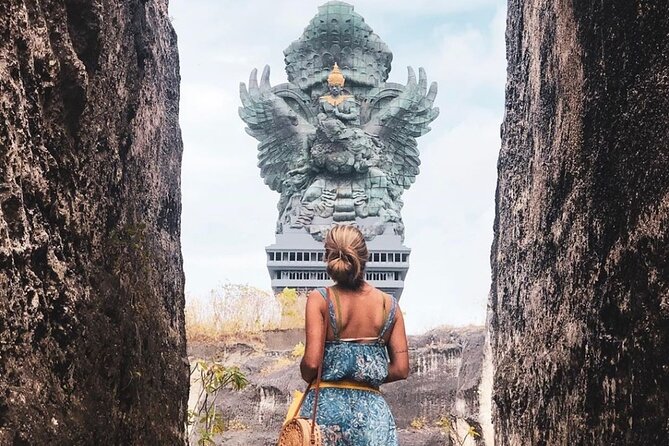
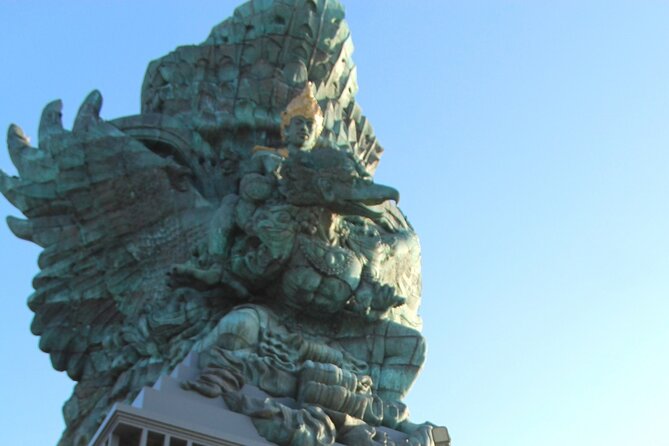
The first thing to know about GWK is its scale. The 120.9-meter Garuda Wisnu Kencana statue shows the Hindu god Wisnu riding Garuda, the eagle that also serves as Indonesia’s national emblem. From the rugged hills of Bali’s Bukit Peninsula, it is hard to miss, and it is taller than both the Statue of Liberty and Christ the Redeemer.
I like the way the park connects the statue to Balinese stories, public art, and live performances. I also like the flexible visit: you can walk through the gardens, use a Segway, or plan your route around the regular dance shows. The main catch is value. At about $6.22 per person, admission is fairly modest, but some performances or statue access may cost extra, so the final bill can feel less simple.
Key points to know before you go
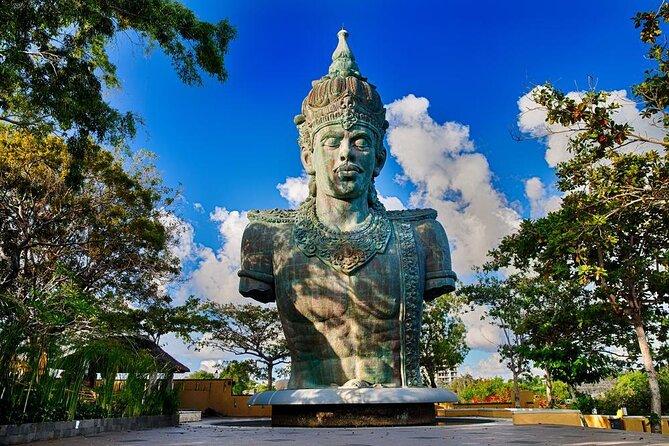
- The 120.9-meter statue is the main event: Copper, brass, and steel create one of Bali’s most recognizable modern monuments.
- The park covers 60 hectares: Give yourself two to three hours if you want more than a quick photograph.
- Balinese performances run throughout the day: Shows are scheduled from 11.00 WITA through the evening Kecak performance at 18.00 WITA.
- A park vehicle can save time: One visit took longer because of a wait for the scheduled service, and a buggy was considered essential for seeing more of the grounds.
- The ticket is inexpensive, but extras matter: Some entertainment and access options may not be part of the basic admission.
- The official ticket arrives separately: Your booking confirmation is not the entrance ticket. The official ticket is sent within 24 hours.
Why GWK feels different from a regular Bali attraction
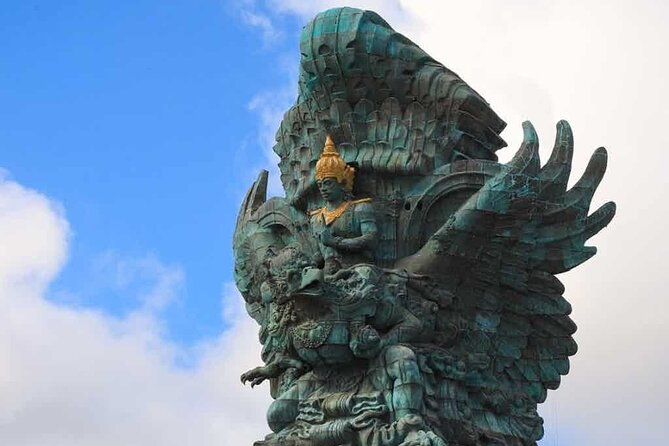
GWK is not an old temple complex. It is a large cultural park built around a modern monument, with mythology providing the thread that ties the site together. That distinction matters. You come here for scale, sculpture, staged performances, and views, not for the worn stonework or quiet ritual atmosphere of a historic temple.
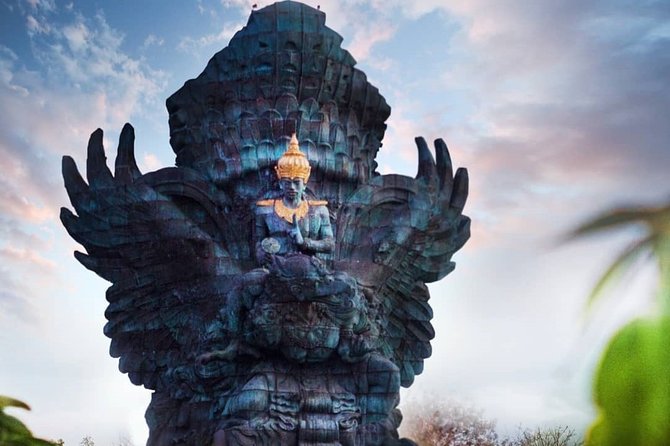
The central figure is Lord Wisnu, a Hindu deity linked with protection, riding Garuda. In Indonesian tradition, Garuda represents freedom from oppression, while the pairing of Wisnu and Garuda suggests protection, loyalty, and national pride. The statue’s gold mosaic crowns catch the light, and its enormous wings create the visual punch from almost every approach.
The materials are also part of the story. Copper, brass, and steel give the work a contemporary feel, while the subject comes from Hindu mythology and Balinese culture. The result can feel grand and even theatrical, but that is exactly the point. GWK is designed to make an immediate impression.
I would not treat it as a complete introduction to Bali’s culture. It offers selected stories and performances in a polished setting. Still, it gives you a useful first look at Balinese dance, masks, music, costume, and mythology without requiring a full day.
More Cultural Tours in Uluwatu:
- Water Sports GWK Uluwatu Private Guided Tour
★ 4.5 · 44 reviews - Uluwatu Surrounding: GWK- Padang Beach- Uluwatu Temple
★ 5.0 · 5 reviews - Nusa Dua Parasailing, Jet sky, GWK with Uluwatu Kecak Fire Dance
★ 4.5 · 5 reviews
Walking through the 60-hectare park
The park is large enough that your visit depends on how you move around it. A quick walk to the main statue and nearby public areas may fit into two hours. If you want to see more sculptures, gardens, plazas, and performances, allow closer to three hours.
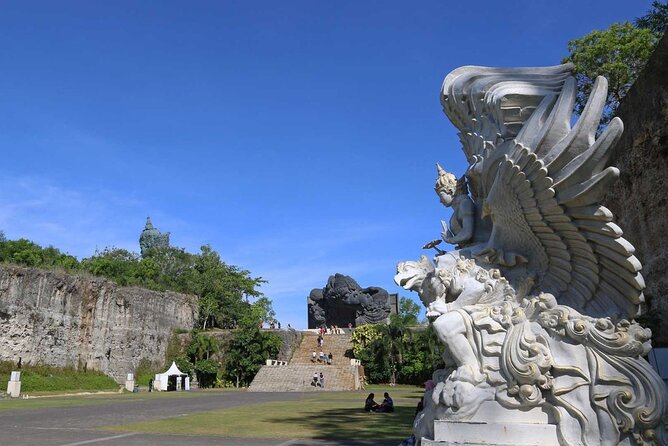
The open areas provide changing views of the statue. You may see it from below, from a plaza, or from a path that lets you appreciate the wingspan. The Garuda’s wings reach 64 meters, so photographs taken from different parts of the park can look surprisingly different.
You can explore on foot or by Segway. A buggy service is also available, and the practical value becomes clear when the heat rises or you want to reach several sections in one visit. A scheduled buggy service runs at regular intervals, but waiting can affect your plan. One reported visit involved a wait of about an hour for access to the upper statue area, so ask about timing when you arrive.
The park’s size is both its strength and its weakness. It gives the statue room to breathe and makes the visit feel more like a proper outing than a single photo stop. At the same time, you may not see every corner if you arrive late, wait for transport, or pause for several shows.
The statue, from national symbol to photo landmark
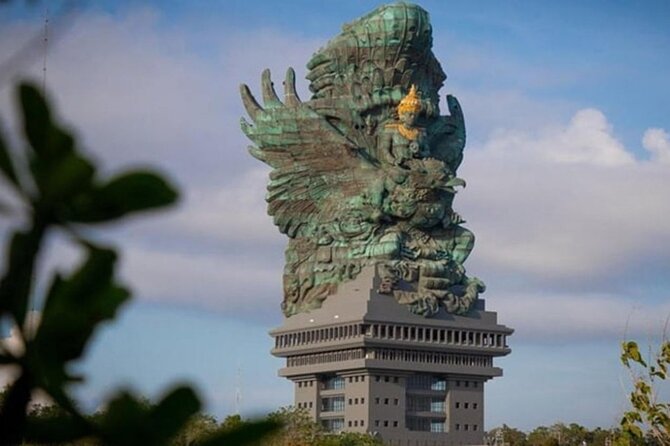
The Garuda Wisnu Kencana statue is the reason most people come. It depicts Wisnu seated on Garuda, with the pair rising above the Bukit Peninsula. At more than 120 meters, the monument is taller than famous landmarks that many people know well, including the Statue of Liberty and Christ the Redeemer.
The statue was created by Balinese artist Nyoman Nuarta. Its size makes it impressive even if you know little about the mythology behind it. I recommend taking time to look beyond the full-height view. Notice the copper and brass surfaces, the steel framework, the gold mosaic crowns, and the details around the wings and figures.
A ticket that included a guided visit to the top of the statue was considered good value by one visitor, with the guide offering useful explanations. That option is not necessarily part of every basic ticket, so check exactly what your booking includes before you pay for an upgrade. If you care about the construction, symbolism, and high-level views, the extra access may be more meaningful than simply spending longer in the lower plaza.
The statue is also a strong choice for families and photographers. Children can understand its sheer size at once, while adults may appreciate the contrast between traditional religious imagery and a modern monumental structure. Keep your expectations realistic, though. The statue alone will not fill two or three hours. The rest of the time comes from the park, shows, viewpoints, and food options.
Balinese performances from 11.00 to 18.00 WITA
The performance schedule is one of the best reasons to plan your timing instead of arriving at random. Shows take place at several parts of the park, and the program changes through the day.
At the Amphitheater, the schedule includes:
- 11.00 WITA: Tari Sekar Jepun, Tari Kebyar Duduk, and Topeng Kenyum Manis
- 12.00 WITA: Tari Jauk Keras, Tari Oleg Tamulilingan, and Tari Kebyar Duduk
- 13.00 WITA: Tari Sekar Jepun and Tari Jauk Manis
- 14.00 WITA: Tari Topeng Monyer and Tari Jauk Manis
- 15.00 WITA: Tari Oleg Tamulilingan and Tari Barong-Bojog
At 16.00 WITA, Plaza Wisnu hosts a Parade Budaya Bali. The Lotus Pond has Joged Bumbung at 17.00 WITA. The evening program ends with Kecak, Garuda Wisnu Kencana, at 18.00 WITA.
This schedule gives you a simple plan: arrive before one of the amphitheater programs, walk the grounds afterward, then finish at the Lotus Pond or with the evening Kecak show. You do not need to watch every performance. Select one or two that fit your interests and use the gaps to explore.
The names may mean little before you arrive, but the variety is useful. You will encounter different dance styles, masks, characters, music, and group performances. The Kecak program is likely to be the most memorable choice for many first-time visitors because it is a distinctive Balinese performance form and takes place at the end of the daily schedule.
The key question is cost. Basic admission may not cover every show or special access option. Since price was the main complaint in one assessment of the park, ask which performances are included before building your budget around them.
A few more things to do around Uluwatu
- Uluwatu Sunset, Kecak Dance, and Dinner Jimbaran Beach
★ 5.0 · 3,681 reviews - Uluwatu Sunset Tour: Kecak and Fire Dance with Jimbaran Dinner
★ 4.5 · 597 reviews - Uluwatu Temple Entry and Kecak Fire Dance Ticket
★ 5.0 · 479 reviews - Private Tour: Uluwatu Temple & Southern Bali Highlights
★ 5.0 · 387 reviews
Food, gardens, and the parts between shows
The park also offers Indonesian heritage cuisine. That makes sense here because the site is meant to present several parts of Indonesian culture in one place. If you have time, a meal or snack can turn the visit into a longer outing rather than a quick stop for the statue.
I would not visit GWK mainly for food, since the information available does not give a detailed menu or specific restaurant recommendation. Think of it as a useful break between walking and performances. If your schedule is tight, see the statue and one show first, then decide if you want to eat inside the park.
The surrounding gardens and other statues are worth allowing time for. One short visit focused on the main attraction, while another praised the gardens and additional sculptures as part of the appeal. That difference explains why the park can feel either too expensive or worthwhile, depending on how much of it you actually use.
Rain can change the experience quickly. A heavy shower once stopped further exploration and left visitors soaked while they arranged a pickup. Staff helped contact the waiting car, which was useful in the moment, but the lesson is simple: keep some flexibility in your plan. The park is spread out, and bad weather can make the distance between attractions feel much longer.
How the price works out at $6.22
The advertised price of about $6.22 per person is reasonable if you spend two or three hours seeing the statue, gardens, and at least one cultural performance. It is less convincing if you arrive only to look at a few large sculptures and leave.
The value depends on three things:
- How long you stay
- Which performances are included
- Whether you pay for transport, Segway use, or special statue access
The basic entry price is low enough for a spontaneous visit from Kuta, but it is not automatically an all-inclusive cultural experience. One person found a package with a guided tour to the top of the statue to be good value, while another felt the park charged too much for what was available. Both reactions make sense because the add-ons can change the calculation.
If you are comparing GWK with a short sightseeing stop, the price is easy to justify. If you are paying for a family group and adding several extras, check the total first. Children under 100 centimeters enter free, which helps families with very young children.
Getting there from Kuta and planning your time
GWK is in the Kuta area, on Bali’s Bukit Peninsula, and it is near public transportation. A Grab bike from Kuta took about 30 minutes for one spontaneous visit, so the park can work as a half-day outing rather than a full-day commitment.
The duration is listed as approximately two to three hours. I would use the short end of that range if you want the statue, a few photos, and one performance. Use the longer estimate if you plan to walk through more of the park, wait for a buggy, eat, or watch several programs.
Because shows run on a timetable, choose your arrival time before setting out. Arriving just before a favorite performance is more efficient than entering with no plan. If you want the 18.00 WITA Kecak show, leave enough time for the grounds and any transport waits earlier in the day.
Your ticket is mobile, but the first confirmation you receive is not the official entrance ticket. The official ticket is sent within 24 hours. This is worth checking before you leave for the park, especially if you booked close to your intended arrival time. One ticket covers one person and one arrival time.
The experience is non-refundable and cannot be changed after booking. That makes weather and timing worth considering before you commit. A sudden storm may not ruin the whole visit, but it can limit what you see.
Who will enjoy GWK most
I would recommend GWK to you if you like large public monuments, cultural shows, photography, and easy sightseeing with several attractions in one place. It is also a practical choice if you want a break from beaches and resort areas without committing to a full day of temple visits.
Families may like the simple visual appeal of the statue and the open park setting. Children under 100 centimeters are free, and the mixture of huge sculpture, costumes, masks, and music gives younger visitors several things to watch.
The park also suits visitors who want a gentle introduction to Balinese performance. You can see a short show, read the basic cultural cues, and move on without spending hours at a single venue.
I would be more cautious if you are seeking a quiet, old, or deeply traditional Balinese site. GWK is a purpose-built cultural park, and its presentations are arranged for sightseeing. It can feel polished and commercial rather than intimate. I would also hesitate if your budget is strict and you dislike paying extra for optional shows or access.
Should you book Garuda Wisnu Kencana?
Book it if the giant statue interests you and you will stay long enough to combine it with at least one performance and a walk through the gardens. At $6.22, the basic price can work well for a two to three-hour visit, especially if you are already in Kuta and can reach it in roughly 30 minutes by Grab bike.
Before booking, check what your selected ticket includes. If you want the upper statue visit, guided commentary, or particular performances, do not assume they come with standard admission. Plan around the daily schedule, allow time for buggy waits, and keep an eye on the weather.
My verdict is cautiously positive. GWK is not a must-see for every Bali itinerary, and the price feels less attractive if you only view three statues and leave. But with the park’s scale, the enormous Wisnu and Garuda monument, the regular Balinese performances, and the nearby gardens, it can be a worthwhile half-day stop when you plan it properly.
FAQ
Where is Garuda Wisnu Kencana Cultural Park?
It is in Kuta, Indonesia, on Bali’s Bukit Peninsula.
How long does a visit take?
The expected duration is approximately two to three hours.
How much does admission cost?
The listed price is about $6.22 per person. Extra activities or performances may not be included, so check the details of your selected ticket.
Are cultural performances held every day?
Yes. Balinese cultural performances are scheduled every day, from 11.00 WITA through the 18.00 WITA Kecak performance.
Can I use a mobile ticket?
Yes. The experience includes a mobile ticket. The booking confirmation is not the official entrance ticket, which is sent within 24 hours.
Are young children charged admission?
Children under 100 centimeters are free of charge.
Can I cancel or change my booking?
No. This experience is non-refundable and cannot be changed for any reason.
Just added around Uluwatu
- Uluwatu tour & Balinese kecak dance★ 5.0 · 3 reviews
- Bali’s Spiritual Pillars – Uluwatu Temple Tour★ 5.0 · 4 reviews
- Uluwatu Temple & Kecak Fire Dance Show (Include All Tickets)★ 4.5 · 5 reviews
- Halfday Tour:Uluwatu Temple,Kecak Dance and Dinner Jimbaran Beach with Transport★ 5.0 · 36 reviews
- Bali’s Spiritual Pillars – Uluwatu Temple and Kecak Dance Tour★ 5.0 · 6 reviews
- Skip The Line Tour: Uluwatu Temple and Kecak Fire Dance Tour – Half Day★ 4.5 · 58 reviews
- Uluwatu & Kecak Dance Tour (Private Half Day Tour)★ 5.0 · 38 reviews
- Uluwatu Temple Scenic Beaches and Fire Kecak Dance Tour★ 5.0 · 30 reviews
Village & Cultural Tours, compared.
Bali Full-Day Traditional Village Sightseeing Trip All Inclusive
Read our review →
Ubud Tour – Balinese Healing By Shaman And Self Purification
Read our review →Melukat Ceremony and Temple Tour at Tirta Empul Temple
Read our review →
Full Day Kintamani Volcano View and Ubud Village Tour
Read our review →
Browse the lists this tour appears in