
Reviewed · HISTORICAL TOURS
Crafting Heritage Batik Painting Workshops
Batik is not just painting on cloth. It is a careful game of lines, heat, and color, and at Five Arts Studio you get to handle each part of the process yourself. You sketch a pattern, draw with hot wax, add dye, then see the original cloth color return when the wax is removed.
I like two things right away: you make a real souvenir, not a trinket from a shop, and the class takes place in a working family compound outside Ubud. The patient teachers, including instructors named Dika and Agong, help without taking over. The main drawback is that batik is harder than it looks. Wax can land in the wrong place, and neat results require patience.
Key points at a glance
- Three hours of hands-on work: You take part in the design, waxing, and dyeing rather than simply watching a demonstration.
- A working Balinese setting: The class takes place at Five Arts Studio in a family home compound near Keliki.
- Good for beginners: You can choose a suggested motif or bring your own idea, with help available at every stage.
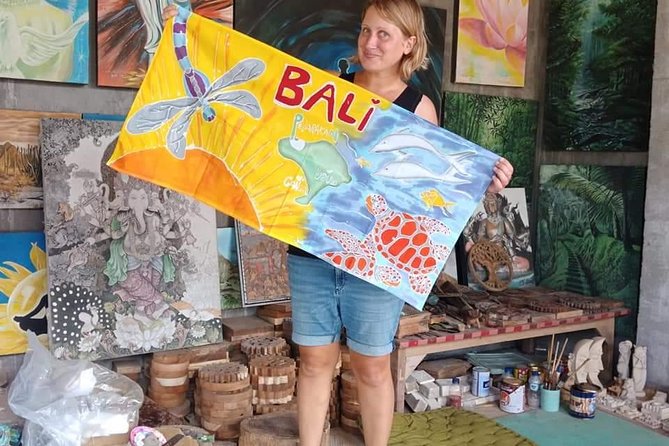
- A creative souvenir: Your finished fabric is personal, colorful, and tied to the time you spent in Bali.
- Small comforts included: Snacks, coffee or tea, mineral water, and all batik materials are provided.
- A little patience required: The technique is manageable, but hot wax and controlled dye work take care.
Why Batik Makes a Better Souvenir Than Another Shop Purchase
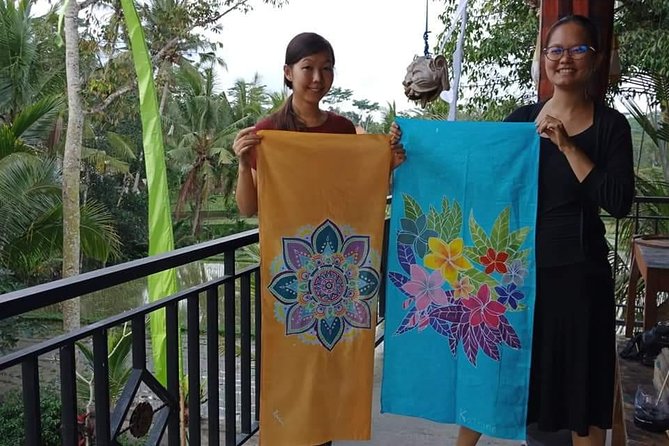
I like souvenirs that carry a memory of the place, and this one does. A batik piece shows the marks of your own hand. It may not be perfectly symmetrical, and that is part of its appeal. The small surprises from the wax and dye give it a personal character that a mass-produced scarf cannot match.
Batik is an important Indonesian art form. The basic idea is simple: hot wax blocks selected areas of fabric, allowing dye to color only the exposed sections. Once the wax is removed, the covered lines remain in their original color. The method sounds straightforward until you try to guide a fine line with hot wax.
That slight difficulty is useful. You begin to understand why finished batik can take time and care. Even a simple design asks you to slow down and pay attention. The class is creative, but it is also a lesson in patience.
More Historical Tours in Bali
- Bali Unesco World Heritage Sites Tour (Private & All-Inclusive)
★ 5.0 · 91 reviews - Private Tour: Bali UNESCO World Heritage Sites
★ 5.0 · 62 reviews - BALI ATV Kuber Through Historic Tunnel and Scenic Waterfalls
★ 5.0 · 34 reviews
Arriving at Five Arts Studio Near Keliki
The meeting point is Five Arts Studio, at Jl. Raya Keliki, Keliki, in the Tegallalang area of Gianyar. The activity begins and ends at the studio, so you do not need to arrange a separate return point.
The setting is a family home compound used as a casual art studio. That matters. You are not sitting in a polished hotel activity room or a large commercial workshop. You get a look at a Balinese artist’s working environment, with the class woven into an everyday family setting.
The studio is described as relaxed and comfortable, with a rustic, local feel. One participant arrived early and was offered tea while waiting for the class to start. That small detail gives you a good sense of the pace: this is not a rushed production line.
You should allow about three hours for the full activity. The actual time can feel shorter if you become absorbed in your design, but do not book it beside an appointment that cannot move. Waxing and dyeing are hands-on steps, and you will want enough time to finish properly.
Starting With a Design You Can Actually Handle
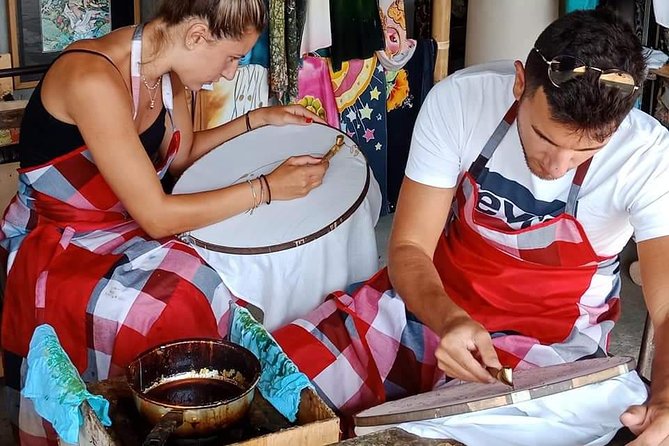
The class begins with an explanation of batik and its basic process. You can bring your own motif or choose from designs supplied at the studio. The available patterns range from simple options to more detailed hand-drawn designs.
This choice makes the workshop work for different skill levels. If you draw often, you may enjoy developing your own idea. If you are not confident with a pencil, a prepared pattern gives you a clear starting point without making the finished piece feel generic.
I would choose a design that is interesting but not overloaded with tiny details. Fine lines take more control once you begin using hot wax. A simpler pattern gives you room to experiment with color and lets you focus on learning the technique.
You first sketch or trace the chosen design onto fabric. This stage seems easy, but it sets up everything that follows. If your lines are too close together, the waxing becomes more fiddly. If the design is too loose, the final piece may look less defined. The instructors can help you adjust the plan before you move on.
Drawing With Hot Wax
The most distinctive part of the class is working with hot wax. You use it to outline areas that should resist the dye. When the wax is applied cleanly, it creates a barrier. The dye stays in its selected area, and the covered line remains lighter once the wax is washed away.
This is also where the class demands the most patience. Wax may drip or spread, and you cannot always correct a mistake as easily as you could with pencil or paint. One participant described accidentally dropping wax where it did not belong, a common kind of mishap for first-time batik makers.
The teachers help you through the process and encourage you not to panic over small errors. That attitude is important. Batik rewards careful work, but it also allows for happy accidents. If you expect a flawless studio sample, you may become tense. If you accept that your cloth will show your own hand, the activity becomes much more enjoyable.
Dika and Agong are among the instructors named by participants, and the teaching style is patient and practical. You can ask for close guidance or work more independently. That balance suits a mixed group, since one person may want step-by-step help while another prefers to experiment.
More craft workshops in Bali:
- Bali Art Experience: Batik Painting & Cultural Connection
★ 5.0 · 3 reviews - Your Fragrance Selection: Bali Perfume Workshop and Creations
★ 5.0 · 3 reviews - Batik Master Class with Full Process
★ 5.0 · 103 reviews - Borobudur: Village Tour with Pottery and Tofu Making
★ 5.0 · 34 reviews
Adding Color Without Losing the Pattern
Once the wax lines are in place, you add colorful dyes to the selected parts of the cloth. This is where the design begins to look like a finished piece rather than a collection of pale outlines.
The studio provides the materials, so you do not need to bring paints, brushes, fabric, or protective equipment. The team also helps you understand how to place and blend the colors. The exact final effect depends on how you apply the dye and how the wax has sealed the lines.
Color blending is one of the more enjoyable parts of the process. It gives you room to make the piece your own, even when you start with a supplied motif. You can follow a suggested color plan or make different choices based on your taste.
You should still work with care. Dye can change the look of the fabric quickly, and a bold color may spread farther than expected if the wax barrier is not complete. That is not a reason to avoid the workshop. It is simply why the instructors remain nearby and why you should not rush.
The Reveal and Your Finished Fabric
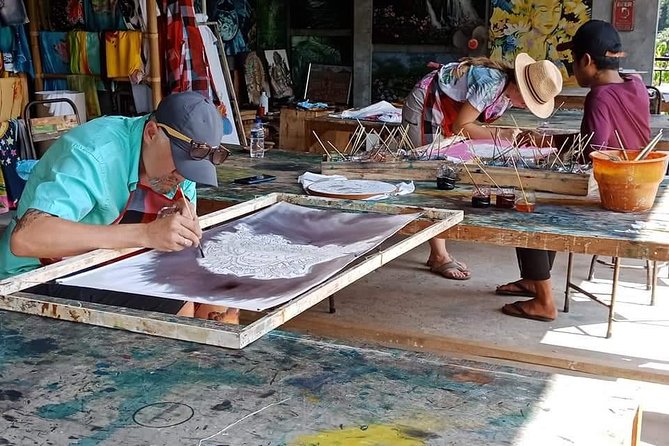
The final stage shows what the earlier work achieved. When the wax is washed off, the original color appears along the protected outlines. The pattern becomes clearer, and the relationship between the pale lines and the dyed areas gives batik its distinctive look.
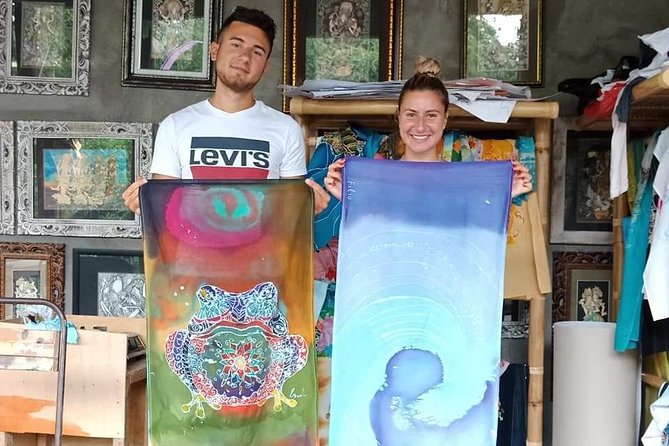
You may be surprised by the result. A piece that felt uneven during the process can come together once the wax is removed. Several participants were pleased to discover they had made something attractive despite having little previous art experience.
The finished cloth is the main reward, but the process matters just as much. You take home a physical reminder of a few quiet hours in Bali, complete with the marks of your choices and mistakes. That gives it more meaning than a souvenir chosen from a shelf.
The supplied information does not specify the exact size or finishing method for every piece, so you should not book this expecting a particular garment, wall hanging, or scarf. Think of it as a personal batik artwork on fabric.
A Calm Activity With Real Instruction
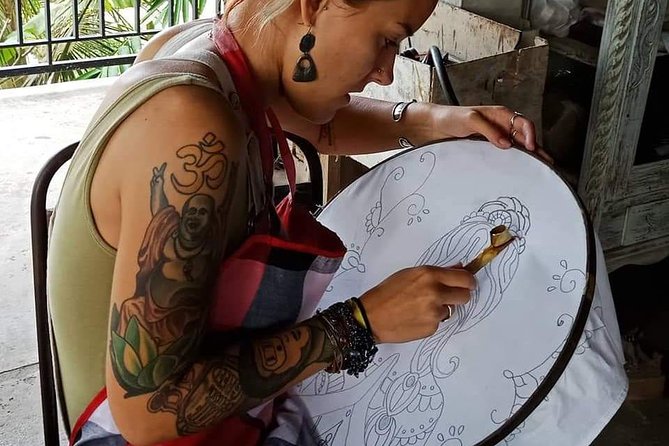
The studio atmosphere is one of the strongest reasons to choose this workshop. You get time to sit, concentrate, and make something with your hands. Coffee, tea, snacks, and mineral water are included, which helps keep the three-hour session comfortable.
The pace also suits people who want a quieter break from Ubud’s busy sightseeing schedule. You are not being moved from one stop to another. You stay at one studio and work through the stages with support nearby.
The instruction is friendly and encouraging. People with little artistic confidence have been able to finish pieces they felt proud of. That does not mean the technique is effortless. One person found it more difficult than expected but was happy with the result, which is a fair description of the experience.
If you have a six-year-old in your group, the class can be workable with adult support. One child was guided through the process by Agong. Still, hot wax requires attention, so young children should not be left to manage the tools alone.
What the $29 Price Includes
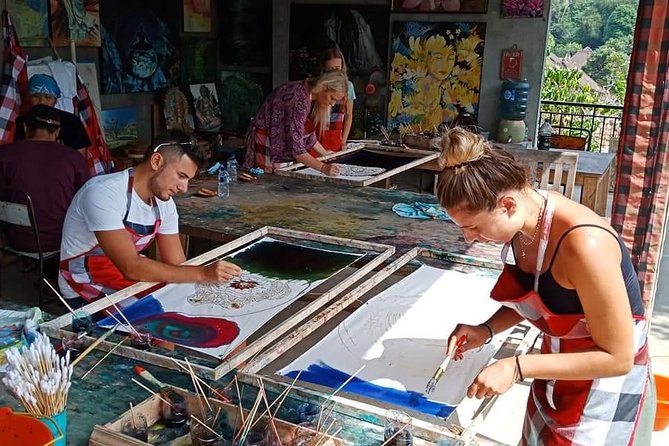
At $29 per person, the workshop offers good value if you want an activity rather than a short demonstration. You receive the instruction, fabric art materials, refreshments, and a finished creation to take home.
The value is especially clear when you compare it with buying a decorative batik item. A shop purchase may be easier, but it does not give you the process, the time with an artist, or the story behind the object. Here, the souvenir is part of a three-hour cultural activity.
Lunch is not included, though local food can be ordered. Alcohol is available to purchase. You may not need either, since snacks and nonalcoholic drinks are already provided, but the options give you some flexibility if the session falls around mealtime.
There is no stated hotel pickup or transport service. You need to reach Five Arts Studio at the listed Keliki address. The meeting point is near public transportation, but you should confirm your route and allow enough time to arrive before the start.
Who Will Get the Most From This Workshop
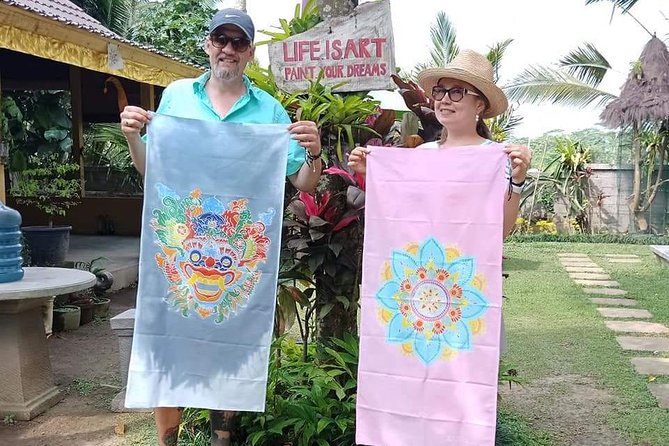
I would recommend this experience to anyone who likes making things, including complete beginners. You do not need a polished drawing style. The supplied motifs and patient instruction give you a workable path from blank fabric to finished artwork.
It suits families, couples, solo visitors, and mixed-ability groups. One person can work carefully through each step while another experiments with color. Since you can choose how much help you want, the class does not force every participant into the same pace.
It is also a good choice if you want something more personal than a sightseeing stop. You will spend most of the time seated and focused on the project, so it offers a change from temples, markets, and long drives.
You should think twice if you dislike slow, detailed work or want an instant result. Waxing can be fussy, and the process rewards attention. The listed information also advises a strong level of physical fitness, so anyone with mobility or stamina concerns should check whether the studio setup suits them before booking.
Service animals are allowed, and the studio is near public transportation. The maximum group size is 30 people, though the hands-on nature of the class may feel more personal when fewer people attend.
Planning Around the Cancellation Rule
You can cancel for a full refund if you do so at least 24 hours before the experience begins. Cancellations made within 24 hours are not refunded, and changes inside that period are not accepted.
That policy is simple, but it matters if your Bali plans depend on weather, transport, or changing day trips. I would book once your Ubud schedule is firm, then leave enough time to reach Keliki without rushing.
The activity ends back at the meeting point. Since there is no separate end location, you can plan your next stop from the studio, but transport arrangements remain your responsibility.
Should You Book the Five Arts Studio Batik Class?
Yes, if you want a hands-on cultural activity with a useful souvenir and a relaxed pace. The strongest reasons are the family-compound setting, the chance to complete every stage yourself, and the warm, patient help from instructors such as Dika and Agong.
Book it especially if you are willing to accept small imperfections. Your cloth may not look like a professional studio piece, and that is not the point. The pleasure comes from learning how wax controls dye, choosing your colors, and watching an uncertain design become something you can carry home.
Skip it if you want a polished performance, a quick activity, or a specific finished product such as a scarf or clothing item. For everyone else, the $29 fee buys three useful hours, refreshments, guidance, materials, and a souvenir with a story attached.
FAQ
Where does the batik workshop take place?
The workshop takes place at Five Arts Studio, Jl. Raya Keliki, Keliki, Kecamatan Tegallalang, Kabupaten Gianyar, Bali 80561, Indonesia.
How long does the experience last?
The workshop lasts approximately three hours.
Where does the activity end?
The activity ends back at Five Arts Studio, the same place where it begins.
What does the class include?
The price includes batik materials, snacks, coffee or tea, mineral water, and instruction.
Is lunch included?
Lunch is not included, but local food can be ordered.
Is alcohol included?
Alcohol is not included, though it is available to purchase.
Do I need previous art experience?
No previous art experience is stated as a requirement. The class is designed for beginners as well as people who already enjoy art.
Can I choose my own design?
You can bring your own idea or choose from suggested motifs provided at the studio.
Are service animals allowed?
Yes, service animals are allowed.
What is the cancellation policy?
You can receive a full refund if you cancel at least 24 hours before the start time. Cancellations or changes made within 24 hours are not accepted for a refund.
How much does the workshop cost?
The listed price is $29 per person.
How large can the group be?
The maximum group size is 30 people.
Just added around Bali
- Bali Parasailing Adventure, Jet Ski, Banana Boat , Donat Boat, with Transport★ 5.0 · 11 reviews
- 1.5 Hours Bali ATV Quad Tour★ 5.0 · 8 reviews
- ATV Quad Bike Through Tunnel and Waterfall★ 5.0 · 3 reviews
- Bali Driver Recommendation★ 5.0 · 7 reviews
- Bali Private Custom Tour★ 5.0 · 12 reviews
- Bali Cooking Class Experience with All Inclusive★ 5.0 · 12 reviews
- Penglipuran Village Waterfall Swing Private Guided Tour★ 5.0 · 13 reviews
- Bali Sightseeing Car Hire with English-speaking Guide and Driver★ 5.0 · 24 reviews
Historical Tours, compared.

Jakarta Heritage of Old Batavia Private City Tour (Historical)
Read our review →
Bali Unesco World Heritage Sites Tour (Private & All-Inclusive)
Read our review →Ulun Danu Beratan Temple – Tanah Lot Temple Tour by UNESCO World Heritage
Read our review →

Yogyakarta Cultural Tour: Borobudur Temple, Prambanan Temple and Merapi Volcano
Read our review →
Half-Day Private Majapahit Historical Tour from Surabaya
Read our review →

Bali ATV Kuber Through Historic Tunnel and Scenic Waterfalls
Read our review →Browse the lists this tour appears in