
Reviewed · HISTORICAL TOURS
Taste & Explore Bali: Denpasar Street Food & Historic Sites
Bali’s best food lesson may begin with a temple, pass through a resistance monument, and finish over coffee. This three-hour walk takes you into central Denpasar for babi guling, bakso, Jaje Bali sweets, and market food prepared and sold by local people. The focus is not polished resort dining. It is everyday Balinese food with cultural context.
I like the small size, capped at 12 people, and the way the route connects food with place. You are not simply handed a plate of roast pork. You learn why babi guling is linked to ceremonies, see Denpasar’s historic center, and support roughly four to six local food stalls. Guides including Putra, Irfan, Lena, and Srix have been praised for making the walk easy to follow and adding useful context.
The main drawback is that the menu is firmly local. Vegetarian, vegan, and gluten-free diets cannot be accommodated, and children under six are not permitted. You should also expect street-market conditions, walking, and food that may be unfamiliar rather than a menu tailored to cautious eaters.
Key things to know before booking
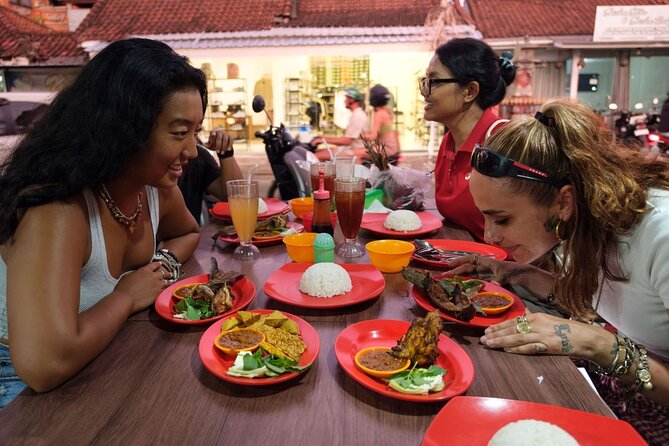
- Babi guling is the food centerpiece: Try Bali’s ceremonial-style roast pork, a dish not usually treated as an everyday tourist sample.
- The route begins at a temple: Start at Pura Agung Jagatnatha before moving through Puputan Square, Catur Muka, and Jalan Gajah Mada.
- You eat where locals buy food: Badung Market brings Jaje Bali snacks and traditional street food into the middle of the experience.
- The group stays small: A maximum of 12 people allows more room for questions and personal help from the guide.
- The tour supports local vendors: Food is prepared or purchased locally, with stops at several small stalls and eateries.
- The finish is calm: End at Nadhi Heritage with authentic Indonesian Arabica coffee, served hot or iced.
Why this Denpasar food walk feels different
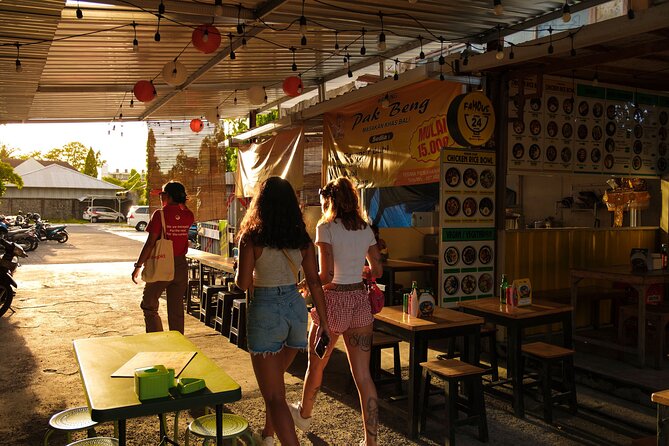
Many Bali food experiences stay close to Seminyak, where restaurants are easy to reach and menus are often adjusted for international tastes. This one takes you into Denpasar, Bali’s administrative and cultural center, where the setting matters as much as the meal.
You begin at 4:00 pm, a useful time for a food walk. The afternoon heat is easing, the city is shifting toward evening, and the market portion fits naturally into the later part of the route. The total time is about three hours, so this is a focused introduction rather than an all-day survey of Balinese cuisine.
I like the balance between food and history. Pura Agung Jagatnatha gives you a quiet start, while Puputan Square and its 0 km marker place the city at the symbolic center of Bali. Then the experience turns toward eating: pork, soup, sweet snacks, fruit or market treats, and coffee.
The format also gives the tour a social purpose. You are buying from local vendors who sell food for a living, not visiting a staged cooking set. That does not guarantee every dish will suit every palate, but it does give your spending a direct connection to the people working in Denpasar’s food trade.
More food tours in South Bali:
- Small-Group Denpasar Night Food Tour
★ 4.0 · 22 reviews - Bali Must-Try Food Tour (Denpasar)
★ 5.0 · 18 reviews - Seminyak Indonesian Food Tour
★ 3.5 · 7 reviews
Starting at Pura Agung Jagatnatha
Meet at Pura Agung Jagatnatha, on Jalan Surapati, at 4:00 pm. The temple is Bali’s central Hindu temple and provides a peaceful opening before the noise and motion of the streets take over.
You have about 15 minutes here. Admission is included, and the stop is short enough to keep the walk moving. The guide can explain the temple’s role and the place of Hindu worship in Bali, while you take in the setting and get oriented to the rest of the route.
This is not a long temple visit, so do not book the tour expecting an extended ceremony or a detailed architectural study. Its value is as a cultural starting point. Food makes more sense when you understand that many dishes, especially babi guling, are tied to family gatherings, ritual, and community life.
Wear suitable walking clothes and remember that this is an active religious site. The supplied details do not list a formal dress code, but respectful behavior is always sensible around a Balinese temple.
Puputan Square and Denpasar’s resistance story
The next historical stop is Puputan Square, described as the symbolic heart of Bali. Here you learn about the 1906 resistance against colonial rule, an event closely tied to Denpasar’s identity.
The visit is brief, around 15 minutes, but it gives the food tour a stronger sense of place. You are not just moving between snack stops. You are seeing the center of a city shaped by conflict, ceremony, and public memory.
The square also connects with Bali’s symbolic 0 km landmark. That detail may sound small, yet it helps explain why this area matters. It is a useful reference point for understanding Denpasar as more than a transfer city between beach districts and the airport.
If history is your main interest, the short timing may feel limited. If you prefer a food walk with just enough background to make the city more meaningful, the stop should fit well.
Patung Catur Muka and the old city streets
At Patung Catur Muka, you have time for photographs and more city context. The four-faced god statue is one of Denpasar’s recognizable landmarks, and the surrounding area includes colonial-era features such as the Nederlandsch-Indië Sokkelklok.
This is another short stop, about 15 minutes. The appeal is visual and historical rather than culinary. You get a chance to notice how old civic landmarks sit alongside ordinary urban life, local traffic, shops, and people going about their day.
After the monument, the route continues along Jalan Gajah Mada. The street has heritage buildings and local shops, giving the walk a more everyday feel. One of the strongest parts of the experience is this shift from formal landmarks to the places where Denpasar residents actually shop and eat.
The route ends on Jalan Gajah Mada as well, at Nadhi Heritage. Because the start and finish are in different locations, you should check the addresses before setting out. The tour is near public transportation, but no private transfer is listed as part of the experience.
More Historical Tours in South Bali:
- Crafting Heritage Batik Painting Workshops
★ 5.0 · 164 reviews - Jakarta Heritage of Old Batavia Private City Tour (Historical)
★ 5.0 · 143 reviews - Bali Unesco World Heritage Sites Tour (Private & All-Inclusive)
★ 5.0 · 91 reviews - Ulun Danu Beratan Temple – Tanah Lot Temple Tour by UNESCO World Heritage
★ 5.0 · 74 reviews
Babi guling and bakso on Jalan Gajah Mada
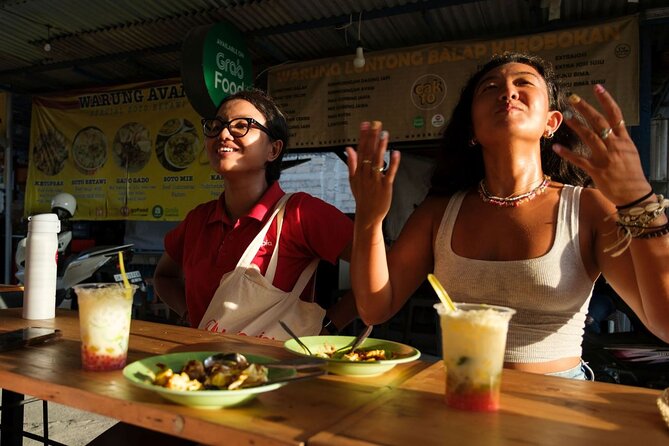
Food begins to take center stage along Jalan Gajah Mada. Here you try two well-known Indonesian favorites: babi guling and bakso.
Babi guling is roasted pork, traditionally prepared for ceremonies. It is one of the most useful dishes to try on this tour because it connects taste with custom. The guide can explain why a dish associated with ritual has become such a recognizable part of Bali’s food culture.
Do not expect a generic roast pork plate designed for overseas visitors. The point is to try the local version in the places the tour visits. Preparation details, serving style, and exact accompaniments can vary, and the supplied information does not promise a fixed portion size or a particular list of side dishes.
Bakso brings a different style of comfort. It is Indonesian meatball soup, usually served as a warm, filling bowl. Along with babi guling, it gives you two contrasting tastes: a ceremonial roast dish and a familiar street-food soup.
This part lasts about 30 minutes. That is enough time for tasting and explanation, but not enough for a slow restaurant meal. If you like to linger over every course, the pace may feel brisk. If you want to sample several foods in one evening, the short stops work in your favor.
Badung Market and Jaje Bali snacks
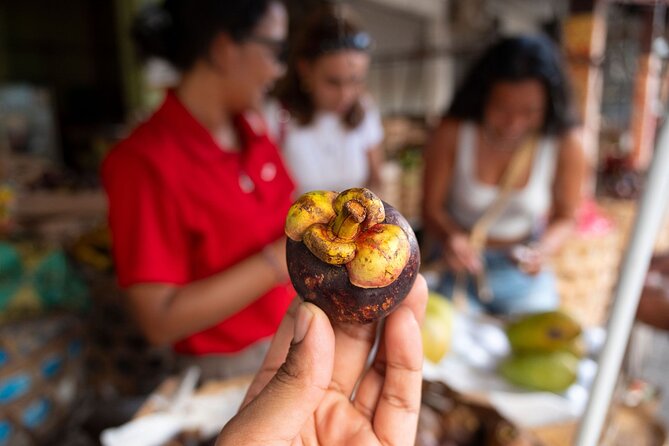
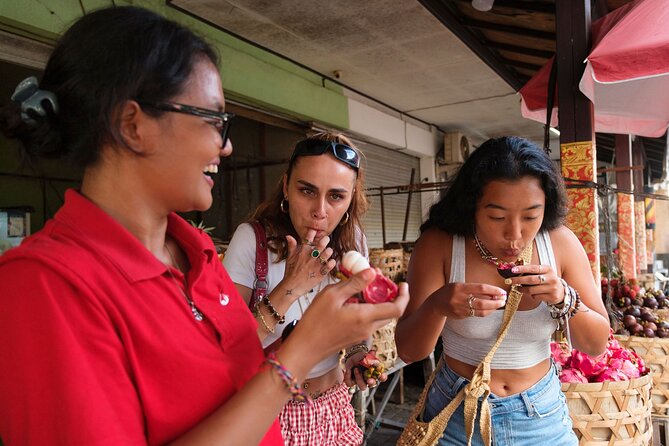
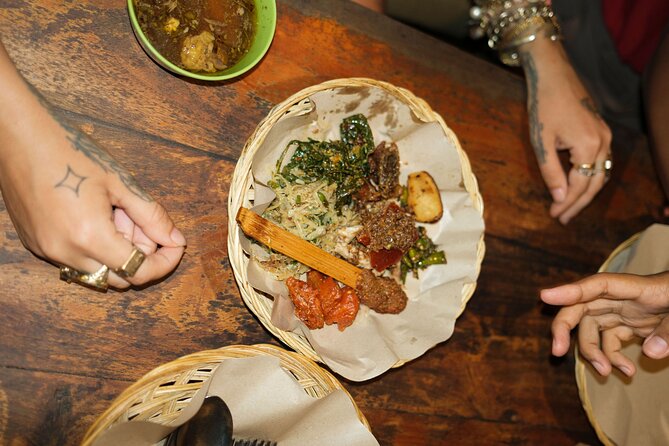
Badung Market is the main street-food stop, with about 30 minutes set aside for traditional Jaje Bali snacks and other market tastes. Jaje Bali often includes colorful sweets made from rice flour and coconut, so expect a different kind of flavor and texture from the savory dishes earlier in the walk.
This is where the experience feels most connected to local food shopping. The vendors are local people selling food for their living, and the tour aims to spread purchases across several stalls rather than sending the whole group to one large restaurant.
You may also encounter other market items, including fruit, cakes, or soup. The exact food selection can change, and that is normal for a market-based tour. Irfan has helped participants choose kue, or Indonesian cakes, and identify unfamiliar fruit. His role, like that of guides Putra, Lena, and Srix, is important because a market can be confusing when you do not know what to choose or how a dish is usually eaten.
The market setting is also the least controlled part of the outing. Noise, crowds, stall seating, and changing availability are part of the deal. If you want a quiet, air-conditioned tasting menu, book a restaurant experience instead. If you want to see how local food is sold and eaten, this is the part to value.
Coffee at Nadhi Heritage
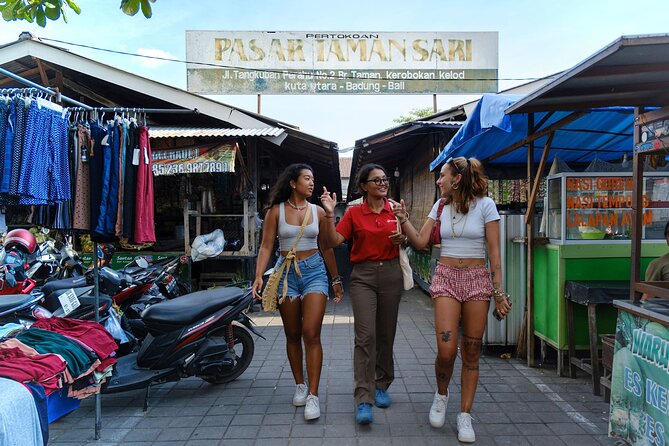
The final stop is Nadhi Heritage on Jalan Gajah Mada, where you finish with Indonesian Arabica coffee. You can choose it hot or iced, which gives the evening a more relaxed close after the market walk.
Coffee is a smart ending for this route. It gives you time to sit, ask questions, and sort through the foods and stories from the previous stops. It also keeps the experience from ending on a hurried market bite.
The coffee shop is described as a heritage venue, so it continues the route’s interest in old Denpasar and local businesses. The listing does not specify the coffee-growing region, brewing method, or roast, so you should not book this as a specialist coffee tasting. Think of it as an authentic Indonesian coffee break included with the food walk.
The meeting information lists Nadhi Heritage as the end point at Jl. Gajah Mada No. 122. The walk does not return you to the temple, so plan your next move from this location.
What the $45 price gives you
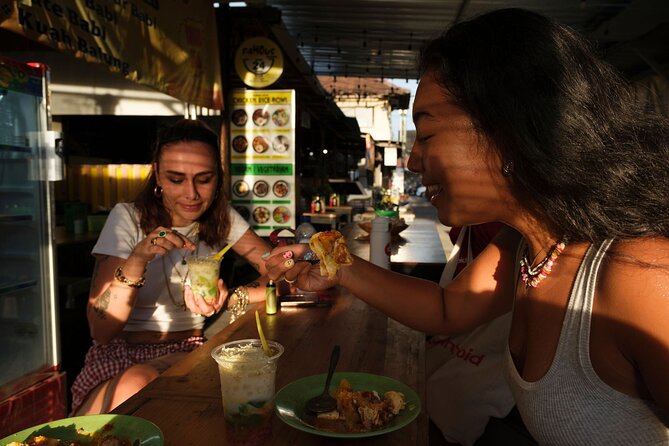
At $45 per person, the value depends on what you want from a food tour. You are paying for roughly three hours of guided walking, several tastings, cultural interpretation, and a small group of no more than 12 people.
That is a reasonable package if you would otherwise spend an evening guessing at market stalls. The guide helps you understand what you are eating, which matters especially for Jaje Bali sweets, local soups, unfamiliar fruit, and ceremonial-style pork. The historical stops also add value beyond the food itself.
The price does not cover extra food or drinks, and gratuities are not included. You should allow some room for optional purchases if a particular snack catches your eye. The included tastings are the core of the tour, not a promise of unlimited servings.
I would judge the value as strongest for first-time visitors to Denpasar or anyone staying in Seminyak who wants to see a side of Bali beyond resort dining. It is less compelling for someone who already knows the city’s markets and prefers to choose every dish independently.
Group size, guides, and the walking pace
A maximum of 12 people is a real advantage here. Market food is easier to manage in a small group, and you have a better chance of asking about ingredients, customs, and local landmarks without losing the guide in a crowd.
The guide can shape the experience. Putra has led the route with attention to both food and local life. Irfan has helped with market choices and explained Indonesian food in detail. Lena has been praised for being easy to talk with, while Srix has connected food stops with customs and points of interest.
Guide assignments can change, so you should not book on the assumption that one specific person will lead your departure. Still, the range of guide feedback suggests that the human side of the tour is important. You are relying on the guide to explain unfamiliar food and keep the history from becoming a string of disconnected facts.
The route is a guided walking tour through central Denpasar, with the itinerary also noting a small taxi ride at the end in one account. The standard details do not clearly promise a taxi for every departure, so do not treat private transport as included. Comfortable shoes are a practical choice.
Who should book this experience?
I would recommend it to adults and older children who enjoy trying food in local settings and want cultural background with their meal. It suits curious eaters who are comfortable with pork, soup, sweets, coffee, and changing market conditions.
It is also a good fit if you are staying in Seminyak but want a structured way to reach central Denpasar. The meeting point is clear, the activity starts at 4:00 pm, and the end point is provided in advance.
Families should note that children under six are not permitted, and there are no children’s meals. The food is authentic local fare, not a simplified family menu.
This is not the right choice for vegetarian or vegan diners, or for anyone with a gluten allergy or intolerance. The operator cannot accommodate those requirements at the places visited. People who dislike pork should also check the menu carefully, since babi guling is one of the main foods featured.
Booking, cancellation, and practical details
You receive confirmation when booking, and the ticket is mobile, so you do not need a printed voucher. The experience is free to cancel up to 24 hours before the 4:00 pm start time for a full refund. Within 24 hours, the payment is not refunded, and late changes are not accepted.
The tour is listed as suitable for most people. Since it includes walking through markets and heritage streets, you should be ready to stay on your feet for portions of the three-hour outing. The exact walking distance is not provided.
The experience is often booked well ahead, with an average booking time of 54 days. That does not mean you must reserve that early, but it is useful to know if your Bali dates are fixed or if you want a particular afternoon.
Should you book the Denpasar food tour?
Book it if you want more than a list of dishes. The strongest feature is the connection between what you eat and where you are: temple, resistance square, old streets, market stalls, and heritage coffee shop.
The tour is especially worthwhile for pork-eaters who want to understand babi guling beyond its reputation as a Bali specialty. The small group, local vendors, and guides such as Putra, Irfan, Lena, and Srix add a personal touch without turning the experience into a formal cooking class.
Skip it if you need dietary flexibility, a quiet restaurant setting, or a fully controlled menu. For everyone else, $45 buys a useful introduction to Denpasar, with enough food to make the history feel connected to daily life.
FAQ
Where does the tour start?
The tour starts at Pura Agung Jagatnatha, at Jl. Surapati No. 7, Dangin Puri, Denpasar.
What time does the experience begin?
The tour begins at 4:00 pm local time.
How long does the tour last?
The experience lasts approximately three hours.
Where does the tour finish?
The tour finishes at Nadhi Heritage on Jl. Gajah Mada No. 122, Denpasar.
What foods are included?
Included tastings feature babi guling, bakso, traditional Jaje Bali snacks, and street food at Badung Market. Indonesian Arabica coffee is also included at Nadhi Heritage.
Is coffee included?
Yes. You can have authentic Indonesian Arabica coffee served hot or iced at Nadhi Heritage.
Can vegetarians or vegans join?
The tour cannot accommodate vegetarian or vegan diets.
Can the tour accommodate gluten allergies?
No. Gluten allergies and intolerances cannot be accommodated at the places visited.
Are young children allowed?
Children under six are not permitted. The experience is best suited to adults and older children, and children’s meals are not available.
How many people are in the group?
The group can include a maximum of 12 people.
Is cancellation free?
You can cancel for a full refund up to 24 hours before the start time. Cancellations or changes made within 24 hours are not accepted for a refund.
Just added around South Bali
- Well-Guided Local Textile Tour of Denpasar★ 5.0 · 13 reviews
- 90 Minutes Surfing Lesson in Canggu★ 5.0 · 25 reviews
- 2-Hour Canggu Private Guided Surfing Experience in Bali★ 5.0 · 3 reviews
- Private Experience Surf Lessons in Canggu★ 5.0 · 9 reviews
- Seminyak Horse back riding In the beach★ 4.5 · 4 reviews
- Backlanes and Hidden Sites: A Self-Guided Audio Tour in Seminyak★ 5.0 · 6 reviews
- Seminyak Indonesian Food Tour★ 3.5 · 7 reviews
- Private One on One Surf Lesson in Canggu area – Bali★ 5.0 · 13 reviews
Historical Tours, compared.
Jakarta Heritage of Old Batavia Private City Tour (Historical)
Read our review →
Bali Unesco World Heritage Sites Tour (Private & All-Inclusive)
Read our review →Ulun Danu Beratan Temple – Tanah Lot Temple Tour by UNESCO World Heritage
Read our review →

Yogyakarta Cultural Tour: Borobudur Temple, Prambanan Temple and Merapi Volcano
Read our review →
Half-Day Private Majapahit Historical Tour from Surabaya
Read our review →
Browse the lists this tour appears in