
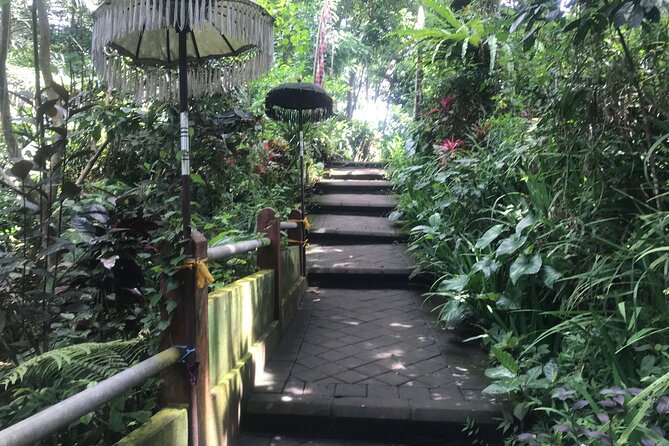
Reviewed · WATERFALL TOURS
Purification Holy Bath at Beji Gria Waterfall
Beji Gria Waterfall offers more than a swim. This is a guided Balinese purification ritual, beginning with prayer and ending with a blessing made from green and yellow coconut water. Along the way, you pass through a narrow canyon, bathe at two sacred water points, and use sound, laughter, and silence to mark a personal reset.
I like two things in particular: the ceremony has a clear structure, so you are never left guessing what to do, and the private pickup keeps the day simple. Guides such as Vito and Pandu have also been praised for punctual service, helpful explanations, and taking thoughtful photographs during the ritual.
The main caution is that Beji Gria is not entirely removed from tourism. Some parts can feel commercial, and staff may offer extra products or packages. This suits you best if you want a guided cultural ritual in a striking setting, not a quiet waterfall visit with no organized activity.
Key points to know before you book
- The ritual has six distinct stages: prayer, two holy baths, emotional release, joyful expression, and a final blessing.
- A temple priest leads the opening and closing: this gives the activity a clear religious purpose rather than making it simply a waterfall swim.
- Private hotel pickup and drop-off are included: the drive takes about 30 minutes to one hour each way, depending on your hotel and traffic.
- The water rituals are active: you walk through a narrow canyon, bathe in flowing water, and use shouting, crying, smiling, and laughter as part of the process.
- The experience is private to your group: you are not placed into a large shared tour, though the site itself may feel busy or commercial.
- Age and dress rules matter: participants must be 10 to 60 years old, and women who are menstruating cannot take the holy bath.
What this Balinese purification ritual is really about
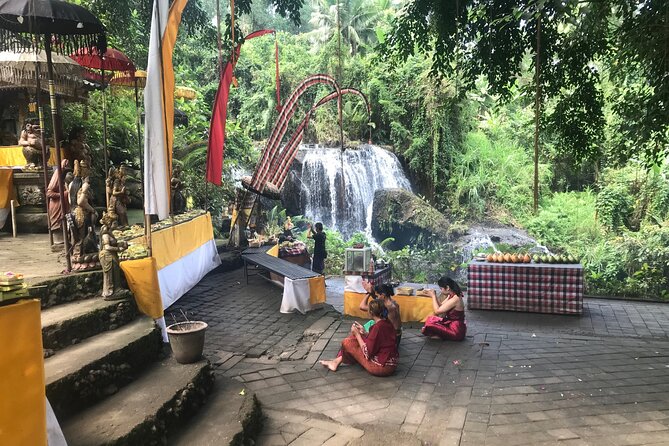
A Balinese holy bath, often called a melukat, is intended as a spiritual cleansing. At Beji Gria Waterfall, the activity combines prayer, natural water, offerings, and guided emotional exercises. You are not simply visiting a waterfall and taking a dip.
The ceremony asks you to move through several states. First comes preparation and balance. Then the water is used to cleanse your aura and encourage good fortune. At the first waterfall, you release anxiety, sadness, and tension by screaming or crying as loudly as you can. At the second, you express happiness through broad smiles and loud laughter.
That may sound unusual if you come from a culture where public emotion is kept private. The guide explains the purpose and leads each stage, which makes the process easier to follow. You do not need to invent your own ritual or worry about making a mistake.
I like this clear progression. It gives the visit a sense of purpose, and it helps you pay attention to what you are doing rather than treating the setting as a photo stop. Still, your response will depend on your comfort with public emotional expression. If shouting or crying in front of a guide feels awkward, you may find the middle stages uncomfortable.
More Cultural Tours in Bali
- Bali Full-Day Traditional Village Sightseeing Trip All Inclusive
★ 5.0 · 3,069 reviews - Bali Cultural Experience
★ 5.0 · 92 reviews - Balinese Village Experience
★ 5.0 · 49 reviews
From your hotel to Beji Gria Waterfall
Bali Yowana Tour collects you at your hotel lobby in a private vehicle. The drive to Beji Gria takes roughly 30 minutes to one hour, with traffic and your hotel location making the difference. The return journey takes a similar amount of time.
This transfer is a useful part of the value. You do not need to arrange a taxi, find the waterfall yourself, or work out how to return with wet clothes. Your driver handles the transport while the guide at the waterfall handles the ceremony.
The full outing is advertised as about three to four hours, but the practical total from pickup to drop-off is around five hours. That longer estimate is the one I would use when planning your day. Leave room for road delays, changing clothes, and the pace of the ritual.
Vito has received especially warm praise for arriving early, explaining what would happen, and making the drive pleasant. The exact driver depends on availability, but the service is designed around private transport rather than a shared bus.
Meeting your guide at the waterfall
At Beji Gria, an authorized local guide meets you and stays with you through the holy bath. The guide explains each stage and helps you follow the ritual in the proper order.
This matters because the ceremony includes more than standing under a waterfall. You will need to know when to pray, where to walk, how each water point differs, and what the actions represent. A good guide also gives you confidence when the ritual becomes more personal or theatrical.
Pandu is one guide specifically praised for guiding the activity and taking photographs on a participant’s phone. That is a practical touch, since your hands may be wet and you may not want to stop the ceremony to manage a camera.
You should still keep your expectations sensible. Photography support is part of the guide’s helpfulness, not a separately promised professional photo package. Bring your phone if you want pictures, but protect it from water and do not let photography distract you from the ceremony.
The opening prayer and temple preparation
The activity begins with meditation or prayer led by a temple priest. Offerings and incense sticks are included, along with a special sash or cloth used during the holy bath.
This opening is important. It frames the water ritual as a religious practice and gives you time to settle before the physical part begins. You are not rushed straight into the canyon. The priest establishes the mood and prepares you for the steps ahead.
The included offerings also make the $59 price easier to understand. You are paying for more than transport and access. The cost covers the guide, parking, necessary ritual items, the priest-led stages, and private hotel transfers.
If you are comparing this with a simple waterfall visit, it is clearly more expensive. If you would otherwise need to arrange a car, pay for a guide, buy offerings, and organize the return trip, the bundled price is more reasonable. Group discounts may also help if you are booking with family or friends.
More Waterfall Tours in Bali
- ATV Quad Bike Through Tunnel and Waterfall in Bali
★ 5.0 · 2,098 reviews - ATV Quad Bike Bali with Waterfall Gorilla Cave and Lunch
★ 5.0 · 1,925 reviews - Bali Secret Waterfall Tour – Private and All-Inclusive
★ 5.0 · 688 reviews - Bali Quad Bike Pass by Waterfall Gorilla Cave Private Transfer
★ 5.0 · 638 reviews
Walking through the canyon for the first bath
The first water stage takes place after you walk through a narrow canyon. You then complete the first holy bath, which is intended to create balance in your health.
The canyon adds a physical element that a standard temple blessing would not have. You move through the natural setting before reaching the water, so the ritual feels connected to the place rather than confined to a room.
Wear light, comfortable clothing and expect to get wet. The operator advises bringing a swimsuit and a full change of clothes. Sunscreen, sunglasses, a hat, a water bottle, snacks, and some petty cash are also sensible additions.
The first bath is not described as a long swimming session. Think of it as one step in a guided ceremony. You should follow the guide’s instructions and allow time for the ritual rather than arriving with plans to linger in the water on your own.
The small well and the second cleansing
The second bath takes place at a small well. Its stated purpose is to cleanse your aura, helping you attract happiness and luck.
This stage gives the ceremony a different focus from the first bath. The first is linked with physical balance, while the second is presented as a more spiritual cleansing. The contrast helps the activity feel like a sequence rather than repeated bathing.
You may find this part quieter and more reflective than the later waterfall exercises. The guide remains nearby to explain what is happening and to keep the group moving through the correct steps.
The word aura may not mean much to you if you prefer a strictly practical or secular activity. That is fine, but you should understand the cultural framework before booking. The value here comes from taking part respectfully in a Balinese ritual, not from treating the water as a medical treatment.
Releasing tension at the first waterfall
The most unusual step comes at the first waterfall. You are encouraged to release anxiety, tension, and sadness by screaming or crying as loudly as you can.
This is not a quiet spa treatment. It is an active emotional exercise, and the guide sets the tone. Some people may find the permission to make noise surprisingly freeing. Others may feel self-conscious, especially if they are not used to showing emotion in front of other people.
You do not have to force a dramatic reaction. The point is to take part in the ritual in a way that feels genuine and respectful. If you prefer a softer version, you can treat the moment as a symbolic act and follow the instruction without pretending to feel something you do not.
This stage is one reason the activity appeals to people looking for a mental reset. It gives the ceremony a clear break from everyday routines. You leave behind the usual pressure to stay composed, at least for a few minutes.
Smiling and laughing at the second waterfall
At the second waterfall, the mood changes. You are asked to express happiness by smiling and laughing as loudly as you can.
The contrast with the first waterfall is deliberate. You first release difficult feelings, then make room for joy. It can feel playful, and the change of tone keeps the ceremony from becoming solemn from beginning to end.
The setting also gives you strong photo opportunities. The waterfall, water, clothing, and movement create more interesting pictures than a standard posed portrait. Pandu has been praised for capturing these moments on a phone, though you should still ask before handing over a valuable device.
Some people will find the laughter stage fun. Others may see it as staged. Both reactions are understandable. This is a ritual with guided actions, not an entirely spontaneous encounter with nature.
Receiving the final coconut-water blessing
The last step returns you to the priest. You receive a final blessing using pure holy water taken from green and yellow coconut water.
This closes the ceremony neatly. After the movement, water, shouting, and laughter, the final blessing gives you a quieter ending. It also reinforces the role of the priest and the religious meaning of the activity.
The inclusion of coconut water is one of the more distinctive details. It is not simply a standard rinse or a farewell from the guide. It marks the end of the purification sequence and gives you a final moment to pause before changing and returning to your hotel.
Allow time to dry off and change after the ceremony. You will be glad to have a clean set of clothes, especially if your next stop is a restaurant, shop, or another activity.
The setting, atmosphere, and commercial side
Beji Gria is beautiful, with waterfalls, natural rock, and the narrow canyon used during the ritual. The setting is a major part of the appeal. You get the visual drama of a waterfall visit while taking part in a local spiritual practice.
It is also important to know that the site can feel commercial. Some parts are arranged for organized visits and photography, and staff may offer additional products or packages. One participant felt that staff became less attentive after declining purchases.
That does not erase the value of the ceremony, but it affects the atmosphere. If you want a completely untouched religious setting, this may not meet your expectations. If you can accept a managed attraction with commercial elements around a genuine ritual structure, the visit can still feel meaningful.
I would treat optional offers as optional. Decide in advance what you want to spend, and do not feel obliged to add anything beyond the package you booked.
What the $59 price includes
At $59 per person, the experience sits above a basic waterfall excursion but includes several useful services:
- Private hotel pickup and drop-off
- An authorized local guide
- Priest-led prayer and blessing
- Offerings and incense sticks
- A special sash or cloth
- Parking fees
- The full holy bath sequence
Food and drinks are not included, as well as personal purchases. Bring your own water and snacks, particularly if your hotel is some distance from the site.
The private format is a real advantage for couples, families, and small groups. You can move at your own pace within the ceremony and avoid sharing a vehicle with strangers. Group discounts may improve the price for larger bookings.
The 98 percent recommendation rate and 4.9 rating from 44 ratings point to consistently strong satisfaction, especially with the guides, drivers, setting, and sense of occasion. I would not treat numbers as a guarantee, but they support the view that the core service is dependable.
Who should book this experience
I would recommend Beji Gria to you if you want a structured cultural activity with water, nature, and a personal theme. It suits people who enjoy guided rituals and do not mind taking part in symbolic actions such as shouting, crying, smiling, and laughing.
It is also a good fit if you are staying in Ubud and want private transport. The pickup removes much of the day’s practical hassle, while the three to five-hour time commitment leaves room for another meal or activity.
Families should note the age range. The minimum age is 10, and the maximum is 60. Women who are menstruating cannot take part in the holy bath because of the local temple policy.
I would skip it if you only want a quiet waterfall swim, dislike organized photography, or feel uncomfortable with commercial surroundings. I would also avoid booking it on a tightly packed day, since traffic can extend both transfers.
Final booking advice
Book this experience if you want more than scenery. The strongest parts are the priest-led structure, the thoughtful guides, the private transport, and the unusual progression from prayer to cleansing, emotional release, laughter, and blessing.
Go in prepared for cold water, wet clothing, public participation, and a site that may feel partly commercial. Bring a change of clothes and keep your schedule loose. With those expectations, Beji Gria Waterfall offers a memorable way to connect with Balinese spiritual practice without having to organize the details yourself.
Free cancellation is available if you cancel at least 24 hours before the start time. Cancellations or changes made within 24 hours are not refunded or accepted.
FAQ
How long does the Beji Gria purification experience take?
The activity itself lasts about three to four hours, while the full outing from hotel pickup to drop-off takes around five hours. Each road transfer can take 30 minutes to one hour, depending on your hotel location and traffic.
Is hotel pickup included?
Yes. Private pickup and drop-off are included from your hotel. The drive to Beji Gria Waterfall and the return journey each take about 30 minutes to one hour.
What does the purification ritual include?
The sequence includes prayer or meditation with a temple priest, a first bath in a narrow canyon, a second bath at a small well, releasing tension through screaming or crying, expressing happiness through smiling and laughter, and a final coconut-water blessing.
What should I bring?
Bring light, comfortable clothing, a swimsuit, a change of clothes, sunscreen, sunglasses, a hat or cap, a water bottle, snacks, a camera, and some petty cash. Food and drinks are not included.
Can children take part?
The minimum age is 10 and the maximum age is 60. Participants outside that age range cannot take part according to the stated activity requirements.
Can women take part while menstruating?
No. Women who are menstruating are not allowed to take the holy bath because of the local temple policy.
Just added around Bali
- Bali Parasailing Adventure, Jet Ski, Banana Boat , Donat Boat, with Transport★ 5.0 · 11 reviews
- 1.5 Hours Bali ATV Quad Tour★ 5.0 · 8 reviews
- ATV Quad Bike Through Tunnel and Waterfall★ 5.0 · 3 reviews
- Bali Driver Recommendation★ 5.0 · 7 reviews
- Bali Private Custom Tour★ 5.0 · 12 reviews
- Bali Cooking Class Experience with All Inclusive★ 5.0 · 12 reviews
- Penglipuran Village Waterfall Swing Private Guided Tour★ 5.0 · 13 reviews
- Bali Sightseeing Car Hire with English-speaking Guide and Driver★ 5.0 · 24 reviews
Waterfall Tours, compared.
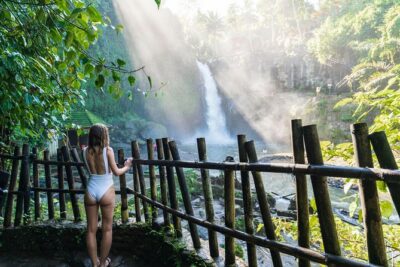
Best of Bali Waterfalls: Tibumana, Tukad Cepung and Tegenungan
Read our review →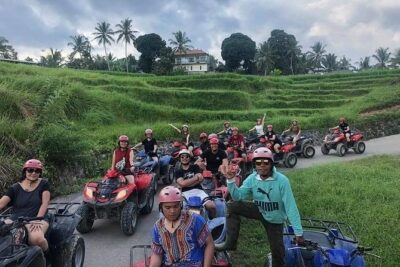
ATV Quad Bike Through Tunnel and Waterfall in Bali
Read our review →
ATV Quad Bike Bali with Waterfall Gorilla Cave and Lunch
Read our review →
Bali Secret Waterfall Tour – Private and All-Inclusive
Read our review →Bali Quad Bike Pass by Waterfall Gorilla Cave Private Transfer
Read our review →
Bali ATV Quad Bike Through Tunnel, Waterfall, White Water Rafting
Read our review →
Blue Lagoon Snorkeling – Lunch – Kantolampo – Tibumana Waterfall
Read our review →
Ubud Tour with Monkey Forest Waterfalls Temples and More
Read our review →Browse the lists this tour appears in