
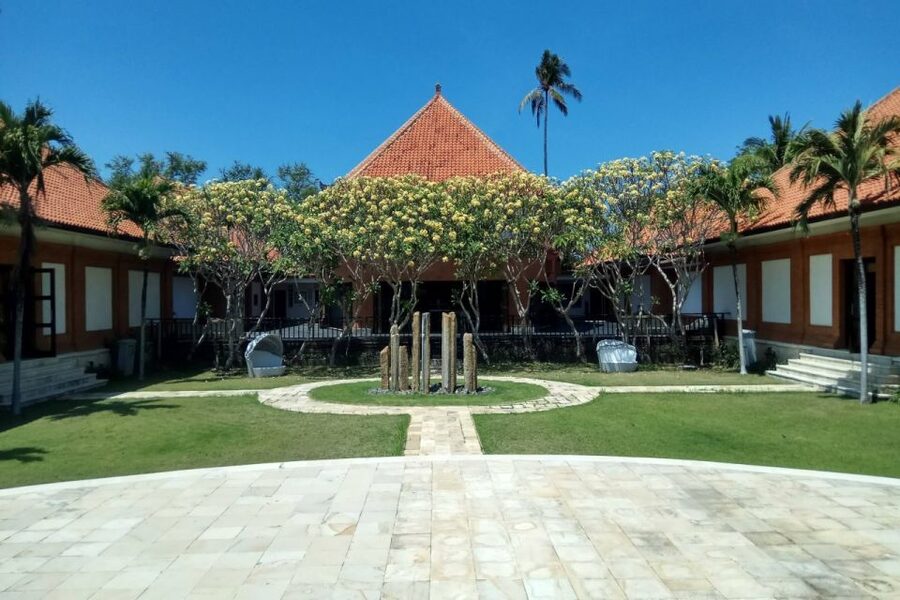
Reviewed · NUSA DUA
Nusa Dua: Museum Pasifika Admission Ticket with Audio Guide
Museum Pasifika packs a surprising amount of art into a calm Nusa Dua stop. You’ll find more than 600 paintings and sculptures by about 200 artists, including Indonesian masters, European artists inspired by Bali, and one of the world’s notable collections of Oceanic art.
I like the broad sweep of the collection, which gives you a quick look at how Indonesia, the wider Asia Pacific region, and Europe have influenced one another. I also like the practical extras: audio commentary in English or Indonesian, refreshments, free Wi-Fi, and wheelchair access throughout the galleries.
The main concern is the museum’s upkeep. One recent visitor found some beautiful works affected by humidity, with no air-conditioning and doors left open. Go for the art and the quiet, but keep your expectations measured rather than expecting a polished major-city museum.
Key points to know
- Over 600 works in one visit: See paintings and sculptures by around 200 international artists.
- Strong Indonesian section: Look for works by Raden Saleh, Lempad, Affandi, Hendra, and Kobot.
- A major Pacific collection: The Michoutouchkine and Pilioko Collection includes about 200 sculptures from 10 Pacific nations.
- Audio help is available: Listen in English or Indonesian as you move through the galleries.
- Simple comforts included: Your admission includes a cold towel and tea, coffee, or infused water.
- Easy Nusa Dua stop: The museum has parking, free Wi-Fi, a café, and wheelchair-accessible galleries.
Why Museum Pasifika is different from a standard Bali museum
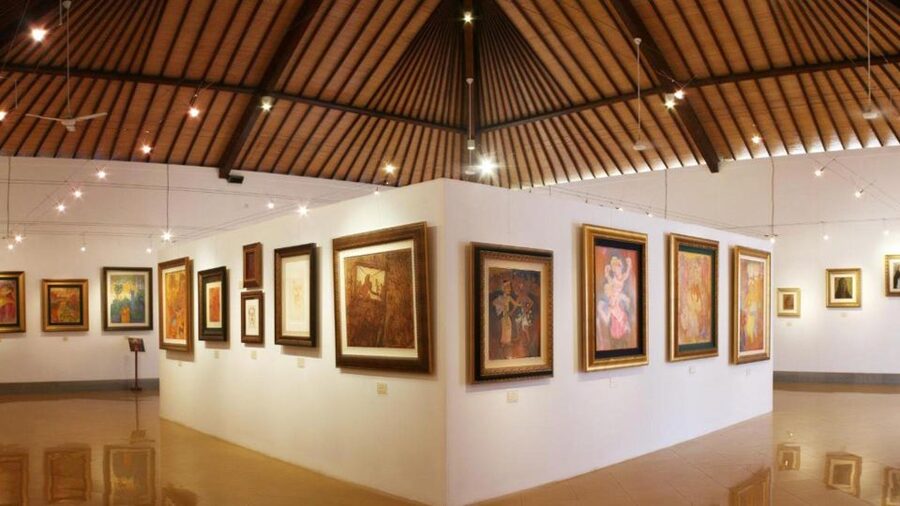
Many Bali art stops focus almost entirely on the island itself. Museum Pasifika takes a wider view. Its rooms connect Indonesian art with work from the Pacific, Europe, and other parts of Asia.
That makes the visit useful if you want more than a quick look at local paintings. You can compare different approaches to portraiture, sculpture, island life, and colonial-era encounters without leaving one compact museum.
The collection includes more than 600 works by roughly 200 artists. That sounds large, but the visit is still manageable because the museum is designed as a series of galleries rather than one enormous institution. You can spend an hour making a quick circuit or stay longer with the audio guide and individual works.
The atmosphere is described as quiet and relaxed. That matters in Nusa Dua, where many outings are built around beaches, resorts, and scheduled sightseeing. Museum Pasifika gives you a slower indoor activity, with room to look closely instead of rushing from one photo stop to the next.
More museums in Nusa Dua:
- Jakarta: Miniature Park, National Museum & Traditional House Tour
★ 4.5 · 17 reviews - Tsunami Museum and Affected Areas Tour of Banda Aceh
★ 5.0 · 4 reviews
Start with Indonesian masters
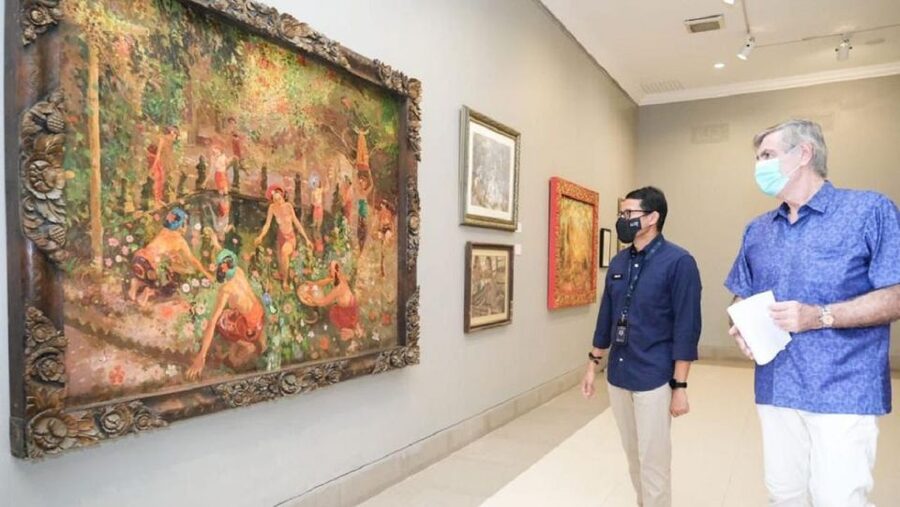
The Indonesian collection is the natural place to begin. More than 50 Indonesian artists are represented, giving you a broad introduction to the country’s modern and traditional art scenes.
You’ll encounter names such as Raden Saleh, Lempad, Affandi, Hendra, and Kobot. Each represents a different part of Indonesia’s artistic story, so the section is not limited to one style or period.
Raden Saleh is especially important in Indonesian art. His work helps explain the early development of Indonesian painting in a period when European artistic methods were being adapted to local subjects and ideas.
Lempad offers a different feel, with work closely connected to Balinese culture and visual traditions. Affandi is another major name to watch for, known internationally for expressive paintings with strong emotion and movement.
The collection is valuable because it lets you see several Indonesian voices side by side. Instead of treating Bali as a single artistic style, the museum shows how varied Indonesian art can be across artists and generations.
Use the audio guide here if you want more context. Without commentary, some works may simply look attractive or unusual. With a little explanation, you can better understand why certain artists matter and how their work fits into Indonesia’s wider art scene.
European artists who found inspiration in Bali
Another set of galleries focuses on Indo-European artists influenced by Asia, especially Indonesia and Bali. This section reflects the long attraction Bali has held for foreign painters and sculptors.
You may see work connected with Walter Spies, Miguel Covarrubias, Jean Le Mayeur, and Charles Sayers. Their art gives you a chance to consider how European artists represented Bali, what they noticed, and what they may have misunderstood.
This is one of the more interesting parts of the museum because it encourages comparison. An Indonesian artist and a European artist might depict similar people, ceremonies, or surroundings, yet their choices can be quite different.
Jean Le Mayeur is closely associated with Bali, while Miguel Covarrubias wrote and painted about the island. Walter Spies also played a major role in the foreign artistic circle that developed in Bali during the early twentieth century.
The museum does not present only famous European names. It also includes work by Indonesian students of the Beaux-Arts School of Hanoi. These artists have appeared in international exhibitions and publications, adding another layer to the collection.
For you, that means the museum is not simply a display of Bali-inspired European art. It also points toward wider artistic links between Indonesia, Vietnam, France, and other parts of Asia.
The Pacific galleries are the museum’s strongest reason to visit
The Michoutouchkine and Pilioko Collection of Premier Art of Oceania is the museum’s most distinctive feature. It contains about 200 sculptures from 10 Pacific nations.
The collection was assembled over 50 years by the two artists named in its title. It is presented as one of the most complete collections of its type in the world.
You’ll find sculpture rather than a room full of familiar tourist images. The works come from different Pacific cultures, so the display gives you a chance to see how materials, human figures, animals, symbols, and ceremonial forms vary across the region.
This section changes the rhythm of the visit. After looking at framed paintings, you move among three-dimensional objects with a stronger physical presence. Give yourself time here, even if sculpture is not normally your first choice.
The Pacific collection also gives Museum Pasifika a clear identity. Without it, the museum might feel like a general international art collection in a resort district. With it, the museum offers something you are less likely to find elsewhere in Bali.
The audio guide should be especially useful in this section. Pacific art can be difficult to place if you do not know the culture or purpose behind an object. Commentary can help you look beyond surface shape and understand why a sculpture belongs in the collection.
A few more things to do around Nusa Dua
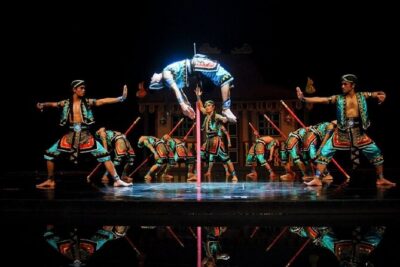
- Devdan Show at Bali Nusa Dua Theatre
★ 5.0 · 79 reviews - Private Arrival Transfer: Denpasar International Airport to Nusa Dua Area
★ 5.0 · 46 reviews - Kekeb Cooking Class at Nusa Dua
★ 5.0 · 33 reviews - Bali Sea Walker Tanjung Benoa
★ 4.5 · 25 reviews
Western artists and the Tahiti connection
The Legendary Western Artists Exhibition brings the focus back to Europe and the Pacific through artists who were influenced by Asia or the South Pacific.
The display includes sculptures and woodcuts connected with Paul Gauguin’s Tahiti period. You may also see works by Henri Rousseau, Henri Matisse, Auguste Rodin, Marvina Hoffmann, and Bernard Buffet.
These names give the museum a wider art-world connection. They show how artists who never worked in Bali or Indonesia were also shaped by ideas from outside Europe.
Gauguin’s Tahiti work is the clearest example. His Pacific subjects became a major part of his artistic identity, and the display lets you consider how Western artists imagined island cultures.
This section is best approached with some caution. Famous names can create high expectations, but the museum experience is not the same as seeing a large national collection with extensive conservation facilities. Treat these works as part of a compact, varied museum rather than the main reason to come to Bali.
What the audio guide adds
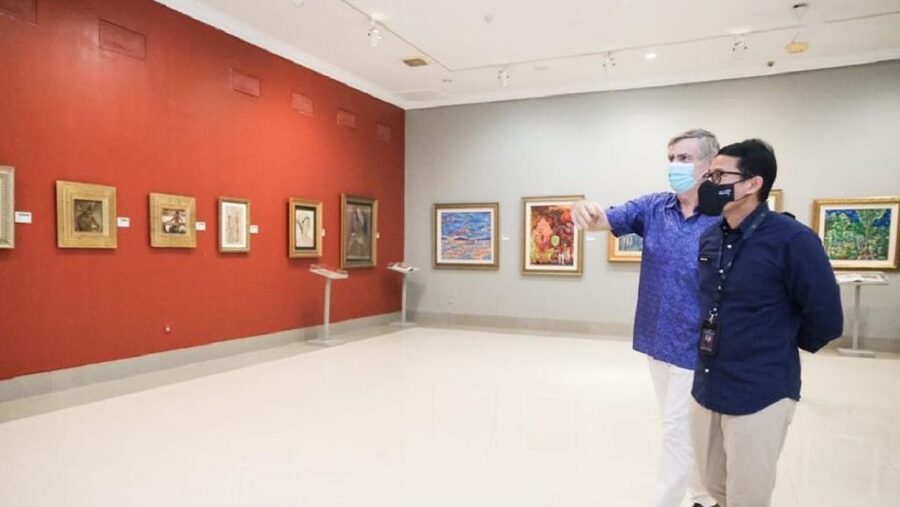
The audio guide is available in English and Indonesian. The booking details describe it as optional, so check the exact selection when you reserve.
I would choose it if you are interested in the stories behind the artists. The collection spans Indonesia, Europe, Vietnam, and the Pacific, and a short explanation can help connect pieces that might otherwise seem unrelated.
You can also visit without relying heavily on the guide. If you prefer to move quickly, the galleries allow you to make your own circuit and stop only at works that catch your eye.
The guide is most useful for three groups: first-time museum visitors, people unfamiliar with Indonesian art, and anyone curious about the Pacific sculpture collection. If you already know the artists well, you may prefer to read the labels and set your own pace.
Because the ticket is valid for the visit date and gives you the full day, you do not need to treat the museum like a timed tour. Check the available starting times, but plan your visit around your own schedule.
The practical comforts included with admission
At $7 per person, this is an inexpensive cultural stop, especially when the ticket includes more than entry. You also receive a cold towel and a choice of tea, coffee, or infused water.
Those details may sound minor, but they matter in Bali’s heat. A cold towel and a drink give you a welcome pause after walking through Nusa Dua or before continuing to another activity.
There is also a café, a large parking area, and free Wi-Fi onsite. You do not need to plan the museum as a complicated outing. Show your ticket at the reception area and begin your visit there.
Hotel pickup and drop-off are not included. You will need to arrange your own transport to the museum, so this works best as part of a Nusa Dua day rather than as a standalone excursion with transportation.
Children aged 0 to 11 enter free. That makes the museum easier to justify for families, though younger children may not want to spend a long time with paintings and sculpture. A shorter visit followed by a café break may work better than trying to inspect every room.
Accessibility and rules inside the galleries
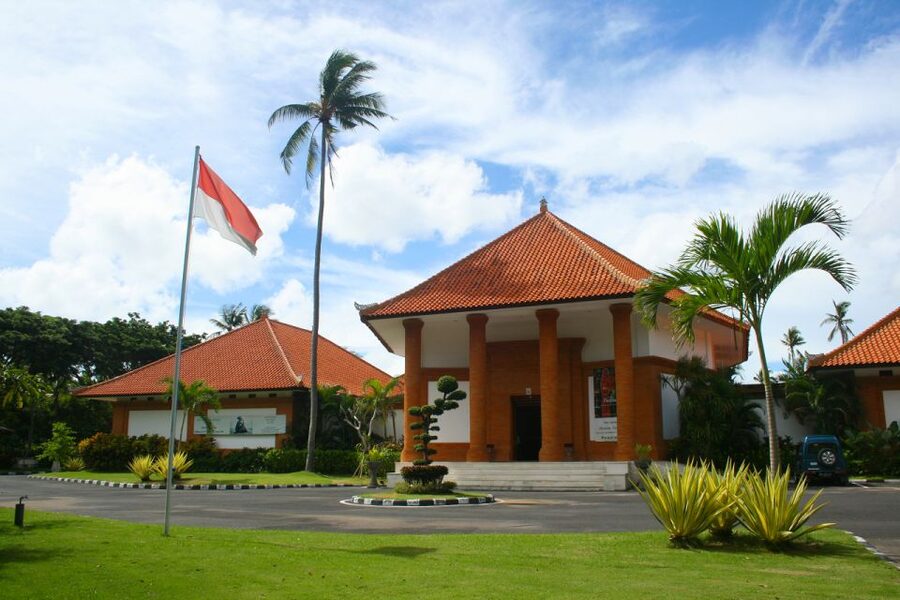
The galleries and facilities are wheelchair accessible, including access for motorized wheelchairs. This is useful if you are planning a relaxed cultural stop without stairs or difficult passageways.
Weapons and sharp objects are not allowed. Flash photography and tripods are also prohibited.
The photography rules are practical rather than surprising. You can look at the works without worrying about elaborate equipment, but leave the flash and tripod behind.
The museum has free Wi-Fi, which can help you check transport or continue planning your day. Still, keep your phone use quiet and secondary to the art. The calm atmosphere is one of the museum’s better qualities.
The condition of the building deserves realistic expectations
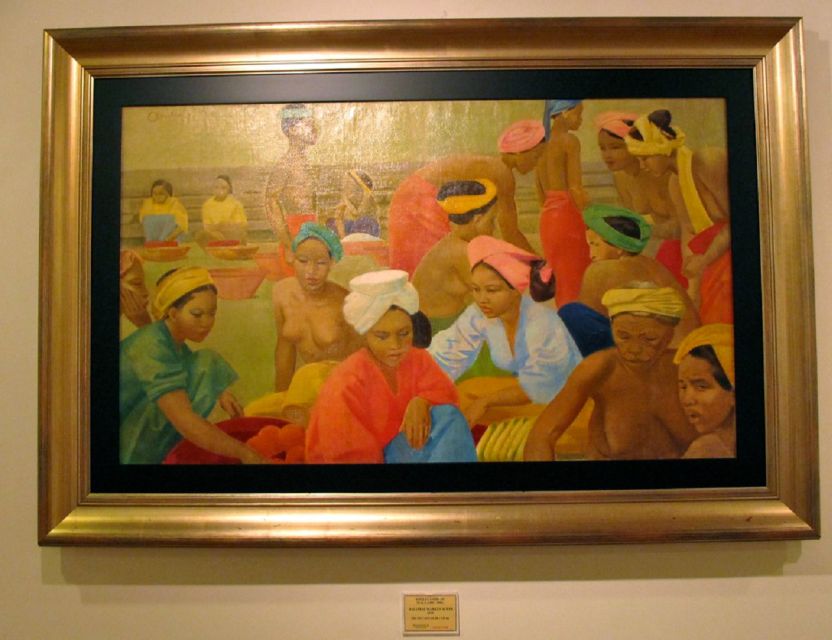
The museum’s art is the main attraction, but the physical setting may not meet everyone’s expectations.
One recent assessment found the experience quiet and pleasant. Another found it underwhelming, pointing to works that were not well protected, humidity, open doors, and a lack of air-conditioning.
That criticism is worth taking seriously. Bali’s heat and humidity are hard on artworks, especially when doors remain open. If you are used to tightly controlled galleries in London, New York, Singapore, or Jakarta, Museum Pasifika may feel more modest.
At the same time, the condition issue does not erase the value of the collection. The Indonesian masters, Pacific sculptures, and Asia-inspired European works remain unusual to see together.
I would visit with the right goal: come for access to a wide and distinctive collection at a low price, not for a flawless museum building. If professional conservation and climate control are your top priorities, you may leave disappointed.
Who will get the most from this visit
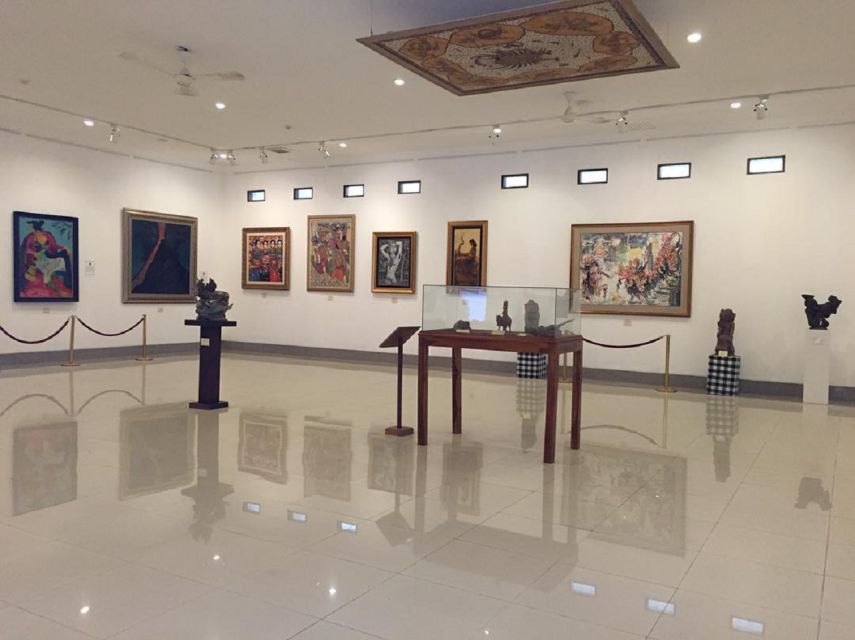
Museum Pasifika suits you best if you want a quiet cultural activity in Nusa Dua and have an interest in art from Indonesia or the Pacific.
It is a good fit for:
- Art-curious visitors: You can see many artists and styles without committing to a full day.
- Families: Children aged 0 to 11 enter free, and the visit can be kept flexible.
- Museum fans: The Pacific sculpture collection gives the museum a clear point of difference.
- Repeat Bali visitors: It offers a break from the usual beach, temple, and shopping schedule.
- Visitors needing easy access: The galleries and facilities are wheelchair accessible.
- Budget-conscious visitors: The $7 ticket includes admission, an audio guide option, and refreshments.
It may suit you less if you want a polished, air-conditioned gallery with tightly controlled displays. The condition of some works and the open-door setup are genuine considerations.
Is the $7 ticket good value?
At $7, the ticket is easy to justify if you are already in Nusa Dua. You receive access to more than 600 artworks, an audio guide option, a drink, and a cold towel.
The price is especially fair for the Pacific collection. About 200 sculptures from 10 nations give you something more distinctive than a small display of decorative objects.
The value is also tied to how long you stay. A quick visit still gives you a useful overview, but the ticket makes better sense if you take time with the Indonesian masters, Pacific sculpture, and Western artists.
There is no hotel transfer, so include your own transport costs in the calculation. If you are staying nearby or already visiting Nusa Dua, the museum is a strong low-cost addition. If you must cross Bali only for this stop, the transport may outweigh the admission bargain.
Should you book Museum Pasifika?
Book it if you want an inexpensive, flexible art visit with Indonesian masters, Pacific sculpture, and a little European perspective in one place. The quiet setting, free entry for children aged 0 to 11, audio support, and included refreshments make it easy to fit into a Nusa Dua day.
Do not book it expecting a major international museum with perfect climate control. The humidity, open doors, and reported lack of air-conditioning may bother serious art collectors.
For most visitors already staying in Nusa Dua, I would consider the $7 ticket worthwhile. Use the audio guide, spend extra time in the Michoutouchkine and Pilioko collection, and keep your expectations focused on the art rather than the building.
FAQ
How much does admission to Museum Pasifika cost?
The listed price is $7 per person. Children aged 0 to 11 can enter free of charge.
How long is the Museum Pasifika ticket valid?
The ticket is valid for the visit date and provides one day of validity. You should check availability for the available starting times.
Is an audio guide included?
An audio guide is available in English and Indonesian. The activity details describe it as optional, so check the booking choice when reserving.
What refreshments are included?
Admission includes a cold towel and a choice of tea, coffee, or infused water.
Is Museum Pasifika wheelchair accessible?
Yes. The galleries and facilities are accessible to wheelchairs and motorized wheelchairs.
What items are not allowed inside?
Weapons and sharp objects are not allowed. Flash photography and tripods are also prohibited.
Just added around Nusa Dua
- Bali Water-Sports Adventure & Water Blow Visit (Private & All – Inclusive)★ 5.0 · 4 reviews
- Nusa Dua Marine Jet Ski and Parasailing Adventure with Hotel Pick up★ 5.0 · 4 reviews
- Bali Shore Excursion: Nusa Dua Beach Half Day Tour★ 3.5 · 3 reviews
- Royal Traditional Lulur Balinese Massage 2 hours Spa At Nusa Dua Bali★ 5.0 · 4 reviews
- Royal Bali Massage 2 Hours in Nusa Dua Bali★ 5.0 · 5 reviews
- Paragliding Bali Nusa Dua cliff with Free Photo/Videos★ 5.0 · 4 reviews
- Nusa Dua Departure transfer to Bali Airport International (DPS)★ 5.0 · 12 reviews
- Kekeb Cooking Class at Nusa Dua★ 5.0 · 33 reviews
Nusa Dua, compared.
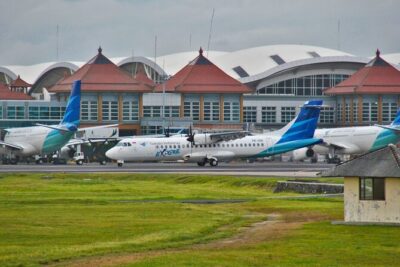
Private Arrival Transfer: Denpasar International Airport to Nusa Dua Area
Read our review →

Tanjung Benoa Water Sports: All Inclusive Bali Activities
Read our review →
Nusa Dua Departure transfer to Bali Airport International (DPS)
Read our review →
Traditional Bali Massage 90 minutes at Nusa Dua Bali
Read our review →
Private Half Day Nusa Dua Village All-Inclusive Tour
Read our review →Browse the lists this tour appears in