
Reviewed · JAKARTA
Jakarta Full-Day Highlights Tour with Transfer
Jakarta’s best introduction is a day that crosses the city’s many identities: national monument, mosque, cathedral, Chinese temple, old Dutch square, puppet workshop, and working harbor. This tour does exactly that, carrying you from Monas and Merdeka Square to the wooden sailing ships of Sunda Kelapa.
I like the easy hotel pickup and small maximum group of 10. I also like the mix of major sights and living culture, especially the Dharma Bhakti Temple, Glodok, and the wayang puppet studio. Guides such as Enok, Jeffrey, Hertin, Syikal, and Edward have earned strong praise for clear explanations and friendly help.
The main drawback is time. Jakarta traffic can be heavy, and a long list of stops means some visits are brief. If you want a slow market wander or a detailed museum visit, you may feel rushed, especially around Chinatown.
Key points to know before booking
- A full city sweep in 7 to 8 hours: You see central Jakarta, Glodok, Old Batavia, and Sunda Kelapa in one day.
- A small group capped at 10: The van setting is more personal than a large coach tour.
- Strong guide service: Enok, Jeffrey, Hertin, Edward, and Syikal are among the guides praised for history, humor, photos, and practical help.
- Several faiths in one morning: Istiqlal Mosque, Jakarta Cathedral, and Dharma Bhakti Temple show Jakarta’s religious mix.
- Old Batavia and working port included: Fatahillah Square and Sunda Kelapa add more than a standard downtown sightseeing loop.
- Lunch is not covered: You need to pay for your own midday meal, though the guide can help with the day’s practical flow.
Why this tour works as a first day in Jakarta
Jakarta is spread out, crowded, and not always easy to read at street level. A private car or small van with pickup removes much of the guesswork. You do not need to piece together distant sights with separate rides, and you can ask questions as the city changes outside the window.
The route also gives you a useful introduction to Indonesia beyond postcard architecture. You see symbols of independence, major places of worship, Chinese Indonesian culture, colonial-era Batavia, traditional performing arts, and the port that helped shape Jakarta’s trade.
The group limit matters here. With no more than 10 people, the day should feel less anonymous than a large bus outing. Several guide names appear in the experience record, including Enok, Jeffrey, Hertin, Edward, and Syikal. Their strengths vary slightly, but the consistent pattern is clear: expect a guide who explains local history, answers questions, helps with photos, and adjusts to the group when conditions change.
The vehicle is air-conditioned, and pickup and drop-off are included. That is useful in Jakarta, where heat, traffic, and long road connections can drain your energy before you reach the next stop.
A few more things to do around Jakarta
- Private Full-Day Guided Tour: Explore Jakarta’s Top Highlights
★ 5.0 · 338 reviews - Baduy Tribal Tracker and Village in Private Tour Full Day & Lunch
★ 5.0 · 25 reviews - Full Day Private Jakarta Tour(Inc Lunch, Puppet show, & Souvenir)
★ 4.5 · 23 reviews
Monas and Merdeka Square set the tone
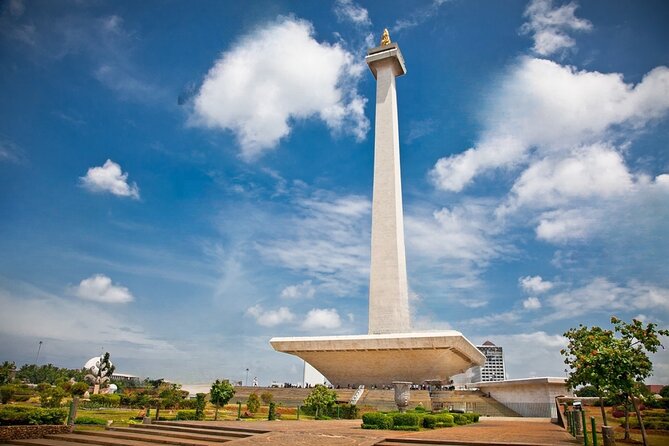
The National Monument, usually called Monas, is the clearest opening statement. At 132 meters, it marks Indonesia’s struggle for independence and gives the day a national focus. The visit is scheduled for about an hour, with admission included.
The monument is more than a photo stop. Your guide can place it in the story of Indonesia’s independence and explain why it matters to the modern state. If access to the observation deck is operating as planned, you may be able to go up for views across Jakarta, though the supplied details do not promise a specific ascent time.
After meeting the guide, you pass through Merdeka Square, the center of Indonesia’s government. The Presidential Palace and other important state buildings are in this area. Expect to see them from the route rather than treat the square as a long walking visit.
This is a good place to ask questions about Indonesia’s political center. It also shows one of the tour’s limits: roads and traffic shape the day as much as the sightseeing schedule.
Istiqlal Mosque and Jakarta Cathedral
The tour then turns to two major religious buildings placed close together: Istiqlal Mosque and Jakarta Cathedral. That pairing gives you a useful look at Jakarta’s religious life without requiring a separate day.
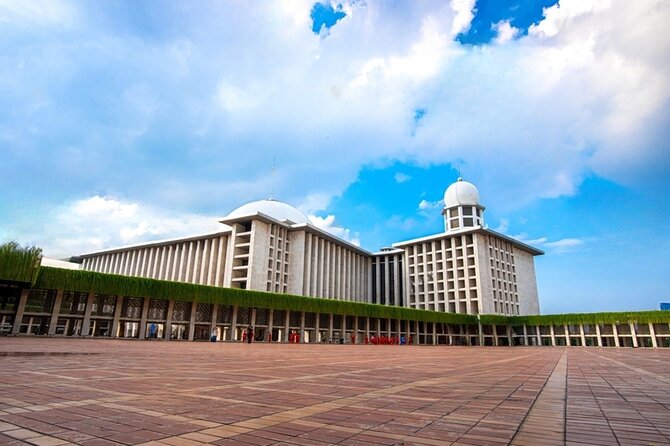
Istiqlal Mosque is the largest mosque in Southeast Asia. You have about 30 minutes here, with no separate admission charge. The scale is the main point: a large dome, broad interior spaces, and a national role that reaches beyond ordinary worship.
Your time may be enough for an introduction and photographs, but not for a long architectural study. Dress and conduct should be respectful at any religious site, and your guide is the best source for current visiting practices.
Jakarta Cathedral receives about 15 minutes. Its Gothic design, tall spires, and stained glass make a sharp contrast with the mosque. The short stop is useful for seeing the relationship between the two buildings, but you should not expect a full church tour.
I like this part because it avoids presenting Jakarta as a city with only one cultural identity. In a short stretch, you see two important religious traditions and the city’s effort to place them within the same civic setting.
Dharma Bhakti Temple and Glodok Chinatown
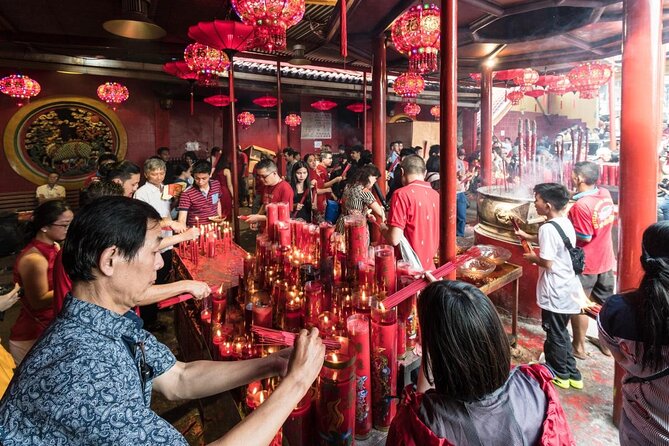
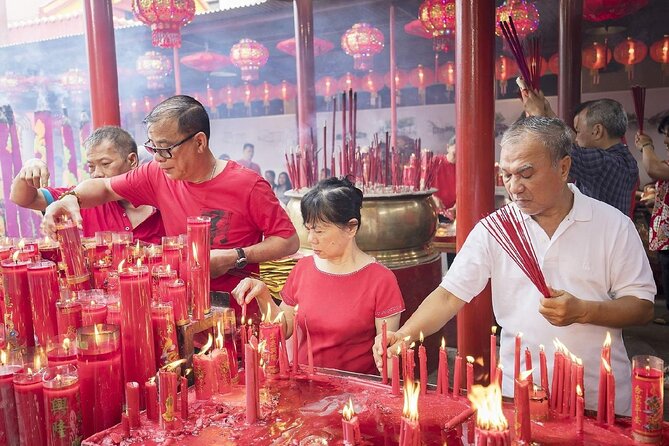
Dharma Bhakti Temple takes you into Glodok, Jakarta’s Chinatown. The temple dates to the 17th century and is known for ornate decoration and a strong visual atmosphere. Admission is included, and the scheduled visit lasts about 30 minutes.
This is one of the more distinctive stops because it moves the day away from government symbols and grand national buildings. You see a place tied to Chinese Indonesian religious and cultural life, with details that reward a slower look at the entrance, decorations, and worship space.
You then have about 45 minutes in Glodok itself. The district is home to shops, food businesses, temples, and local activity. The tour does not promise a long shopping session, so set your expectations accordingly. You get an introduction to the area, not an entire afternoon to browse every lane.
This is also where I would speak up if you want more market time. One clear criticism of the schedule is that the puppet studio can receive more attention than the Chinatown markets. If Glodok is your priority, tell the guide early. The route may not allow major changes, but your preference can still help shape the stop.
A completely different kind of day out in Jakarta:
- Jakarta: Volcano, Tea/Rice Fields, Hot Spring, Local Food
★ 4.9 · 515 reviews - Active Volcano, Rice Field, Hot Spring, Fruit market, Tea Plantation with Lunch
★ 5.0 · 513 reviews - Jakarta Half-Day Guided Tour with a Private Fun Local Host
★ 5.0 · 292 reviews - Jakarta Bogor Botanical Garden, Waterfall and Rice terrace, Lunch
★ 5.0 · 157 reviews
Fatahillah Square and Old Batavia
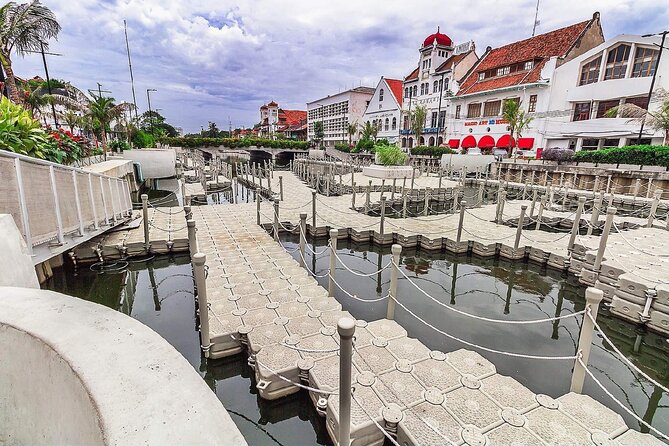
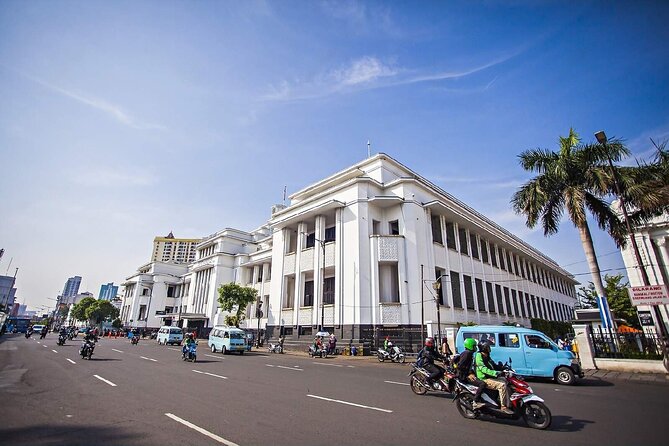
Fatahillah Square is the center of Jakarta’s Old Town, also called Kota Tua. The scheduled visit is about an hour, with admission included. The Jakarta History Museum occupies the former City Hall building, and the square is surrounded by old colonial-era structures.
This is the point where Jakarta’s past becomes easiest to picture. You can look across the square, notice the old facades, and connect the area to Batavia, the former colonial name for the city. The tour also includes about 45 minutes in Jakarta Old Town more broadly, so this section receives a useful share of the day.
Do not expect Old Batavia to look like a perfectly restored European center. Its appeal comes from the mixture of historic buildings, public space, local use, and signs of wear. That contrast is part of the lesson. Jakarta is a living capital, not a museum set.
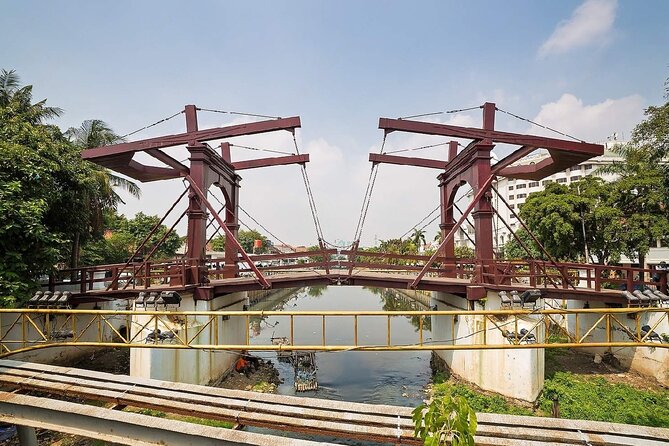
The extra stop at Kota Intan Drawbridge adds a small but unusual detail. Dating to the 17th century, it is one of the few remaining historic drawbridges in the world. The stop is free, and it helps connect Old Batavia to the canals and trade systems that shaped the port district.
Making wayang kulit at Makutharama
Makutharama Puppet Studio introduces wayang kulit, Indonesia’s traditional shadow-puppet art. The visit lasts about 45 minutes, with admission included.
The studio is dedicated to keeping the craft alive through puppet-making workshops and performances. You can expect an explanation of how the puppets are made and used, along with a closer look at a form of storytelling that is central to Indonesian culture.
This stop has real value if you want something you cannot get from a quick monument photo. It gives you a craft, a performance tradition, and a chance to see how cultural knowledge is passed on.
There is also a practical caution. The studio visit may include time focused on puppet sales. Some people will appreciate the chance to buy a handmade item, while others may prefer more time in Glodok or Old Batavia. I would treat this as a cultural demonstration with a shopping element, not only as a workshop.
Sunda Kelapa Harbor and the old trading coast
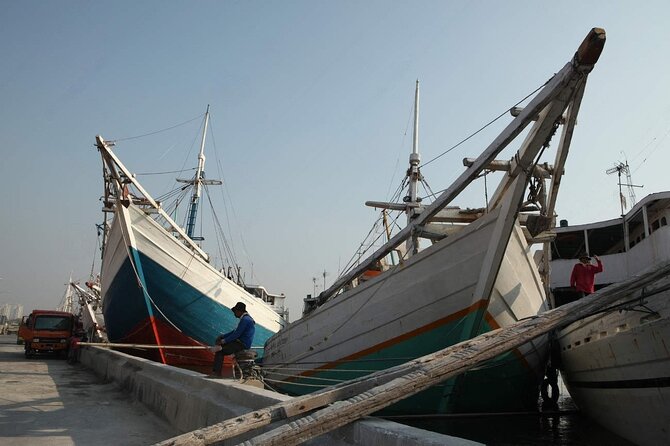
The final major stop is Sunda Kelapa Harbor, where the city’s maritime past remains visible. The port has been used since the 12th century and is known for traditional wooden phinisi schooners.
The scheduled visit lasts about 30 minutes, with admission included. That is enough to see the harbor and understand its place in Jakarta’s development, but it is not a long waterfront outing. The boats are the main draw, so keep your camera ready and listen for the guide’s explanation of their role.
I like ending here because the harbor gives the day a physical sense of connection. Monas represents the modern nation, Old Batavia shows colonial trade, and Sunda Kelapa shows the sea route that helped make Jakarta important in the first place.
The order of the stops may change with traffic or local conditions. Jakarta’s roads can be slow, and rain has occasionally challenged the schedule. Still, the guides and drivers have been praised for keeping the day moving safely, including during wet weather.
What the $60 price really covers
At $60 per person, the value depends on how much you would otherwise spend arranging transport between widely separated parts of Jakarta. The price includes an air-conditioned vehicle, pickup and drop-off, an English-speaking guide, bottled water, entrance fees, parking, and fuel charges.
That is a useful bundle. You are not paying only for admission to Monas or a museum. You are also paying for a driver, route planning, local explanations, and a vehicle that remains with the group during a long day.
Lunch is not included. Plan to buy your own meal, and use the guide’s local suggestions if needed. A food stop is not listed as a formal attraction, so do not book this expecting a food tour.
The small-group limit improves the value. A group of seven has already worked well for this experience, and the maximum of 10 keeps the van from becoming too unwieldy. Group discounts may be available, which could make the price more attractive for friends or family traveling together.
The tour carries a 4.9 rating from 63 ratings and a 100 percent recommendation figure. The most praised features are the guides, the number of sights covered, the comfortable vehicle, and the friendly handling of questions and photographs.
Who should book this Jakarta day tour
I would choose this tour if you have one full day in Jakarta and want a broad first look rather than a slow study of one neighborhood. It suits first-time visitors, solo travelers who prefer company, and anyone who wants transport handled from start to finish.
It is also a good fit for people interested in more than monuments. You get religious architecture, Chinese Indonesian culture, traditional puppetry, colonial streets, government landmarks, and a working harbor in the same day.
You may want a different plan if your main goal is shopping in Glodok, extended museum time, or a relaxed food crawl. The route covers a lot, but the schedule leaves little room for lingering.
The tour is listed as suitable for most people, with a maximum of 10 participants. Since the day includes several site visits and movement between neighborhoods, ask the provider about any personal mobility concerns before booking if that matters to you.
Booking and cancellation details
Confirmation is provided when you book. Pickup and drop-off are offered, but the supplied information does not specify a fixed pickup zone or exact pickup time, so confirm those details with Travalcore Tour.
Free cancellation is available until 24 hours before the experience start time. Canceling or changing the booking less than 24 hours ahead does not qualify for a refund, and the cut-off uses Jakarta local time.
Should you book it?
Book this tour if you want Jakarta’s main sights explained in one organized day, with transport, entry fees, and an English-speaking guide included. The combination of Monas, the mosque and cathedral pairing, Glodok, Old Batavia, wayang puppets, and Sunda Kelapa is unusually broad for a single outing.
Go in with realistic expectations. Traffic may cut into sightseeing time, Chinatown may feel too short, and the puppet studio may include a sales component. But if you value range, good guide support, and a small group over lingering in one place, the $60 price is sensible. It is a strong first-day orientation to Jakarta, especially with guides such as Enok, Jeffrey, Hertin, Edward, or Syikal leading the way.
FAQ
How long does the Jakarta highlights tour last?
The tour lasts approximately 7 to 8 hours.
What is the price of the tour?
The listed price is $60 per person.
Is hotel pickup included?
Yes. Pickup and drop-off services are included, although you should confirm the exact pickup details with Travalcore Tour.
How many people can join the tour?
The tour has a maximum group size of 10 people.
Is transportation air-conditioned?
Yes. The tour includes an air-conditioned vehicle.
Is an English-speaking guide included?
Yes. An English-speaking tour guide is included.
Are entrance fees included?
Yes. Entrance fees and parking fees are included.
Is lunch included?
No. Lunch is not included in the tour price.
What sights are visited?
The route includes Monas, Merdeka Square, Istiqlal Mosque, Jakarta Cathedral, Dharma Bhakti Temple, Glodok Chinatown, Fatahillah Square, Jakarta Old Town, Makutharama Puppet Studio, Kota Intan Drawbridge, and Sunda Kelapa Harbor.
Can I cancel for a full refund?
Yes, if you cancel at least 24 hours before the experience start time. Cancellations or changes made less than 24 hours before the start time are not eligible for a refund.
Just added around Jakarta
- The Secret Society of Batavia – Walking Tour★ 5.0 · 4 reviews
- Volcano and Domas Crater of Hot Stony Bubble from Jakarta Lunch★ 5.0 · 23 reviews
- Batik Heritage Introduction Class with Lunch & Souvenir★ 5.0 · 8 reviews
- Situ Gunung Waterfall & Suspension Bridge Sukabumi start Jakarta★ 4.5 · 13 reviews
- Soekarno Hatta International Airport by Plaza Premium Lounge★ 4.0 · 46 reviews
- Private Tour: Half Day Jakarta Old City Tour★ 4.0 · 4 reviews
- Jakarta Indonesian Culture in half Day★ 5.0 · 50 reviews
- Jakarta Scooter Lessons and Motorcycle Lessons★ 5.0 · 9 reviews
Jakarta, compared.
Jakarta: Volcano, Tea/Rice Fields, Hot Spring, Local Food
Read our review →
Active Volcano, Rice Field, Hot Spring, Fruit market, Tea Plantation with Lunch
Read our review →
Private Full-Day Guided Tour: Explore Jakarta’s Top Highlights
Read our review →
Jakarta Half-Day Guided Tour with a Private Fun Local Host
Read our review →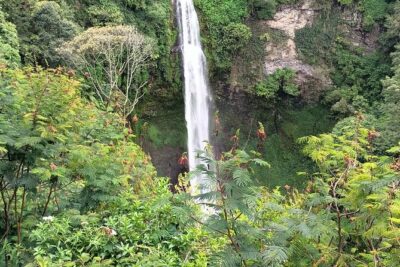
Jakarta Bogor Botanical Garden, Waterfall and Rice terrace, Lunch
Read our review →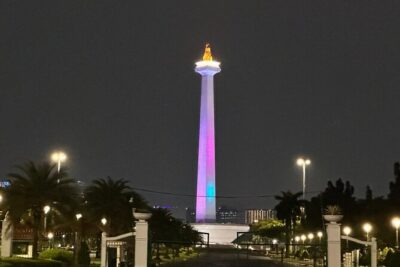
Jakarta Heritage of Old Batavia Private City Tour (Historical)
Read our review →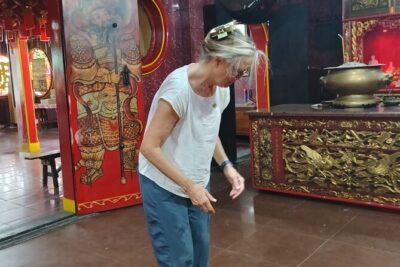
Jakarta Half-Day Sightseeing Tour To Modern City and Old Town
Read our review →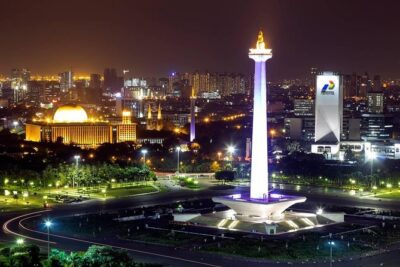
Jakarta Night Tour : Enjoyable Night time in Jakarta (Hotel Pick-up)
Read our review →Browse the lists this tour appears in