
Reviewed · SCUBA DIVING
PADI Open Water Course
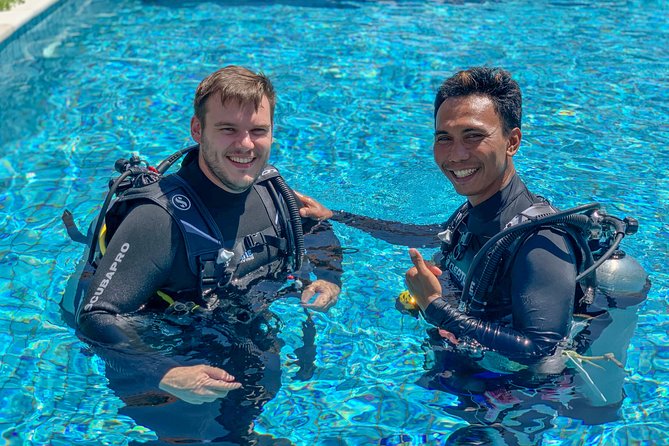
Bali’s PADI Open Water Course packs a full beginner certification into three focused days, moving from theory to pool practice and then four open-water sessions at Padang Bai and Tulamben. That progression gives you a useful test of your skills in real sea conditions, not just a pool.
I like the practical setup: hotel pickup, meals, equipment support, and an air-conditioned minivan are included. I also like the small maximum group size of three, which should give you more direct time with your instructor. The main consideration is the price, $530 per person, plus the need to plan carefully around flights and medical restrictions.
Key points to know before booking
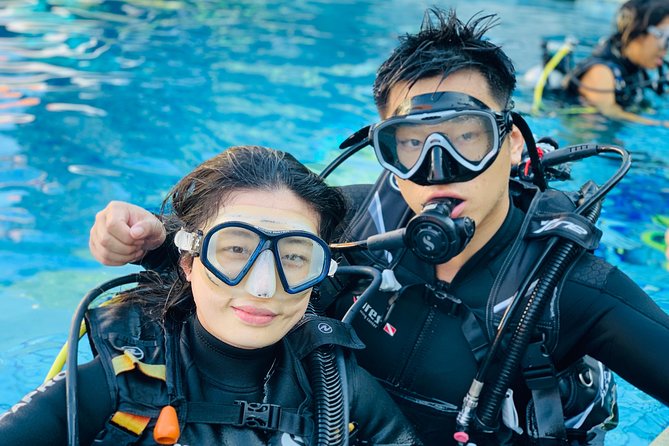
- Four open-water sessions: The course finishes with sea training at Padang Bai and Tulamben.
- Three-part structure: You complete knowledge work, pool training, then practical sessions in the sea.
- Small group size: The activity accepts a maximum of three participants.
- Sanur meeting point: The listed start point is Neptune Scuba Diving Bali in Sanur Kauh, Denpasar.
- Hotel transport and meals included: Pickup, return transport, lunch, drinks, snacks, and an air-conditioned minivan are part of the package.
- Certification limit: Once you pass, you can scuba safely to a maximum depth of 18 meters.
What the three-day PADI course actually involves
This is not a quick tryout in the sea. It is a proper PADI Open Water certification course, designed to give you the basic skills and judgment needed to scuba independently to 18 meters.
The three stages matter. First, you learn the theory and safety rules. Next, you practice the core skills in a pool, where the water is controlled and the instructor can stop easily to explain a technique. Finally, you apply those skills during four open-water sessions at Padang Bai and Tulamben.
That order is reassuring if you are new to scuba. You are not being pushed straight from a hotel room into the sea with a tank and a long list of instructions. The pool gives you a place to get used to breathing equipment, buoyancy, and basic procedures before the setting becomes more demanding.
The course is also a serious commitment for three days. You should leave enough room in your Bali schedule to attend each stage without rushing. Missing part of the training could affect your ability to complete the certification, so this is best treated as a main activity rather than something to squeeze between short sightseeing stops.
More Diving Trips in Bali
- Two fun dives morning trip (Certified Divers only)
★ 5.0 · 170 reviews - Introduction into diving (half day, 2 dives, no cert)
★ 5.0 · 80 reviews - Certified Scuba Dive with Manta Rays (Open Water Diver minimum)
★ 5.0 · 55 reviews
Starting at Neptune Scuba Diving Bali in Sanur
The listed meeting point is Neptune Scuba Diving Bali, on Jl. Suka Merta in Sanur Kauh, Denpasar Selatan. The activity ends back at the meeting point, and hotel pickup and drop-off are included.
That address matters because the experience is often described as being in Kuta, while the actual starting point is in Sanur. If you are staying elsewhere in Bali, confirm the pickup arrangement and timing before the first morning. The package includes transport, but you will still want to know when the vehicle is expected and where you should wait.
The included air-conditioned minivan is a useful touch in Bali. Equipment, training, meals, and transport can create a fair amount of practical fuss, so having a driver and guide handle the road connection makes the three days easier to manage.
The normal operating hours are listed as 7:00 AM to 6:00 PM, Monday through Sunday. That does not mean your course will occupy every hour in that window. It simply gives you the operating range when arranging dates and asking about pickup.
The group limit of three is one of the strongest practical features. Beginner training works better when you can ask a question without waiting behind a large class. It also gives the instructor a better chance to notice small problems with buoyancy, breathing, or equipment use.
Day one: theory and pool training
The first stage is knowledge development. You learn the principles behind safe scuba, equipment use, underwater communication, and the limits of an Open Water certification. The supplied information does not give a minute-by-minute schedule, so expect the instructors to set the exact pace based on your progress.
Do not treat the theory portion as paperwork to rush through. It explains why the course has rules about flying, health, depth, and managing your body underwater. That information is what helps you make sensible choices after the certificate is in your wallet.
Pool training follows the theory work. The pool is the right place to build comfort because you can concentrate on one skill at a time. If you are uneasy about breathing from a regulator, controlling your position, or handling basic equipment, the controlled setting gives you room to settle down.
Past students have specifically praised instructors including Gede, Muli, Julian, Sia, and Agus for patience and clear support. Gede has been singled out for working carefully with younger students and beginners. Muli has helped students improve buoyancy control and encouraged people who were not confident swimmers. These names do not guarantee which instructor you will receive, but they show the sort of personal teaching style you can ask Neptune to arrange or confirm.
A helpful point for nervous beginners: the course is not only for strong swimmers, based on the experiences described. Still, the medical and participation rules are real. You should be comfortable answering the health questionnaire honestly and discussing concerns before you pay.
Padang Bai and Tulamben: taking the skills to sea
The final phase includes four open-water sessions at Padang Bai and Tulamben. These locations give the course a proper sea component and let you apply pool skills in natural conditions.
Padang Bai is one of the named training areas, while Tulamben provides the other setting. The available details do not specify exact sites, visibility, marine life, or the order of the stops, so you should not book this expecting a guaranteed animal encounter or a particular underwater attraction.
What you can count on is a change from pool practice to open water. That step tests your ability to stay calm, follow instructions, manage your equipment, and maintain control in a less predictable setting. It is the part of the course that turns a collection of pool exercises into practical scuba experience.
The four-session format is useful. You get repeated chances to correct a problem instead of facing the sea only once. If your buoyancy needs work during an early session, the instructor can help you make adjustments during later training.
Tulamben and Padang Bai also help you see more of Bali beyond the streets and beaches around Kuta. The course includes road transport, so you can spend the day focused on training rather than arranging separate transfers. The tradeoff is that road journeys and full training days can make this a tiring three-day activity. Bring patience, water, and a willingness to follow the timetable.
Lunch, bottled water, coffee or tea, and snacks are included. That is more useful than it may sound. Beginner scuba training takes concentration, and not needing to find food between sessions keeps the day simpler. The package also includes a driver or guide and a professional guide, so the operation handles the main logistics for you.
A completely different kind of day out in Bali:
- Bali Full-Day Traditional Village Sightseeing Trip All Inclusive
★ 5.0 · 3,069 reviews - ️ Bali Instagram Tour: The Most Famous Spots (Private & All-Inclusive)
★ 5.0 · 2,857 reviews - Full-Day Tour to Water Temples and UNESCO Rice Terraces in Bali
★ 5.0 · 2,539 reviews - ATV Quad Bike Through Tunnel and Waterfall in Bali
★ 5.0 · 2,098 reviews
What the instructors add to the experience
Good instruction matters more here than flashy scenery. A certification course should teach you to behave safely when something feels unfamiliar, not simply get you underwater long enough for a photograph.
The strongest pattern in the instructor feedback is patience. Gede has been described as calm and thorough with a 15-year-old student. Another account describes him helping a newcomer who had little swimming experience. Muli has received praise for encouragement and for helping improve buoyancy. Sia and Agus have also been noted for patient instruction and attentive support.
Julian is associated with a course completed by a couple from New York, while other students worked with the wider Neptune team. The important lesson is to ask who will teach you, especially if you have a particular concern such as anxiety, weak swimming confidence, or trouble controlling your position in the water.
The maximum of three participants gives this instruction more room to work. You can ask for a demonstration again, pause when you need to, or request help with a skill without holding up a large group.
Still, your own attitude matters. Tell the instructor if you are nervous, uncomfortable, or unsure. A scuba course is not a test of bravado. Quietly asking for help is a better habit than pretending everything is fine.
Is $530 a fair price?
At $530 per person, this is not a bargain activity. But it is also more than a single half-day outing. The price covers a full three-day certification course, four open-water sessions, pool training, professional instruction, transport, hotel pickup and drop-off, lunch, drinks, snacks, taxes, and handling charges.
That makes the price easier to assess. If you already planned to earn a PADI Open Water certificate in Bali, the package combines the major costs in one booking. You are paying for instruction and certification training, not only for time underwater.
The small group size improves the value. Private instruction would usually cost more, but a maximum of three still gives you a more personal setup than a large class. The included minivan and meals also reduce the extra spending and planning that can appear around a multi-day course.
Souvenir photos are not included. They are available to purchase, so budget extra if underwater images matter to you. I would treat photos as optional. The useful product here is the training and certification, not the picture package.
You can cancel for a full refund if you do so at least 24 hours before the start time. Changes or cancellations inside that window are not accepted for a refund. Since health and flight timing matter, sort out both before the cutoff.
Health, flights, and age rules
The minimum age is 10. That makes the course possible for families with older children, though the young participant still needs to meet the health and participation requirements.
Every participant must complete a health questionnaire before scuba. Respiratory and circulatory health must be in good condition, and body air spaces must be normal and healthy. Current colds or congestion, epilepsy, coronary disease, severe medical problems, alcohol, and drugs can prevent participation.
The supplied guidance specifically says not to scuba within 18 hours of flying. Plan your arrival and departure around that rule. Do not place the first course session too soon after landing, and do not schedule a flight immediately after your final underwater session.
If you have asthma, a heart condition, or another medical concern, consult your doctor before booking. This is not a formality. Pressure changes affect the body, and the instructor or operator can refuse participation if the health requirements are not met.
Most people can participate, and the activity is near public transport, but the health screening remains essential. The best approach is simple: be honest on the questionnaire and ask questions early.
Who should book this course?
This course suits you if you want a recognized beginner qualification rather than a one-time introduction. It also works well if you prefer to learn in a small group and want transport, food, and instruction organized together.
It is a good fit for:
- First-time scuba students
- Couples or friends seeking a formal qualification
- Families with participants aged 10 or older
- People who want both pool practice and four sea sessions
- Visitors with three clear days in their Bali itinerary
- Students who value patient, individual instruction
It is less suitable if you have only one free day, dislike structured training, or want a casual underwater activity with no study. It may also be a poor choice if you have a tight flight schedule or an unresolved medical issue.
Swimmers with limited confidence should not assume they are automatically excluded. Several instructor experiences describe patient help for students who were not strong swimmers. But you should still speak openly with the operator before booking, since the course requires you to complete practical skills safely.
Practical advice for a smoother three days
Bring a swimsuit, sun protection, a change of clothes, and a way to keep small personal items dry. The package includes water and snacks, but you may prefer your own bottle and extra food for the road.
Ask in advance about the exact pickup time, the instructor assigned to you, and the order of Padang Bai and Tulamben. The listed information confirms both locations but not the daily sequence.
Leave your schedule open after each training day. The course may be rewarding, but it requires attention and physical energy. You will get more from the sessions if you are rested rather than racing in from another activity.
If you plan to fly during the same Bali trip, write the 18-hour rule into your itinerary before booking hotels and flights. It is much easier to protect that gap now than to rearrange flights later.
Finally, do not measure your progress by how quickly someone else learns. Buoyancy and breathing control can take time. The instructors associated with this operation have been praised for patience, and you should use that support by asking for another explanation whenever you need one.
Should you book the Neptune PADI course?
Book it if you want a real three-day qualification course with four sea sessions, small-group instruction, and transport handled for you. The strongest value comes from the combination of pool practice, open-water training, meals, and hotel transfers, not from a quick tourist outing.
I would pause before booking if $530 stretches your budget, your Bali schedule is tight, or your flight and health situation do not fit the rules. Confirm the Sanur meeting point, pickup details, assigned instructor, and dates before committing.
For a first certification, this is a well-organized choice on paper, with the practical support a beginner needs. If you give it three unhurried days and approach the training seriously, it can turn a Bali holiday into a useful skill you keep long after you leave the island.
FAQ
How long does the PADI Open Water Course take?
The course lasts approximately three days.
Where does the course begin?
It begins at Neptune Scuba Diving Bali, Jl. Suka Merta, Sanur Kauh, Denpasar Selatan, Bali.
Where does the activity end?
The activity ends back at the meeting point.
What locations are included in the open-water training?
The four open-water sessions take place at Padang Bai and Tulamben.
What is included in the price?
The price includes taxes, fees, handling charges, bottled water, lunch, coffee or tea, snacks, a driver or guide, a professional guide, hotel pickup and drop-off, and transport by air-conditioned minivan.
Are souvenir photos included?
No. Souvenir photos are available to purchase separately.
What is the minimum age?
The minimum age is 10 years.
Can I fly soon after completing the course?
Scuba within 18 hours of flying is not recommended. Plan your flights with that interval in mind.
Can I cancel for a full refund?
Yes. You can cancel at least 24 hours before the experience start time for a full refund. Cancellations or changes made less than 24 hours before the start time are not accepted for a refund.
Just added around Bali
- Bali Parasailing Adventure, Jet Ski, Banana Boat , Donat Boat, with Transport★ 5.0 · 11 reviews
- 1.5 Hours Bali ATV Quad Tour★ 5.0 · 8 reviews
- ATV Quad Bike Through Tunnel and Waterfall★ 5.0 · 3 reviews
- Bali Driver Recommendation★ 5.0 · 7 reviews
- Bali Private Custom Tour★ 5.0 · 12 reviews
- Bali Cooking Class Experience with All Inclusive★ 5.0 · 12 reviews
- Penglipuran Village Waterfall Swing Private Guided Tour★ 5.0 · 13 reviews
- Bali Sightseeing Car Hire with English-speaking Guide and Driver★ 5.0 · 24 reviews
Scuba Diving, compared.
Open Water Course in Nusa Lembongan – Get Certified on remote island (next Bali)
Read our review →
2 Days Discover Scuba Diving in Nusa Lembongan – Scuba Initiation
Read our review →
Open Water Course in Tulamben – Get Certified in Bali
Read our review →
Bali Diving for Beginners: Tulamben Liberty Wreck
Read our review →
Discover Scuba Diving in Tulamben – Diving Initiation in Bali best diving sites
Read our review →
Advanced Open Water Course – Advanced Certification in Lembongan (next to Bali)
Read our review →
5 Fun Dives in Nusa Lembongan (for certified divers) – Swim with a Mola Mola
Read our review →
Browse the lists this tour appears in