
Reviewed · SCUBA DIVING
3-Day Freediving Level 1 Course
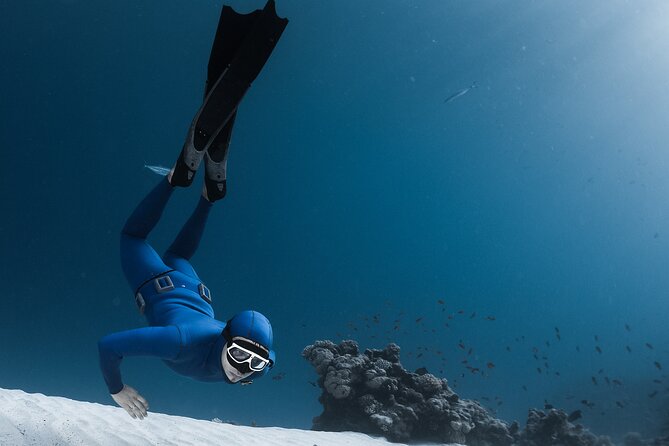
The striking part of this Nusa Penida course is how much it fits into three days. You move from classroom theory to pool practice, then out to the sea, learning to stay calm and controlled while descending on one breath. Most students reach about 50 to 65 feet, or 15 to 20 meters, by the end.
I like the four-student limit, which gives the instructor time to watch each person closely. I also like that equipment, learning materials, certification, and underwater photos are included, so you can arrive ready to learn instead of shopping for special gear.
The main drawback is the long daily schedule. From 8:30 am to 4:30 pm, with lunch not included, this is a serious course rather than a casual morning activity. You also arrange your own transport and accommodation on Nusa Penida.
Key points to know before booking
- Three full training days: Expect theory, two confined-water sessions, and three open-water sessions.
- Small groups: A maximum of four students per instructor supports close supervision and personal feedback.
- Beginner-friendly: No prior freediving experience is required, but you must be able to swim.
- Pool before ocean: The course builds skills in a controlled setting before moving into open water.
- Useful inclusions: Gear, taxes, certification, digital course materials, and underwater photos are covered.
- A real physical commitment: Most students work toward a two-minute breath hold and a 15 to 20-meter descent, but results vary.
What the three-day course is really teaching
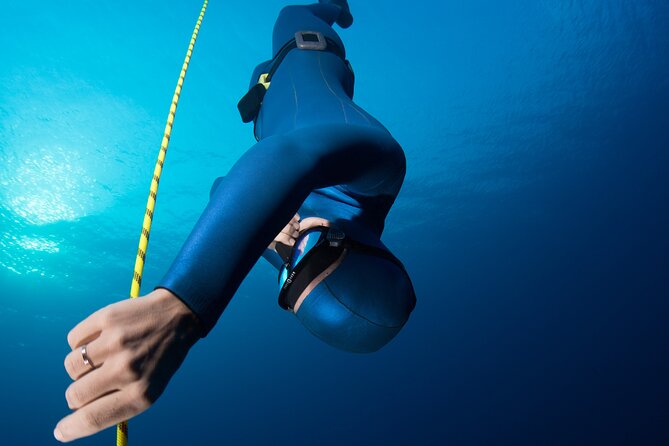
Freediving is not simply swimming downward and holding your breath. The course is designed to teach you how to use your body calmly, conserve effort, and return to the surface safely.
That makes the Level 1 format a sensible starting point. You learn on land, practice in confined water, and then apply those skills in the ocean. The order matters. You get time to understand the basics before the sea adds movement, depth, and a less predictable setting.
Each day runs from 8:30 am to 4:30 pm, including a lunch break. That is a full working day in the water and classroom, so I would not pair this with a packed sightseeing schedule. Plan to give the course your attention.
The school welcomes complete beginners. You do not need a previous course or special qualification. You do need to be able to swim and have a moderate level of physical fitness. If you are nervous about being underwater without breathing, the gradual format gives you a way to build confidence step by step.
More Diving Trips in Bali
- Two fun dives morning trip (Certified Divers only)
★ 5.0 · 170 reviews - Introduction into diving (half day, 2 dives, no cert)
★ 5.0 · 80 reviews - Certified Scuba Dive with Manta Rays (Open Water Diver minimum)
★ 5.0 · 55 reviews
Day one: theory, calm breathing, and pool work
The first stage covers theory and practical skills on land. This is where you learn the safety rules and the mechanics behind a controlled breath hold.
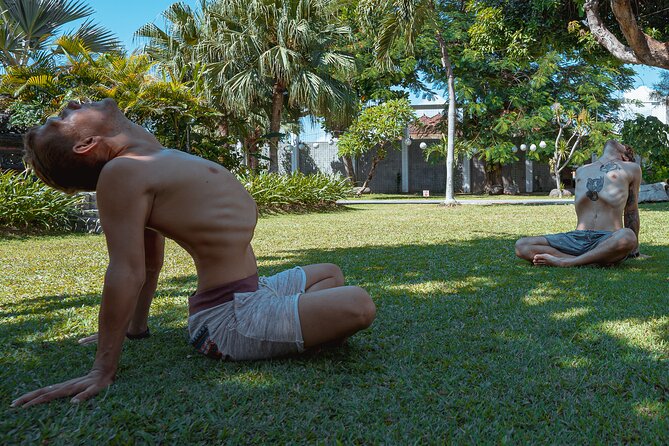
That classroom work may not sound as exciting as the sea sessions, but it is the part that helps you understand what your body is doing. Freediving depends on relaxation and good habits. You are not trying to force a personal record on the first morning.
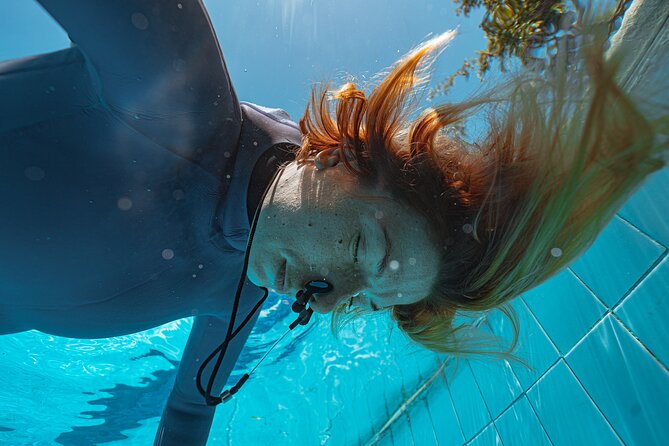
The course then moves into confined water for two sessions. A pool or similarly controlled setting lets you work on body position, breathing, movement, and comfort without the added demands of open water.
I see this as one of the strongest features for a first-timer. A beginner can get used to the unusual feeling of holding a breath while supported by an instructor, rather than being sent straight into the ocean. The aim is steady progress, not bravado.
The instructors named in the course feedback include Artem, Roberto, Seva, Hamza, Gaston, Gas, and Chiara. Their teaching styles differ, but the pattern is clear: the school places emphasis on patient coaching, encouragement, and individual attention. Artem is described as considerate while still nudging students toward a useful challenge. Roberto helped one nervous beginner become comfortable in the water.
That balance is important. You want an instructor who takes safety seriously, but you also need enough encouragement to move beyond the first signs of discomfort.
Day two: taking your skills into the sea
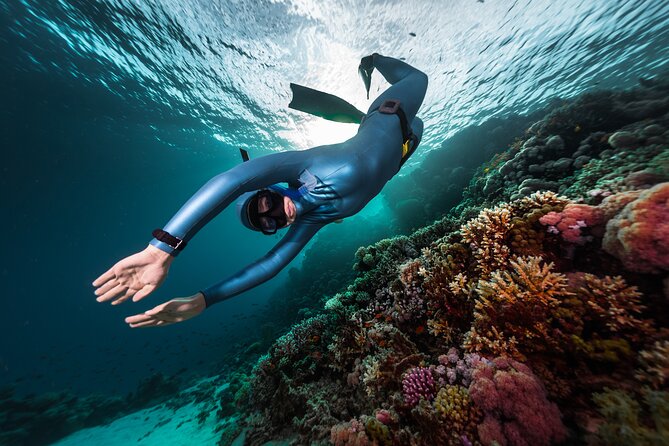
The open-water portion gives the course its sense of place. Nusa Penida offers warm tropical water, coral, and fish, so the setting is more than a training tank. You are learning a skill in the same kind of environment that makes people want to freedive in the first place.
The course includes three open-water sessions across the three days. The exact order of those sessions is not specified, so your instructor will determine how your progress fits the conditions and the group.
This is also where the small class size matters most. In open water, the instructor must keep track of technique, comfort, safety, and progress. Four students per instructor is a much more reassuring ratio than a large class where you wait your turn and receive little personal correction.
You should expect the sea to feel different from the confined-water sessions. Even a confident pool student may need time to adjust to open water. The goal is not to copy somebody else’s depth. It is to stay relaxed and use the method you have practiced.
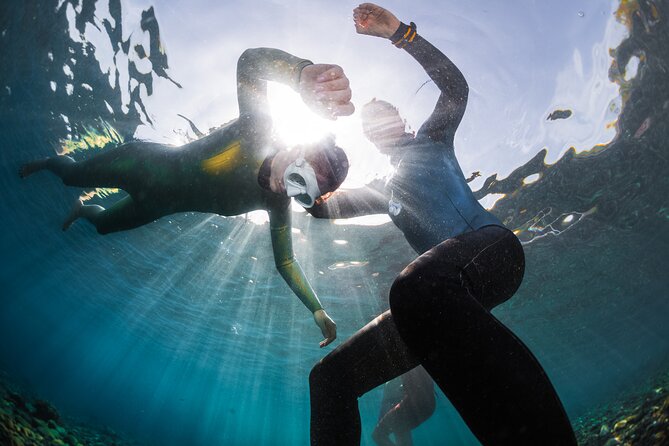
Underwater photographs are included, giving you a record of the experience. The pictures also add a nice personal touch to a course that can otherwise feel focused on numbers such as depth and breath-hold time. You get to see your body position and movement, along with the coral and tropical fish around you.
Day three: progress, technique, and certification
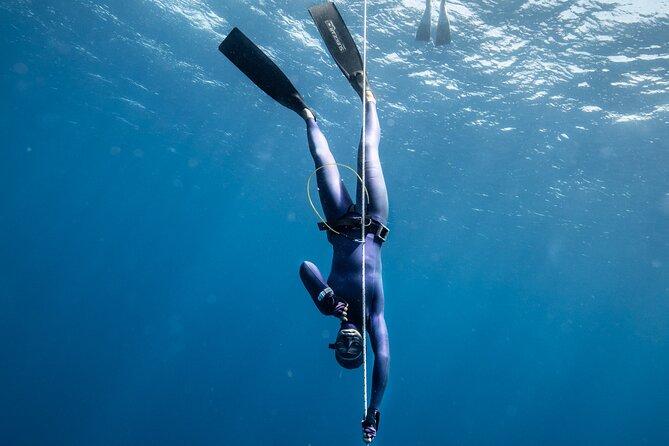
By the final day, the course brings together theory, confined-water practice, and open-water training. Most students can hold their breath for more than two minutes and reach 15 to 20 meters on one breath by the end.
Treat those figures as course outcomes, not promises. Your result depends on comfort in the water, fitness, prior swimming ability, and how quickly your body adapts. A good Level 1 course should leave you safer and more relaxed, even if your depth is below the advertised range.
The instructors are also there to help you judge your own limits. Several comments highlight a teaching style that is supportive without being passive. Seva is described as patient, kind, funny, and attentive to safety. Hamza helped build confidence through encouragement and careful guidance.
At the end, you receive freediving certification and digital learning materials. That gives the course more lasting value than a one-off snorkeling session. You leave with a foundation you can continue practicing, though the information provided does not specify the name of the certifying organization or any onward training requirements.
A completely different kind of day out in Bali:
- Bali Full-Day Traditional Village Sightseeing Trip All Inclusive
★ 5.0 · 3,069 reviews - ️ Bali Instagram Tour: The Most Famous Spots (Private & All-Inclusive)
★ 5.0 · 2,857 reviews - Full-Day Tour to Water Temples and UNESCO Rice Terraces in Bali
★ 5.0 · 2,539 reviews - ATV Quad Bike Through Tunnel and Waterfall in Bali
★ 5.0 · 2,098 reviews
Why the four-person ratio matters
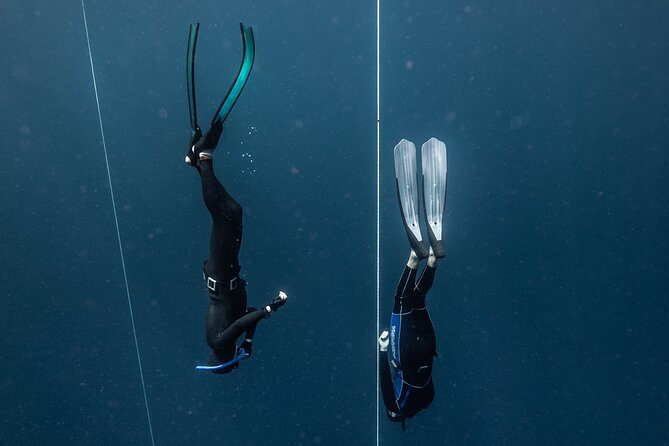
The small-group format is one of the clearest reasons to consider this course at $450. The price is not just paying for time in the water. It covers three days of instruction, equipment use, taxes and fees, certification, digital materials, and underwater photographs.
A larger group might cost less, but you could spend more time waiting and less time receiving useful feedback. With only four students per instructor, the teacher has a better chance to notice poor body position, tension, or hesitation.
That does not mean the experience is private. You still share the course with other students, and the pace must work for the group. If one person progresses quickly and another needs extra time, the instructor will have to balance both needs. Still, four is a manageable number for an activity where safety and close observation matter.
The strongest praise goes to the instructors and their manner with beginners. Students describe the staff as friendly, professional, supportive, and well organized. Those qualities count for a lot here. You want clear explanations before you enter the water and calm direction once you are below the surface.
What is included for the $450 price
At $450 per person, this is not a cheap add-on to a Bali holiday. It is a structured three-day course. I think the value is reasonable if you want a proper introduction rather than a single recreational session.
Included are:
- Freediving equipment
- All fees and taxes
- Freediving certification
- Digital learning materials
- Underwater photos
You do not need to buy special freediving equipment before arriving. That lowers the barrier for beginners and saves you from guessing what gear is suitable.
Lunch is not included. Private transportation and accommodation are also outside the price. You need to budget for those separately and make your own way to Freedive Nusa at Jl. Ped, Buyuk No. Desa, Ped, Nusa Penida.
The course begins and ends at that meeting point each day. Since no private transport is provided, check your accommodation location and allow enough time to reach the school before 8:30 am. The listed operating period runs through December 8, 2026, from Monday to Sunday.
Who will enjoy this course most
This is a good match for a beginner who can swim and wants a serious introduction to freediving. You do not need past water-sports experience, and the pool sessions offer a measured way to get comfortable.
It also suits a couple or friends who want to learn together, provided everyone accepts that progress may differ. The small group gives you personal instruction while still making the experience social.
I would choose it if you want to continue practicing after Bali. The digital materials and certification give you something to build on, and the course is more useful than a quick photo stop in the water.
You may want to reconsider if you prefer a relaxed half-day activity. Three days from morning to late afternoon is a firm commitment. It also may not suit you if you are not comfortable swimming or if you want guaranteed access to a specific depth. The stated 15 to 20 meters is what most students achieve, not a result promised to every student.
Practical planning for Nusa Penida
Book accommodation close enough to the school to manage the early start. The address is in Ped, on the north side of Nusa Penida, and the course does not include transport from your hotel.
Bring normal personal items for a full day out, since lunch is your responsibility. You will use the school’s freediving equipment, so there is no need to arrive with a full kit.
Keep the rest of your Nusa Penida plans light during these three days. The schedule already includes classroom study, pool work, sea sessions, a break for lunch, and time for feedback. You may prefer to leave beaches and sightseeing for before or after the course.
The mobile ticket makes booking simple, and confirmation is provided at the time of booking. Cancellation is free if you cancel at least 24 hours before the start time. A cancellation made less than 24 hours ahead is not refundable, and late changes are not accepted.
Should you book Freedive Nusa?
I would book this course if you want a careful, structured way into freediving and can commit three full days. The small groups, equipment, certification, photos, and patient coaching make the $450 price easier to justify.
I would not book it as a casual activity squeezed between other Nusa Penida plans. You need to swim, maintain moderate fitness, provide your own lunch and transport, and accept that the course demands concentration.
For a first course, the progression from theory to pool to open water makes good sense. You get the tropical setting, but you also get instruction that treats safety and confidence as seriously as depth. That is the right combination for learning to enjoy the quiet world below the surface.
FAQ
How long is the freediving course?
The course lasts three days. Each day runs from 8:30 am to 4:30 pm, including a lunch break.
Where does the course take place?
The course takes place at Freedive Nusa in Ped, Nusa Penida, Bali. It includes both confined-water sessions and open-water sessions.
Do I need previous freediving experience?
No. Previous experience is not required. You only need to be able to swim.
How many students are in each group?
The activity has a maximum of four students per instructor.
What sessions are included?
The course includes theory and practical work on land, two confined-water sessions, and three open-water sessions.
What depth can I expect to reach?
Most students can reach about 15 to 20 meters, or 50 to 65 feet, on one breath by the end of the course. This is not guaranteed for every student.
How long might I hold my breath after the course?
Most students can hold their breath for more than two minutes at the end. Individual results vary.
Is equipment included?
Yes. Freediving equipment is included, along with all fees and taxes, digital learning materials, certification, and underwater photos.
Are lunch, accommodation, and transport included?
No. Lunch, accommodation, and private transportation are not included. The activity begins and ends at the Freedive Nusa meeting point.
More Three Day Trips in Bali
- Best of Bali 3-Day Packaged Tour
★ 5.0 · 503 reviews - All inclusive Private 3 day tours package : Bali highlights
★ 5.0 · 348 reviews - More Complete: Discover Bali In 3 Days Private Tour Package
★ 5.0 · 167 reviews - Fun and Joy : 3-Day Java Tour Ending in Bali (All-Inclusive)
★ 5.0 · 62 reviews
Just added around Bali
- Bali Parasailing Adventure, Jet Ski, Banana Boat , Donat Boat, with Transport★ 5.0 · 11 reviews
- 1.5 Hours Bali ATV Quad Tour★ 5.0 · 8 reviews
- ATV Quad Bike Through Tunnel and Waterfall★ 5.0 · 3 reviews
- Bali Driver Recommendation★ 5.0 · 7 reviews
- Bali Private Custom Tour★ 5.0 · 12 reviews
- Bali Cooking Class Experience with All Inclusive★ 5.0 · 12 reviews
- Penglipuran Village Waterfall Swing Private Guided Tour★ 5.0 · 13 reviews
- Bali Sightseeing Car Hire with English-speaking Guide and Driver★ 5.0 · 24 reviews
Scuba Diving, compared.
Open Water Course in Nusa Lembongan – Get Certified on remote island (next Bali)
Read our review →
2 Days Discover Scuba Diving in Nusa Lembongan – Scuba Initiation
Read our review →
Open Water Course in Tulamben – Get Certified in Bali
Read our review →
Bali Diving for Beginners: Tulamben Liberty Wreck
Read our review →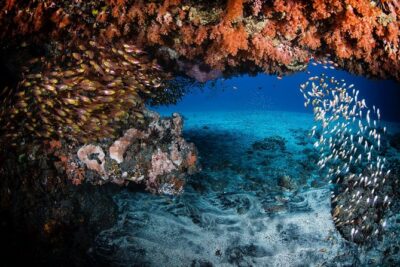
Discover Scuba Diving in Tulamben – Diving Initiation in Bali best diving sites
Read our review →
Advanced Open Water Course – Advanced Certification in Lembongan (next to Bali)
Read our review →
5 Fun Dives in Nusa Lembongan (for certified divers) – Swim with a Mola Mola
Read our review →
Browse the lists this tour appears in